733 results for: Labor and Labor Unions
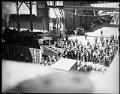
Photograph
Striking longshoremen with locomotive leaving Smith Cove, Seattle, July 19, 1934
In the early 1930s, the International Longshoremen's Association, led by San Francisco-based Harry Bridges, tried to unionize all West Coast dockworkers to improve pay and working conditions. In 1934, after employers refused to recognize the union, West Coast longshoremen went out on strike for 98 days, seriously disrupting trade. At Seattle's Smith Cove, picketing strikers blocked access to the piers…
ID Number:PI24006
Date:1934
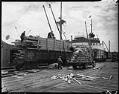
Photograph
Truck and railroad car with cargo, Seattle, 1934
Since the latter part of the 19th century, Seattle has been a transshipment point for goods traveling between the United States and other Pacific Ocean ports. At the docks, longshoremen transferred the cargo between ships and the railroad. In the 1930s, they did most of this work by hand; by the 1990s, many dockworkers had been replaced by machinery. Handwritten…
ID Number:PI24029
Date:1934
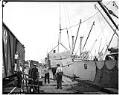
Photograph
Men unloading cargo from ship, circa 1935
Since the latter part of the 19th century, Seattle has been a transshipment point for goods traveling between the United States and other Pacific Ocean ports. At the docks, longshoremen transferred the cargo between ships and the railroad. In the 1930s, they did most of this work by hand; by the 1990s, many dockworkers had been replaced by machinery.In this…
ID Number:PI24030
Date:Circa 1935
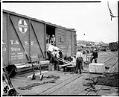
Photograph
Men loading boxcar at pier, circa 1935
Since the later part of the 19th century, Seattle has been a transshipment point for goods traveling between the United States and other Pacific Ocean ports. At the docks, longshoremen transferred the cargo between ships and the railroad. In the 1930s, the men did most of this work by hand; by the 1990s, many dockworkers had been replaced by machinery.In…
ID Number:PI24031
Date:Circa 1935
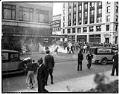
Photograph
Tear gas in Tacoma during the 1935 mill strike, June 24, 1935
In May 1935, a strike against the St. Paul & Tacoma Lumber Company idled some 40,000 sawmill and timber workers. The workers demanded better pay and shorter working hours. The mill's owners tried to keep the mill open and called in state police and the National Guard to keep order. On June 24, the police and guardsmen used tear gas…
ID Number:PI24070
Date:1935
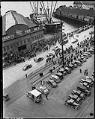
Photograph
Labor dispute at Pier 6, Seattle, 1938
Signs in image: [Milwaukee] Pier No. 6. Chicago Milwaukee St. Paul Railroad. Arlington Dock Co.Handwritten on negative: Seamen picket I.L.A.Handwritten on sleeve: Seattle - docks - Pier six.Date photograph was filed at the Seattle Post-Intelligencer (date of photograph and file date may differ by a month or more): April 22, 1938.
ID Number:PI24098
Date:Filed 4/22/38
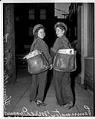
Photograph
First women mail carriers, December 1942
Before December 1942, only men delivered mail on foot in Seattle. With so many men away serving in World War II, the postal service decided to give female carriers a try. Starting in mid-December, Donna Pennington and Ardyth Hamilton sorted mail at the Broadway station and delivered it to homes and businesses on Capitol Hill.This photo shows Seattle residents Donna…
ID Number:PI25090
Date:1942
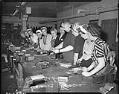
Photograph
Women training in wartime class at Rainier branch of Edison Technical School, Seattle, 1943
The Edison Technical School provided a broad range of practical training in full and part-time classes. During World War II, women trained in production related work, such as in this photo taken at the Building Trades Unit located in the old Rainier School at 23rd South and King Street. Note from MOHAI records: Rainier School opened three years after its…
ID Number:PI25831
Date:1943
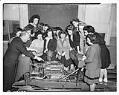
Photograph
Young women in war workers class, ca. February 20, 1943.
During World War II, many women were trained to fill the jobs left by men serving in the military. Women did auto repair, aircraft assembly and other jobs once considered men's work. This photo, taken in West Seattle in February 1943, shows young women studying a car engine. The auto mechanics class may have been photographed at West Seattle High…
ID Number:PI28092
Date:1943
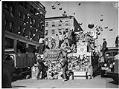
Photograph
Pots and pans flying through the air during scrap drive, July 1941
Even before the United States entered World War II in 1941, groups were collecting scrap aluminum and other metals for the industries supporting the war in Europe. Throughout the war, people all over the country turned in their extra metal items to help the war effort. One scrap metal depository was set up in downtown Seattle at University Place, a…
ID Number:PI28150
Date:1941