733 results for: Labor and Labor Unions
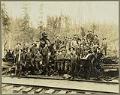
Photograph
Smith Logging Company, Monroe, 1912
Darius Kinsey (1869-1945) was a prominent photographer in the Pacific Northwest, specializing in logging photography. After five years as a photographer for the Seattle and Lake Shore Railroad Co, in 1897 he opened a photography studio in Sedro-Wooley with his wife Tabitha working as his photography assistant. In 1906, he moved his photography studio to Seattle, but continued to document…
ID Number:SHS2626
Date:1912
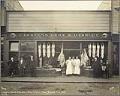
Photograph
Carstens Bros & Dashley Meat Market employees outside store, Nome, October 1908
In 1890 German emigrant Julius August Carstens (1873-1949) arrived in Seattle with his brothers, Thomas and William. Together they founded the Carstens Brothers Meat Markets, later expanding the business into meat packing. In this image employees of the Carstens Brothers and Dashley Meat Market pose outside the shop in Nome, Alaska. In 1899 the brothers had expanded their business north…
ID Number:SHS3098
Date:1908
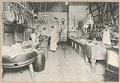
Photograph
William Myers and Frank Krauland in Georgetown Market, Seattle, 1911
Louis Steen (1845-1922), a butcher born in Germany, came to the U.S. in about 1867 and opened his meat market in Seattle's Georgetown neighborhood on Duwamish Avenue, now Airport Way. In this image, two of Steen's employees stand in the interior of the market. William Myers, left, is listed as a meat cutter in the 1911 Seattle City Directory, and…
ID Number:SHS3643
Date:1911
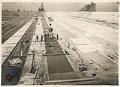
Photograph
Workers pouring concrete for Beacon Hill reservoir, Seattle, circa 1911
Washington's Cedar River originates in the Cascade Mountain Range and drains into Puget Sound via Lake Washington. Since 1899 the upper Cedar River watershed, and its subsequent reservoirs and pipeline infrastructure, have been operated by Seattle Public Utilities, providing drinking water for about two-thirds of King County. The population of Seattle and King County grew quickly after the establishment of…
ID Number:SHS3768
Date:Circa 1911
Photograph
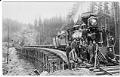
Railroad construction workers and locomotive at the Green River crossing, 1885
In the 1880s, Chinese laborers were recruited by railroad companies because they worked for lower pay than whites. Chinese men were often assigned to such dangerous tasks as blasting through rock and laying tracks in tunnels or on river bluffs. Of the 20,000 men that built the Northern Pacific branch line between Pasco and Tacoma, 15,000 were Chinese.This 1885 photo…
ID Number:SHS5907
Date:1885
Photograph
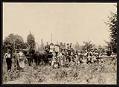
Hop pickers near Auburn, Washington, circa 1900
Brewers use the fruit of the hop plant to flavor beer. Beginning in the 1880s, hop growing brought great prosperity to western Washington state. In 1888 alone, over three quarters of a million pounds of hops were harvested in the area. The boom waned in the early 1890s when the fields were attacked repeatedly by an insect pest.This photo, taken…
ID Number:SHS6026
Date:Circa 1900
Photograph
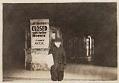
Newspaper boy with mask standing in front of closed theatre "closed" sign on box office, Seattle, 1918
In the fall of 1918, the worldwide influenza epidemic hit Seattle. The flu was sudden and deadly. The city's health commissioner banned dances and closed theaters, churches, and schools. At the height of the epidemic, anyone going out in public was required by law to wear a mask made of six layers of gauze. This was supposed to keep the…
ID Number:SHS6338B
Date:1918
Photograph
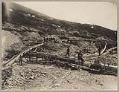
Miners and sluices on Bonanza Creek, circa 1898
Miners used water running through sluice boxes to wash the gold out of the pay dirt. Lumber for the sluice boxes was cut from the surrounding hills and finished in a nearby sawmill. As the hills were cleared, lumber became even more expensive. By the time this photo was taken, large mining companies had begun to replace small scale mining…
ID Number:SHS7300
Date:Circa 1898
Photograph
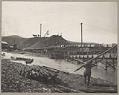
View of sluices and piles of gravel at Ophir, circa 1905
Gold strikes were made on Ophir Creek, near Nome, Alaska, in 1897. By 1905, the day of the individual miner had passed, giving way to larger scale industrial mining at Ophir and elsewhere.This photo, taken by Albert Kinne around 1905, shows the hoisting works at claim 14 at Ophir Creek. The hoists, possibly pulled by the horses (center left), lift…
ID Number:SHS7301
Date:Circa 1905
Photograph
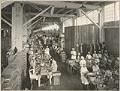
Women cleaning strawberries at Spokane Street terminal, Seattle, circa 1921
In 1921 the Port of Seattle completed the Spokane Street Terminal, with nearly 200,000 square feet of space and state-of-the-art cold storage facilities used for freezing, handling, and storing fish from Alaska and local produce until they were exported or sent to local markets. That same year, Puget Sound berry growers harvested 3,160 acres of strawberries, mainly for the processing…
ID Number:SHS7309
Date:Circa 1921