733 results for: Labor and Labor Unions
Photograph
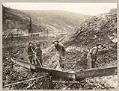
Manning a sluice at Bonanza Creek, circa 1898
Miners used water running through sluice boxes to wash the gold out of the pay dirt. Lumber for the sluice boxes was cut from nearby hills and finished in a nearby sawmill. As the hills were cleared, lumber became even more expensive. A typical two-man sluice was fifty feet long, ten inches tall, and twelve to fourteen inches across, with…
ID Number:SHS9548
Date:Circa 1898
Photograph
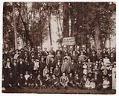
Brewers' Union picnic at River Park, 1894
Many Seattle-area labor unions held regular social and family events. On August 12, 1894, members of the Brewer's Union and their families gathered in River Park for their annual picnic. During the day, they assembled with their families for this group photograph. The photo was probably taken in King County, but the park's location has not yet been identified.
ID Number:SHS9785
Date:1894
Photograph
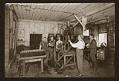
Bayview Brewery bottling room, 1902
The Seattle Brewing & Malting Company built its Bayview Brewery on Ninth Avenue South in 1890. The brewery's premium Rainier Beer and its other brews satisfied thirsts from the Alaska gold fields to California and across the Pacific to Asia.This photo, taken at Bayview Brewery in 1902, shows the what is probably the bottling room. Several brewery workers stand near…
ID Number:SHS9788
Date:1902
Photograph
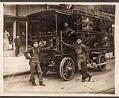
Three delivery men with Rainier beer truck, 1905
Sometime around 1905, the Seattle Brewing & Malting Company began delivering its Rainier Beer by truck instead of horse-drawn wagon. In this photo, taken in downtown Seattle around 1905, three delivery men pose by the Rainier Beer delivery truck. The men wear leather aprons to protect their clothing. The top of the truck is piled with wooden crates for carrying…
ID Number:SHS10559
Date:1905
Photograph
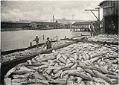
A Puget Sound salmon catch, circa 1900
The salmon canning industry started in the late 1860s along the Columbia River. By the 1890s, the fishing ground and market had shifted to Puget Sound. Seattle was the home base of the salmon fishing fleet for many years. In this photo, taken around 1900, workers unload salmon from barges at a Seattle cannery wharf south of downtown.
ID Number:SHS10593
Date:Circa 1900
Photograph
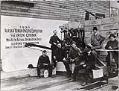
Automated salmon processing machine, "Iron Chink," Seattle, 1909
In 1902, machines called "Iron Chinks" started replacing the largely Chinese cannery workers who butchered and canned the fish. The use of a racial slur in the machine's name is one example of the discrimination faced by Chinese immigrants to the US. The name continued to be used into the mid-20th century. Today they are called butchering machines or iron…
ID Number:SHS10662
Date:1909
Photograph
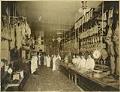
National Meat Company, Seattle, circa 1902
Seattle’s National Meat Company opened at 318 Main Street in 1902. According to an article in The Seattle Sunday Times, the facility consisted of “a well-appointed and attractively kept main floor and basement,” and its two delivery wagons “promptly deliver to all parts of the city.”In this image, Frank Jobson stands with his staff members in the retail shop’s interior.…
ID Number:SHS10674
Date:circa 1902
Photograph
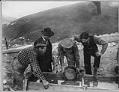
Panning for gold at Gold Hill, Yukon Territory, circa 1898
Miners used water running through sluices to wash the gold out of the pay dirt. Larger chunks of gold and gravel settled out along the uneven bottom of the sluice boxes. The smallest pieces of gold and dirt were washed to end of the sluice box where the gold was removed by panning.This photo, taken around 1898 by Asahel Curtis,…
ID Number:SHS11388
Date:Circa 1898
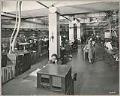
Photograph
PT&T operators working at Garfield Exchange, Seattle, 1951
Telephone service in Seattle began with 90 customers in 1883. One of Seattle's original service providers, Sunset Telephone-Telegraph Company (later Pacific Telephone & Telegraph Company, then AT&T) built a new exchange building in 1921 to help handle what was by then 83,347 customers, making half-a-million local telephone calls every day. The Garfield Exchange was built on Queen Anne Hill at…
ID Number:SHS11511
Date:1951
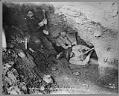
Photograph
Underground mining at Gold Hill, circa 1898
In Alaska and the Yukon, placer gold was found along ancient stream beds, some of which were twelve to forty feet underground at bedrock. The gold was frozen in the dirt or gravel. Miners chopped away at the frozen earth with picks or tried to thaw it with fires or steam machines. They "drifted" all winter, digging in the direction…
ID Number:SHS12491
Date:1900