584 results for: Alaska
Photograph
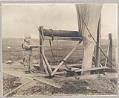
Child near mining equipment, Nome, August 30, 1906
Whole families traveled to the Yukon and Alaskan gold fields. Some couples met there and raised families. Many children worked with their parents on mining claims. It was a rough environment for children. Temperatures in Nome during the winter of 1899-1900 ranged from -35 to +35 degrees Fahrenheit with strong chilly winds.This photo of a child in Nome was taken…
ID Number:SHS565
Date:1906
Photograph
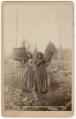
Indigenous women picking hops, Snoqualmie Hop Ranch, circa 1895
From the late 1860s to the early 1890s, hop farming was an important activity in the valleys of the Puget Sound region, including Puyallup, White River, and Snoqualmie. Indigenous workers came from throughout the Pacific Northwest, Canada, and Alaska (but especially from regional tribes like the Puyallup, Snoqualmie, Muckleshoot, Duwamish, Sammamish, Lummi, and Nisqually) as a seasonal labor force to…
ID Number:SHS1052
Date:Circa 1895
Photograph
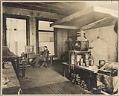
Office area and laboratory in U.S. Assay Office, circa 1903
Gold must be assayed in order to determine its purity, and therefore its value. After extensive lobbying by Seattle businessmen, the United States government opened an assay office in Seattle in July 1898. Many miners sold their gold to the government at the assay office which sent it to the Philadelphia mint for making gold coins.This photo shows the interior…
ID Number:SHS1230
Date:Circa 1903
Photograph
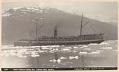
Steamer "Queen" and ice floes at Taku Inlet, 1897
Steamers carrying gold seekers north from Seattle during icy weather didn't always have an easy time of it. Alaska's Inland Passage could be tricky and dangerous, and channels weren't always marked.In this 1897 photo, the steamer "Queen" is stuck on a sandbar in Taku Inlet, southeast of Juneau. The vessel waited for six hours in the ice before it floated…
ID Number:SHS1512
Date:1897
Photograph
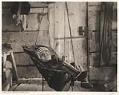
Infant asleep in a sling, Alaska, circa 1905
In this image, an infant wearing a cap covered with buttons sleeps in a birchbark sling rigged with a rocking mechanism. The style of the cap appears Tlingit, but the infant's moccasins and the sling are probably of Alaskan Athabaskan origin. Around the beginning of the 20th century, white photographers used photographs of Indigenous babies on commercial products, and this…
ID Number:SHS1765
Date:Circa 1905
Photograph
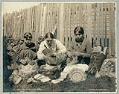
Tlingit women weaving baskets, Alaska, circa 1897
The Tlingit people have lived on the coast and islands of what is now southeastern Alaska since time immemorial. Tlingit society is organized into clans, which follow maternal descent. Fishing, gathering, and hunting were central to historic Tlingit lifeways - they used salmon, shellfish, seals, berries, deer, and other food sources. They used every part for different purposes, not wasting…
ID Number:SHS1766
Date:Circa 1897
Photograph
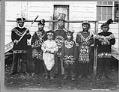
Chilkat people in dance costumes, Klukwan, Alaska, circa 1895
The Chilkat are a Tlingit tribe who have lived in and around their village of Klukwan on the Chilkat River, in southeastern Alaska since time immemorial. They lived on foods available on their lands as well as trading with other tribes on the Pacific coast and inland. Settlers came to Chilkat lands in large numbers in the early 20th century,…
ID Number:SHS1769
Date:Circa 1895
Photograph
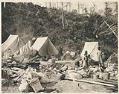
Camp of Auke Natives, Alaska, circa 1896
The Tlingit people have lived on the coast and islands of what is now southeastern Alaska since time immemorial. Tlingit society is organized into clans, which follow maternal descent. Fishing, gathering, and hunting were central to historic Tlingit lifeways - they used salmon, shellfish, seals, berries, deer, and other food sources. They used every part for different purposes, not wasting…
ID Number:SHS1772
Date:Circa 1896
Photograph
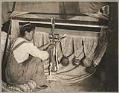
Woman weaving a Chilkat blanket, Alaska, circa 1904
The Chilkat are a Tlingit tribe who have lived in and around their village of Klukwan on the Chilkat River, in southeastern Alaska since time immemorial. They lived on foods available on their lands as well as trading with other tribes on the Pacific coast and inland. Settlers came to Chilkat lands in large numbers in the early 20th century,…
ID Number:SHS1773
Date:Circa 1904
Photograph
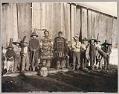
Group of Chilkat people in traditional dance costumes, Klukwan, Alaska, circa 1895
The Chilkat are a Tlingit tribe who have lived in and around their village of Klukwan on the Chilkat River, in southeastern Alaska since time immemorial. They lived on foods available on their lands as well as trading with other tribes on the Pacific coast and inland. Settlers came to Chilkat lands in large numbers in the early 20th century,…
ID Number:SHS1785
Date:Circa 1895