584 results for: Alaska
Photograph
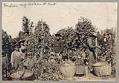
Indigenous men, women, and children working in hop field, Kent, circa 1895
From the late 1860s to the early 1890s, hop farming was an important activity in the valleys of the Puget Sound region, including Puyallup, White River, and Snoqualmie. Indigenous workers came from throughout the Pacific Northwest, Canada, and Alaska (but especially from regional tribes like the Puyallup, Snoqualmie, Muckleshoot, Duwamish, Sammamish, Lummi, and Nisqually) as a seasonal labor force to…
ID Number:SHS1975
Date:Circa 1895
Photograph
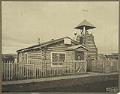
St. James Mission, Tanana, Alaska, circa 1900
St. James Mission was an Episcopal mission established in Alaska, near the confluence of the Tanana and Yukon Rivers. The point of land between the rivers had been a historic trading place for Athabascan peoples. Built over the years between 1887 and 1900, the site grew to include a school, hospital, and sawmill, as well as the reading room and…
ID Number:SHS2020
Date:Circa 1900
Photograph
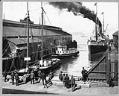
Steamship "Queen" and schooner at Seattle pier, circa 1898
So many people wanted to go north to the gold fields of the Klondike region that all sorts of boats and ships were pressed into service. Some were more seaworthy than others.This photo, taken in 1898 or 1899 shows a group of men at the Seattle waterfront looking at the steamer "Queen" (right) and a small wooden schooner (left). The…
ID Number:SHS2075
Date:Circa 1898
Photograph
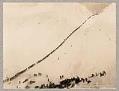
Packers ascending summit of Chilkoot Pass, 1898
The gold seekers climbed over 1,200 steps to reach the top of Chilkoot Pass where they crossed the border into Canada. The angle of climb was about 30 degrees, and the line could only move as fast as the slowest climber. Anyone who stopped to rest might wait hours to get back in line. The Northwest Mounted Police required that…
ID Number:SHS2246
Date:1898
Photograph
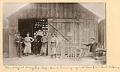
August Wenzel in front of his blacksmith shop at 7th and Pike, Seattle, 1889
August Joseph Wenzel (1856-1945) was born in Kingdom of Prussia, Germany, and moved to Seattle in 1888 with his wife Maria and their 8 children. He opened a blacksmith and cooper shop on Pike Street between Fourth Avenue and Fifth Avenue. Next door to the blacksmith shop he owned a wagon works shop and next to that a meat market.…
ID Number:SHS2303
Date:1889
Photograph
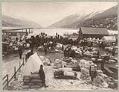
Freight yard at Dyea, circa 1898
By the fall of 1897, over 3,000 people had poured into the tiny settlement of Dyea, heading for the Klondike gold fields. At first, ships had to anchor well offshore. The harbor was narrow and had a twenty-foot tide. Klondike stampeders had paid to get to Dyea, but their passage didn't include unloading their supplies and taking them ashore.This photo…
ID Number:SHS2365
Date:Circa 1898
Photograph
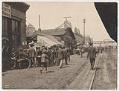
Railroad Avenue during the gold rush, circa 1898
Seattle's Railroad Avenue ran along the waterfront. During the peak gold rush period, from 1897 through about 1906, the avenue was busy with people headed to the Klondike and Nome gold fields. Merchants set up shops to sell supplies to the prospectors. Signs advertised last-minute purchases.This Anders Wilse photo shows Railroad Avenue (now Alaskan Way) in 1897 or 1898, during…
ID Number:SHS2500
Date:Circa 1898
Photograph
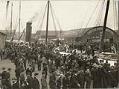
Crowd with steamship "Australia" at Seattle pier, circa 1898
Gold seekers streamed to Seattle by the thousands, eager to board ships bound for the Klondike gold fields. Seattle's shipping industry and waterfront businesses boomed during the gold rush. In March 1897, before the news of the Klondike gold finds reached Seattle, port records show that only 18 ships sailed to or from Seattle. In March 1898, with the gold…
ID Number:SHS2504
Date:Circa 1898
Photograph
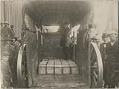
Crates of gold on the way to the Seattle assay office, circa 1902
Gold from the Nome and Klondike gold fields was often shipped to Seattle in wooden crates. Wagons waiting at the waterfront hauled the heavy shipment up the hill to the U. S. Assay Office on Ninth Avenue. This photo, probably taken between 1898 and 1906, shows a group of men and boys looking at a shipment of gold in the…
ID Number:SHS2505
Date:Circa 1902
Photograph
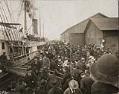
Steamship "Australia" loading at Seattle pier, circa 1898
The United States was in the grip of a nationwide economic depression in the 1890s. When the steamer "Portland" arrived in Seattle in July 1897 with more than a ton of Klondike gold, the city's depression ended. Pacific Northwest shipping companies were eager to profit from the gold rush. They scrambled to provide passenger and freight service to the Alaskan…
ID Number:SHS2506
Date:Circa 1898