417 results for: Indigenous Peoples
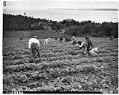
Photograph
Indigenous berry pickers on Vashon Island, June 1943
The United States' entry into World War II in December 1941 created labor shortages as many men left civilian jobs to join the military. On the West Coast, the shortage was exacerbated by the forced removal of Japanese Americans, many of whom were farmers. In the summer of 1943, the Vashon Island Packing Company hired 80 First Nations people from…
ID Number:PI23856
Date:1943
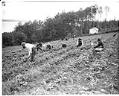
Photograph
Indigenous workers in a strawberry field, Vashon Island, June 1943
The United States' entry into World War II in December 1941 created labor shortages as many men left civilian jobs to join the military. On the West Coast, the shortage was exacerbated by the forced removal of Japanese Americans, many of whom were farmers.In the summer of 1943, the Vashon Island Packing Company hired 80 First Nations people from British…
ID Number:PI23857
Date:1943
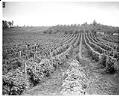
Photograph
Indigenous workers in berry field, Vashon Island, June 1943
The United States' entry into World War II in December 1941 created labor shortages as many men left civilian jobs to join the military. On the West Coast, the shortage was exacerbated by the forced removal of Japanese Americans, many of whom were farmers.In the summer of 1943, the Vashon Island Packing Company hired 80 First Nations people from British…
ID Number:PI23858
Date:1943
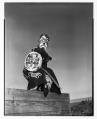
Photograph
Charlie Swan, Makah cultural leader, Neah Bay, August 1945
The Makah people of the northwest tip of the Olympic Peninsula refer to themselves as Kwih-dich-chuh-ahtx, which translates roughly to "the people who live by the rocks and seagulls." The early Makah were skilled mariners, using several types of canoes which they carved from western red cedar for various purposes - war, whaling, fishing, sealing, carrying cargo, and long voyages.…
ID Number:PI23865
Date:1945
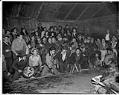
Photograph
Slahal game at the Swinomish smokehouse, January 22, 1946
The Swinomish are a Coast Salish group whose historic lands were in the Skagit and Samish River valleys as well as Whidbey, Camano, Fidalgo Islands and the San Juan Islands. They lived in large permanent villages during the winter, then spread out in spring and summer to gather resources – salmon from the rivers, shellfish from the coastline, cedar wood…
ID Number:PI23871
Date:1946
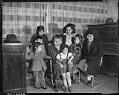
Photograph
Chief Jerry Kanim and his family, Snoqualmie, February 21, 1948
The Snoqualmie people are a Coast Salish group who have lived in the Snoqualmie River Valley since time immemorial. They made dugout canoes which they used to navigate the river and reach Puget Sound. Traditionally the Snoqualmie burned off the bottom lands of the Snoqualmie Valley to create open areas that ensured an abundance of edible plants for foraging as…
ID Number:PI23889
Date:1948
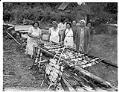
Photograph
Women cooking salmon, Muckleshoot Reservation, circa 1950
The Muckleshoot Indian Tribe is made up of descendants of the Duwamish and Upper Puyallup peoples who lived near Puget Sound and its associated waterways since time immemorial. Muckleshoot ancestors lived in villages that were tied together by marriage bonds, trade, shared ceremonies, and use of the same land. This network of interconnected villages extended far beyond the Upper Puyallup…
ID Number:PI23907
Date:Circa 1950
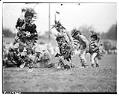
Photograph
Indigenous dancers fancy dancing at the Ellensburg Rodeo, September 1945
The first rodeo at Ellensburg, Washington, opened in September 1923. For many years, the "Indian Village" was one of the more popular attractions at the rodeo. There, Indigenous people from many tribes camped in teepees and put on dancing and riding performances. In 1945, 100 Yakama Natives camped and performed at the rodeo and rode in its parades. In this…
ID Number:PI25362
Date:1945
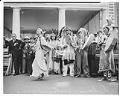
Photograph
Native American leaders performing at Victory Square, Seattle, August 15, 1942
Victory Square, on University Street between Fourth and Fifth Avenues, was the hub of Seattle's home front activities during World War II. Crowds gathered here for parades, war bond rallies and many other patriotic events.In the center of this photo, Tulalip Tribes leader Harriette “Hiahl-tsa” Shelton Dover dances as part of a Discovery Day event held by the Alaska-Yukon Sourdoughs…
ID Number:PI28263
Date:1942
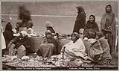
Photograph
Indigenous women merchants at Treadwell Mines on Douglas Island, Alaska, July 1897
The Tlingit people have lived on the coast and islands of what is now southeastern Alaska since time immemorial. Tlingit society is organized into clans, which follow maternal descent. Fishing, gathering, and hunting were central to historic Tlingit lifeways – they used salmon, shellfish, seals, berries, deer, and other food sources. They used every part for different purposes, not wasting…
ID Number:SHS9
Date:1897