417 results for: Indigenous Peoples
Photograph
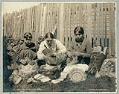
Tlingit women weaving baskets, Alaska, circa 1897
The Tlingit people have lived on the coast and islands of what is now southeastern Alaska since time immemorial. Tlingit society is organized into clans, which follow maternal descent. Fishing, gathering, and hunting were central to historic Tlingit lifeways - they used salmon, shellfish, seals, berries, deer, and other food sources. They used every part for different purposes, not wasting…
ID Number:SHS1766
Date:Circa 1897
Photograph
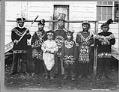
Chilkat people in dance costumes, Klukwan, Alaska, circa 1895
The Chilkat are a Tlingit tribe who have lived in and around their village of Klukwan on the Chilkat River, in southeastern Alaska since time immemorial. They lived on foods available on their lands as well as trading with other tribes on the Pacific coast and inland. Settlers came to Chilkat lands in large numbers in the early 20th century,…
ID Number:SHS1769
Date:Circa 1895
Photograph
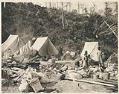
Camp of Auke Natives, Alaska, circa 1896
The Tlingit people have lived on the coast and islands of what is now southeastern Alaska since time immemorial. Tlingit society is organized into clans, which follow maternal descent. Fishing, gathering, and hunting were central to historic Tlingit lifeways - they used salmon, shellfish, seals, berries, deer, and other food sources. They used every part for different purposes, not wasting…
ID Number:SHS1772
Date:Circa 1896
Photograph
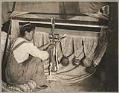
Woman weaving a Chilkat blanket, Alaska, circa 1904
The Chilkat are a Tlingit tribe who have lived in and around their village of Klukwan on the Chilkat River, in southeastern Alaska since time immemorial. They lived on foods available on their lands as well as trading with other tribes on the Pacific coast and inland. Settlers came to Chilkat lands in large numbers in the early 20th century,…
ID Number:SHS1773
Date:Circa 1904
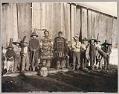
Photograph
Group of Chilkat people in traditional dance costumes, Klukwan, Alaska, circa 1895
The Chilkat are a Tlingit tribe who have lived in and around their village of Klukwan on the Chilkat River, in southeastern Alaska since time immemorial. They lived on foods available on their lands as well as trading with other tribes on the Pacific coast and inland. Settlers came to Chilkat lands in large numbers in the early 20th century,…
ID Number:SHS1785
Date:Circa 1895
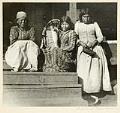
Photograph
Indigenous women and infant on porch, circa 1900
Mabel Elizabeth “Lizzie May” (Denny) Thompson (1875-1968) was the daughter of Orion Orville Denny (1853-1916) and Elva Flowers (Coulter) Denny Richmond (1858-1919). Mrs. Thompson was an active participant in Seattle society; she was a founding member of the Seattle Historical Society (now MOHAI), and a member of the Daughters of the Pioneers, the Mayflower Society, and the Daughters of the…
ID Number:SHS1898
Date:Circa 1900
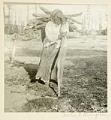
Photograph
Indigenous woman carrying firewood, circa 1900
Mabel Elizabeth “Lizzie May” (Denny) Thompson (1875-1968) was the daughter of Orion Orville Denny (1853-1916), and Elva Flowers (Coulter) Denny Richmond (1858-1919). Mrs. Thompson was an active participant in Seattle society; she was a founding member of the Seattle Historical Society (now MOHAI), and a member of the Daughters of the Pioneers, the Mayflower Society, and the Daughters of the…
ID Number:SHS1899
Date:Circa 1900
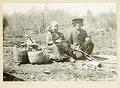
Photograph
Chesheeahud and Tleebuleetsa near campfire, circa 1900
Chesheeahud was a Duwamish chief and guide to the lakes and rivers around what is now Seattle living between the mid-19th and early 20th centuries. He led a village called hehs-KWEE-kweel (meaning Skate), at the south edge of the mouth of Union Bay onto Lake Washington. hehs-KWEE-kweel was near a vital portage used by the Duwamish between Lake Union and…
ID Number:SHS1900
Date:Circa 1900
Photograph
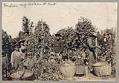
Indigenous men, women, and children working in hop field, Kent, circa 1895
From the late 1860s to the early 1890s, hop farming was an important activity in the valleys of the Puget Sound region, including Puyallup, White River, and Snoqualmie. Indigenous workers came from throughout the Pacific Northwest, Canada, and Alaska (but especially from regional tribes like the Puyallup, Snoqualmie, Muckleshoot, Duwamish, Sammamish, Lummi, and Nisqually) as a seasonal labor force to…
ID Number:SHS1975
Date:Circa 1895
Photograph
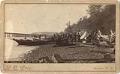
Native camp on the beach, Seattle, circa 1885
In 1865 the Board of Trustees of Seattle passed Ordinance No. 5 banning Indigenous people from living in the city unless they worked for a non-Indigenous resident and lived on their employer’s property. Despite this attempt to enforce separation between Indigenous people and the settlers, Seattle depended on Indigenous people. Settlers relied on Native people for domestic work and for…
ID Number:SHS2174
Date:Circa 1885