417 results for: Indigenous Peoples
Photograph
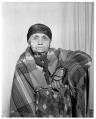
siastenu at the Seattle Post-Intelligencer office, Seattle, November 16, 1940
siastenu (1857-1958), also named Ruth Sehome Shelton, was born in 1857 on Guemes Island, in one of the last remaining Samish longhouses. She was descended from the Dungeness Klallam, the Lummi, and the Samish peoples. siastenu spread the oral histories of the Coast Salish peoples and carried knowledge of that history into the 20th century. In 1889, siastenu married Wheakadim…
ID Number:PI23839
Date:1940
Photograph
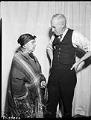
siastenu and Ed Dalby at the Seattle Post-Intelligencer offices, November 16, 1940
siastenu (1857-1958), also named Ruth Sehome Shelton, was born in 1857 on Guemes Island, in one of the last remaining Samish longhouses. She was descended from the Dungeness Klallam, the Lummi, and the Samish peoples. siastenu spread the oral histories of the Coast Salish peoples and carried knowledge of that history into the 20th century. In 1889, siastenu married Wheakadim…
ID Number:PI23840
Date:1940
Photograph
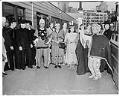
Makah dancing at Colman Dock, Seattle, March 22, 1941
The Makah people of the northwest tip of the Olympic Peninsula refer to themselves as Kwih-dich-chuh-ahtx, which translates roughly to "the people who live by the rocks and seagulls." The early Makah were skilled mariners, using several types of canoes which they carved from western red cedar for various purposes - war, whaling, fishing, sealing, carrying cargo, and long voyages.…
ID Number:PI23844
Date:1941
Photograph
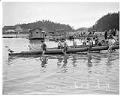
Indigenous rowers carrying racing canoes into water, La Conner, November 29, 1941
In 1941, Swinomish leader Tandy Wilbur arranged a competition between two Indigenous racing canoes and two shells crewed by the University of Washington Huskies. Wilbur had recently become chairman of the Swinomish Tribal Community, and he intended the race to help form bonds among the several different tribal groups living together on the Swinomish reservation. He also wanted to use…
ID Number:PI23846
Date:1941
Photograph
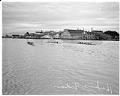
Indigenous canoes and Husky crew shell racing, La Conner, November 29, 1941
In 1941, Swinomish leader Tandy Wilbur arranged a competition between two Indigenous racing canoes and two shells crewed by the University of Washington Huskies. Wilbur had recently become chairman of the Swinomish Tribal Community, and he intended the race to help form bonds among the several different tribal groups living together on the Swinomish reservation. He also wanted to use…
ID Number:PI23847
Date:1941
Photograph
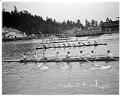
Husky crew and Indigenous canoe race, La Conner, November 29, 1941
In 1941, Swinomish leader Tandy Wilbur arranged a competition between two Indigenous racing canoes and two shells crewed by the University of Washington Huskies. Wilbur had recently become chairman of the Swinomish Tribal Community, and he intended the race to help form bonds among the several different tribal groups living together on the Swinomish reservation. He also wanted to use…
ID Number:PI23848
Date:1941
Photograph
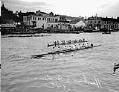
Husky crew and Indigenous canoe race, La Conner, November 29, 1941
In 1941, Swinomish leader Tandy Wilbur arranged a competition between two Indigenous racing canoes and two shells crewed by the University of Washington Huskies. Wilbur had recently become chairman of the Swinomish Tribal Community, and he intended the race to help form bonds among the several different tribal groups living together on the Swinomish reservation. He also wanted to use…
ID Number:PI23850
Date:1941
Photograph
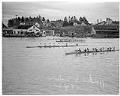
Husky crew and Indigenous canoe race, La Conner, November 29, 1941
In 1941, Swinomish leader Tandy Wilbur arranged a competition between two Indigenous racing canoes and two shells crewed by the University of Washington Huskies. Wilbur had recently become chairman of the Swinomish Tribal Community, and he intended the race to help form bonds among the several different tribal groups living together on the Swinomish reservation. He also wanted to use…
ID Number:PI23851
Date:1941
Photograph
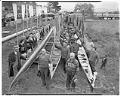
Husky crew team with shells and Indigenous rowers with canoes, La Connor, November 29, 1941
In 1941, Swinomish leader Tandy Wilbur arranged a competition between two Indigenous racing canoes and two shells crewed by the University of Washington Huskies. Wilbur had recently become chairman of the Swinomish Tribal Community, and he intended the race to help form bonds among the several different tribal groups living together on the Swinomish reservation. He also wanted to use…
ID Number:PI23853
Date:1941
Photograph
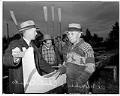
Charlie Edwards and Al Ulbrickson standing by canoe "Susie Q", La Conner, November 29, 1941
In 1941, Swinomish leader Tandy Wilbur arranged a competition between two Indigenous racing canoes and two shells crewed by the University of Washington Huskies. Wilbur had recently become chairman of the Swinomish Tribal Community, and he intended the race to help form bonds among the several different tribal groups living together on the Swinomish reservation. He also wanted to use…
ID Number:PI23854
Date:1941