121 results for: Japanese American Incarceration
Photograph
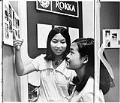
Young women looking at photos at "Pride and Shame" exhibit, Seattle, July 19, 1970
In the summer of 1970, the Seattle Japanese American Citizens League (JACL) organized an exhibit titled "Pride and Shame" that chronicled the experience of Japanese and Japanese Americans in the Pacific Northwest from the late 1880s to 1970. First shown at the Museum of History & Industy (MOHAI), the exhibit was in part a community celebration, with displays about Japanese…
ID Number:2000.107.098.18.04
Date:1970
Photograph
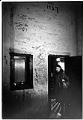
Yoshiko Mita at stage door of old Nippon Kan Theater, Seattle, February 14, 1979
In this photo, Japanese actress Yoshiko Mita stands in the stage door of the old Nippon Kan (Japanese Hall) Theater on S. Washington Street in Seattle's Chinatown International District. The graffitied walls are covered with names and dates that predate WWII. Built with funds from the community, the theater opened in 1909, and served as the cultural center of Seattle's…
ID Number:2000.107.098.19.03
Date:1979
Photograph
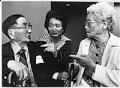
Incarceration camp survivors at reparations hearing, Seattle, September 11, 1981
The Commission on Wartime Relocation and Internment of Civilians (CWRIC) was appointed by Congress in 1980 to conduct an official study into Executive Order 9066 and the forced removal and incarceration of Japanese Americans during World War II. The CWRIC held public hearings in several U.S. cities, including Seattle, and the testimonies were recorded. In 1983, the Commission issued a…
ID Number:2000.107.098.19.08
Date:1981
Photograph
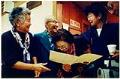
Kichisaburo Ishimitsu and friends at redress ceremony, Seattle, October 14, 1990
The Japanese American Redress Movement refers to the efforts, from the 1940s through the 1990s, to obtain the restitution of civil rights, monetary compensation, and an apology from the U.S. government for the forced removal and incarceration of Japanese Americans during World War II. Japanese Americans protested their mass incarceration with defiance and protests while living at the camps, and…
ID Number:2000.107.098.20.02
Date:1990
Photograph
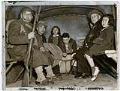
Japanese Americans from Bainbridge Island in back of military truck, March 31, 1942
In this image Seijiro Nakamura, second from left, and his children are shown seated in an army truck with Private Tony Bova. The elderly man on the right is Kihachi Hirakawa, pastor of the Japanese church at Winslow. The minister had held his final services three days before in the church he built with is own labor more than forty…
ID Number:2000.107.098.21.01
Date:1942
Photograph
Bob and Yoshi Hosokawa waiting for bus during forced removal, 1942
This image shows Bob and Yoshi Hosokawa, who had been married three months, awaiting their turn to board the bus for the train that will carry them to the Minidoka War Relocation Center in southern Idaho, where they would be incarcerated until 1945.On February 19, 1942, shortly after Japan's attack on Pearl Harbor and United States entry into WWII, President…
ID Number:2000.107.098.22.01
Date:1942
Photograph
Child waiting to be taken to an incarceration camp during WWII, November 30, 1942
On February 19, 1942, shortly after Japan's attack on Pearl Harbor and United States entry into WWII, President Franklin Roosevelt signed Executive Order 9066, calling for the exclusion of all civilians of Japanese descent from "designated military areas." More than 9,000 Japanese and Japanese American people living in the Pacific Northwest were forced into incarceration at camps in Idaho and…
ID Number:2000.107.098.22.02
Date:1942
Photograph
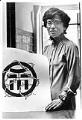
Cherry Kinoshita holding symbol of Japanese American incarceration, Seattle, July 22, 1988
Born in Seattle, Cherry Tanaka Kinoshita (1923-2008) was incarcerated at Minidoka Relocation Center during World War II. She married, returned to Seattle in 1950, and raised a family. Kinoshita was particularly active in efforts to obtain an apology and reparations from the United States government for the wartime incarceration of Japanese Americans. In 1980, Kinoshita became a founder of the…
ID Number:2000.107.105.35.01
Date:1988
Photograph
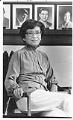
Cherry Kinoshita, Seattle, July 22, 1988
Born in Seattle, Cherry Tanaka Kinoshita (1923-2008) was interned at Minidoka Relocation Center during World War II. She married, returned to Seattle in 1950, and raised a family. Kinoshita was particularly active in efforts obtain an apology and reparations from the United States government for the wartime incarceration of Japanese Americans. In 1980, Kinoshita became a founder of the Washington…
ID Number:2000.107.105.35.02
Date:1988
Photograph
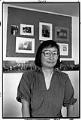
Chizuko Omori at home in front of incarceration camp photos, Seattle, August 10, 1988
Chizuko May Omori (b. 1930), a young Nisei girl, was living with her family in Oceanside, California when World War II broke out. After the bombing of Pearl Harbor, Omori and her family were incarcerated in Poston concentration camp (known officially as the Colorado River Relocation Center) in Yuma County, Arizona. After release from the camp, Omori lived for a…
ID Number:2000.107.136.07.01
Date:1988