121 results for: Japanese American Incarceration
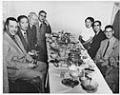
Photograph
Kohga Photographic Society at the Maneki Café, Seattle, circa 1949
Seattle photographer Al Smith began taking photographs as a hobby as a teenager and continued documenting his experiences, both abroad and at home, throughout his life. Best known for his photos of Seattle's Jackson Street area jazz clubs and musicians, Smith also photographed family, friends, and local people in their everyday lives.After World War II, Al Smith was invited to…
ID Number:2014.49.Box31Folder001004
Date:1949
Audio recording
Oral history interview with Shirley and Shoji Kino, February 27, 2007
Interview with Shirley and Shoji Kino conducted by Lorraine McConaghy at the interviewees' home in Renton for the Speaking of Seattle Oral History Project on February 27, 2007. In the interview, the Kinos' discuss their experiences before, during, and after Japanese American incarceration camps during World War II.
ID Number:2019.35.1.36
Date:2007
Videorecording
Oral history interview with Junkoh Harui, April 20, 2004
Interview with Junkoh Harui, the owner of Bainbridge Gardens on Bainbridge Island, with Julie Kressen on April 20, 2004, for the Agriculture Oral History Project. Bainbridge Gardens was started in 1911 by Harui's father and uncle. In 1941, they were forced to leave to Moses Lake during World War II. In 1958, Harui and his wife, Chris, opened the Island's…
ID Number:2019.35.8.6
Date:2004
Videorecording
Oral history interview with Tomio Moriguchi, April 20, 2010
Interview with Tomio Moriguchi conducted by Marsha King at KCTS Studios in Seattle for the Experienced Leaders Oral History Project in April 2010. Moriguchi was the CEO of the Uwajimaya supermarket chain in Seattle from 1965 to 2007. Topics discussed include his family's incarceration during World War II, the family business, and his advocacy work.
ID Number:2019.35.16.13
Date:2010
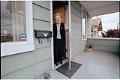
Photograph
Fumiko Hayashida at her home, Seattle, March 16, 2001
Fumiko Hayashida (1911-2014), was one of the first Japanese Americans to be incarcerated during World War II. Her parents were berry farmers on Bainbridge Island, and she married another berry farmer, Saburo Hayashida. On March 30, 1942, 227 Bainbridge Island residents of Japanese descent, including Hayashida, her husband, and their two children, were forcibly removed from their homes. Hayashida and…
ID Number:2020.42.4.46.01.24
Date:2001
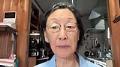
Videorecording
Oral history interview with Laura Lee Kusaka, August 19, 2024
Interview with Laura Lee Kusaka by the 2024 MOHAI Curator's Fellow Polly Yorioka about Kusaka's mother Massie "Yutani" Tomita, including her life in Seattle’s Japanese American community, the Yutani family’s immigration story, and life in Seattle before incarceration during the second World War. The interview is conducted by Yorioka in order to learn more about the Boys’ and Girls’ Day…
ID Number:2024.52.1
Date:2024
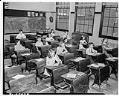
Photograph
Bailey Gatzert School classroom after incarceration of Japanese Americans, Seattle, 1942
Many of the students who attended Bailey Gatzert School in the 1920s and 1930s came from either Chinatown or Niponmachi (Japan Town). The school lost about 45 percent of its student body when Japanese Americans were incarcerated in camps in 1942. Handwritten on negative: Bailey Gatzert school. Handwritten on sleeve: Seattle - schools - Gatzert, Bailey (students).Date photograph was filed…
ID Number:PI25525
Date:1942
Photograph
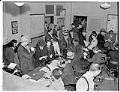
Japanese Americans surrendering equipment to police, Seattle, December 29, 1941
On February 19, 1942, shortly after Japan's attack on Pearl Harbor and United States entry into WWII, President Franklin Roosevelt signed Executive Order 9066, calling for the exclusion of all civilians of Japanese descent from "designated military areas." More than 9,000 Japanese and Japanese American people living in the Pacific Northwest were forced into incarceration at camps in Idaho and…
ID Number:PI28030
Date:1941
Photograph
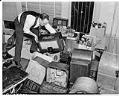
Man stacking radios surrendered by Japanese Americans, Seattle, December 29, 1941
On February 19, 1942, shortly after Japan's attack on Pearl Harbor and United States entry into WWII, President Franklin Roosevelt signed Executive Order 9066, calling for the exclusion of all civilians of Japanese descent from "designated military areas." More than 9,000 Japanese and Japanese American people living in the Pacific Northwest were forced into incarceration at camps in Idaho and…
ID Number:PI28032
Date:1942
Photograph
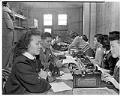
Japanese Americans registering for exclusion, Seattle, 1942
Shortly after the Japanese attacked Pearl Harbor, President Franklin Roosevelt signed Executive Order 9066, calling for the exclusion of all Japanese and Japanese Americans from "designated military areas." Although the United States was at war with Germany and Italy, few Italian and German Americans were placed in incarceration camps.This March 1942 photo shows Japanese Americans registering at the Seattle chapter…
ID Number:PI28033
Date:1942