3246 results for: Seattle Post-Intelligencer
Photograph
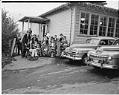
Group in front of school for children with disabilities, Seattle, 1948
Written on original envelope: Seattle - schools - spastic, with Charles A. Lawless, Mrs. Norman CleinSubject headings for envelope group: Handicapped children - educationWritten on negative: Spastic SchoolSubject headings for individual negative: TaxicabsOriginal title: Handicapped, Taxi cab drivers and children in front of school for handicapped, SeattleDate photograph was filed at the Seattle Post-Intelligencer (date of photograph and file date…
ID Number:PI23207
Date:1948
Photograph
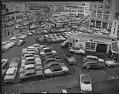
Full downtown parking lot during Christmas shopping season, Seattle, 1954
The day after Thanksgiving has always been a big shopping day in Seattle. Here at the intersection of Westlake Avenue and 7th Avenue shoppers have filled up the parking lots close to the downtown stores. Signs in image read: Mobilgas - Mobiltires, Mobilubrication - Parking Office - Two hours free parking with lubrication. Ready now! - Motorola Color TV. Olympia.…
ID Number:PI23269
Date:1954
Photograph
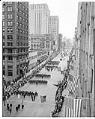
Independence Day parade on Second Avenue, Seattle, July 4, 1938
Over 6,000 people marched in Seattle's 1938 Independence Day parade. Military units and civic groups marched down Second Avenue to Yesler Way, then up to Fourth Avenue and back to Virginia Street. The Seattle Post-Intelligencer estimated that tens of thousands of spectators crowded the downtown area, standing 10 to 20 deep along the parade route.Here, American flags hang from the…
ID Number:PI23277
Date:1938
Photograph
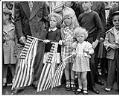
Children watching Independence Day parade, July 4, 1947
Seattle's 1947 July 4th holiday began with a military parade and a flyover of B-29 bombers and naval planes. The Seattle Post-Intelligencer estimated that the crowd of spectators numbered in the tens of thousands as the parade wound its way south along Second Avenue and north again on Third Avenue. The 1947 holiday also celebrated the new independence of the…
ID Number:PI23314
Date:1947
Photograph
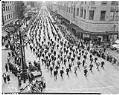
Labor Day Parade on Fourth Avenue, September 2, 1940
On September 2, 1940, bands, floats and marching union members joined in Seattle's Labor Day parade. A 40-piece band and more than 1,000 members of the International Longshoremen & Warehousemen's Union Local 1-19 led the parade, followed by groups representing printers, airplane mechanics, fishermen, shingle weavers, post office clerks and many other workers.In this photo, taken during the 1940 Labor…
ID Number:PI23358
Date:1940
Photograph
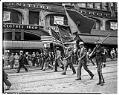
Spanish-American War veterans in Memorial Day parade, Seattle, May 30, 1940
On May 30, 1940, Seattle area veterans of the Civil War, Spanish American War, and World War I held ceremonies of remembrance and marched in the Memorial Day parade. They gathered on Second Avenue at Virginia Street, moved down Second Avenue to Yesler Way and then marched back north on Fourth Avenue. National guard units, cadet corps, patriotic groups, Red…
ID Number:PI23376
Date:1940
Photograph
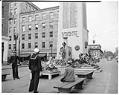
War memorial in Victory Square, Seattle, 1946
Memorial reads: We here highly resolve that these dead shall not have died in vain. -Lincoln.Handwritten on negative: Victory Square.Handwritten on sleeve: Memorial Day - Victory Square.Date photograph was filed at the Seattle Post-Intelligencer (date of photograph and file date may differ by a month or more): May 31, 1946.
ID Number:PI23390
Date:1946
Photograph
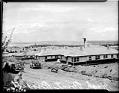
High Point housing project, July 1942
When the United States entered World War II in December 1941, workers were already pouring into Seattle to work at Boeing and other war industries. The Seattle Housing Authority rushed to complete High Point in West Seattle to house some of the war workers. Some 650 carpenters and other laborers built 700 homes, mainly duplexes.This July 1942 shows the High…
ID Number:PI23696
Date:1942
Photograph
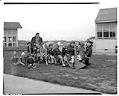
Child care center at High Point housing project, April 1942
Many people came to the Seattle area during World War II to work in the shipyards and other war industries. Some of these men and women lived at the High Point housing project in West Seattle. Child care was a problem for working mothers. Many of High Point's young children were looked after at the community's child care center.This April…
ID Number:PI23697
Date:1942
Photograph
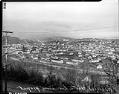
Rainier Vista Housing Project, Seattle, 1941
The Rainier Vista Housing Project was built to house workers in Seattle's war industries. After the war, veterans moved into the development. It was once again used for defense industry workers during the Korean War. In 1953, the Seattle Housing Authority took over the development. Handwritten on negative: Rainier Vista housing project.Handwritten on sleeve: Seattle - housing projects - Rainier…
ID Number:PI23703
Date:1941