3246 results for: Seattle Post-Intelligencer
Photograph
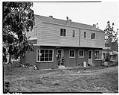
Sand Point Housing Project, Seattle, 1941
During World War II, the Navy built temporary officers quarters on the south end of the Sand Point Naval Air Station. The University of Washington took over the housing in 1957, renting the units to married students at low rates. The buildings were torn down in 2000. Handwritten on negative: Sand Point Housing.Handwritten on sleeve: Seattle - housing projects -…
ID Number:PI23714
Date:1941
Photograph
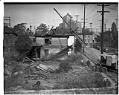
Demolition for Yesler Terrace housing project, October 7, 1940
On the morning of October 7, 1940, workers from the Seattle Housing Authority began to clear a 40-block area on First Hill. Over the protests of many residents, cranes and bulldozers demolished substandard housing to make room for Yesler Terrace, Seattle's first public housing project. Some 1,000 people had to be relocated until Yesler Terrace was completed.This photo, taken on…
ID Number:PI23718
Date:1940
Photograph
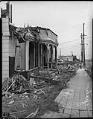
Houses being demolished for Yesler Terrace housing project, Seattle, 1940
Opened in 1940, Yesler Terrace was Seattle's first public housing project. The project had an integrated housing policy, which was somewhat unusual at that time. Handwritten on negative: Yesler housing project.Handwritten on sleeve: Seattle - housing projects - Yesler (wrecking old houses).Date photograph was filed at the Seattle Post-Intelligencer (date of photograph and file date may differ by a month…
ID Number:PI23720
Date:1940
Photograph
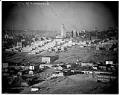
Yesler Terrace housing project, Seattle, 1941
Opened in 1940, Yesler Terrace was Seattle's first public housing project. The project had an integrated housing policy, which was somewhat unusual at that time. Handwritten on negative: Yesler housing.Handwritten on sleeve: Seattle - housing projects - Yesler.Date photograph was filed at the Seattle Post-Intelligencer (date of photograph and file date may differ by a month or more): December 27,…
ID Number:PI23736
Date:1941
Photograph
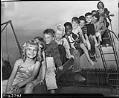
Children on slide at Yesler Terrace playground, Seattle, 1942
Yesler Terrace had an integrated housing policy from its beginnings, and today is an extremely diverse community. Handwritten on negative: Yesler project playfield.Handwritten on sleeve: Seattle - playfields - Yesler project.Date photograph was filed at the Seattle Post-Intelligencer (date of photograph and file date may differ by a month or more): June 22, 1942.
ID Number:PI23743
Date:1942
Photograph
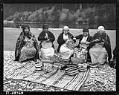
Indigenous women making baskets, Olympic Peninsula, 1926
The women from coastal Washington's Indigenous tribes are known for their basketry. They made twined, coiled, and plaited baskets for gathering clams and berries, storing and serving food, and many other purposes. Basketry techniques were also used for hats and other clothing. At the start of the 20th century, Indigenous artists in the Pacific Northwest were making baskets specifically for…
ID Number:PI23768
Date:1926
Photograph
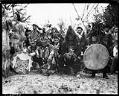
Indigenous group in ceremonial dress, Seattle, 1931
This image shows a group of Indigenous people dressed in elaborate ceremonial dress in the summer of 1931. It is possibly in connection with a display of Northwest Indigenous culture at the Seattle Exposition and Outdoor Show, which included a war dance demonstration every evening. The two men on the right wear feather headgear typical of Coast Salish spirit dancers.…
ID Number:PI23790
Date:1931
Photograph
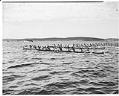
Canoe race at Coupeville festival, August 9, 1936
In 1936, the Coupeville Indian Water Festival culminated in a race of traditional canoes crewed by Indigenous people from Washington and British Columbia. Eleven canoes started the three-mile race in Penn's Cove on August 9, 1936, but only eight managed to finish. High winds caused three canoes to sink; the Lone Eagle from the Lummi Reservation sank only a few…
ID Number:PI23809
Date:1936
Photograph
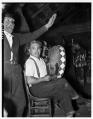
Swinomish drummer and singer at the Treaty Day observance, January 22, 1939
The Swinomish are a Coast Salish group whose historic lands were in the Skagit and Samish River valleys as well as Whidbey, Camano, Fidalgo Islands, and the San Juan Islands. They lived in large permanent villages during the winter, then spread out in spring and summer to gather resources – salmon from the rivers, shellfish from the coastline, cedar wood…
ID Number:PI23822
Date:1939
Photograph
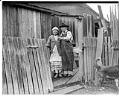
George and Mary Adams standing outside their home, Port Gamble Reservation, February 1939
In February 1939, the representatives of the Port Gamble band of the Clallam (now S’Klallam) people invited a Seattle Post-Intelligencer reporter and photographer to come to their village south of Hansville on the Olympic Peninsula. Chairman of the tribe’s governing committee Benny George, along with his aid Jackson and Rev. Karl Leonard of Bremerton, had been in contact with the…
ID Number:PI23825
Date:1939