185 results for: Coast Salish Peoples
Photograph
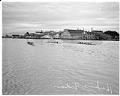
Indigenous canoes and Husky crew shell racing, La Conner, November 29, 1941
In 1941, Swinomish leader Tandy Wilbur arranged a competition between two Indigenous racing canoes and two shells crewed by the University of Washington Huskies. Wilbur had recently become chairman of the Swinomish Tribal Community, and he intended the race to help form bonds among the several different tribal groups living together on the Swinomish reservation. He also wanted to use…
ID Number:PI23847
Date:1941
Photograph
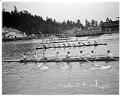
Husky crew and Indigenous canoe race, La Conner, November 29, 1941
In 1941, Swinomish leader Tandy Wilbur arranged a competition between two Indigenous racing canoes and two shells crewed by the University of Washington Huskies. Wilbur had recently become chairman of the Swinomish Tribal Community, and he intended the race to help form bonds among the several different tribal groups living together on the Swinomish reservation. He also wanted to use…
ID Number:PI23848
Date:1941
Photograph
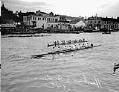
Husky crew and Indigenous canoe race, La Conner, November 29, 1941
In 1941, Swinomish leader Tandy Wilbur arranged a competition between two Indigenous racing canoes and two shells crewed by the University of Washington Huskies. Wilbur had recently become chairman of the Swinomish Tribal Community, and he intended the race to help form bonds among the several different tribal groups living together on the Swinomish reservation. He also wanted to use…
ID Number:PI23850
Date:1941
Photograph
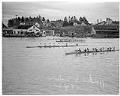
Husky crew and Indigenous canoe race, La Conner, November 29, 1941
In 1941, Swinomish leader Tandy Wilbur arranged a competition between two Indigenous racing canoes and two shells crewed by the University of Washington Huskies. Wilbur had recently become chairman of the Swinomish Tribal Community, and he intended the race to help form bonds among the several different tribal groups living together on the Swinomish reservation. He also wanted to use…
ID Number:PI23851
Date:1941
Photograph
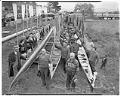
Husky crew team with shells and Indigenous rowers with canoes, La Connor, November 29, 1941
In 1941, Swinomish leader Tandy Wilbur arranged a competition between two Indigenous racing canoes and two shells crewed by the University of Washington Huskies. Wilbur had recently become chairman of the Swinomish Tribal Community, and he intended the race to help form bonds among the several different tribal groups living together on the Swinomish reservation. He also wanted to use…
ID Number:PI23853
Date:1941
Photograph
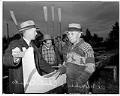
Charlie Edwards and Al Ulbrickson standing by canoe "Susie Q", La Conner, November 29, 1941
In 1941, Swinomish leader Tandy Wilbur arranged a competition between two Indigenous racing canoes and two shells crewed by the University of Washington Huskies. Wilbur had recently become chairman of the Swinomish Tribal Community, and he intended the race to help form bonds among the several different tribal groups living together on the Swinomish reservation. He also wanted to use…
ID Number:PI23854
Date:1941
Photograph
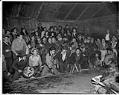
Slahal game at the Swinomish smokehouse, January 22, 1946
The Swinomish are a Coast Salish group whose historic lands were in the Skagit and Samish River valleys as well as Whidbey, Camano, Fidalgo Islands and the San Juan Islands. They lived in large permanent villages during the winter, then spread out in spring and summer to gather resources – salmon from the rivers, shellfish from the coastline, cedar wood…
ID Number:PI23871
Date:1946
Photograph
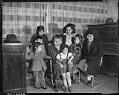
Chief Jerry Kanim and his family, Snoqualmie, February 21, 1948
The Snoqualmie people are a Coast Salish group who have lived in the Snoqualmie River Valley since time immemorial. They made dugout canoes which they used to navigate the river and reach Puget Sound. Traditionally the Snoqualmie burned off the bottom lands of the Snoqualmie Valley to create open areas that ensured an abundance of edible plants for foraging as…
ID Number:PI23889
Date:1948
Photograph
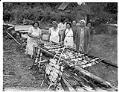
Women cooking salmon, Muckleshoot Reservation, circa 1950
The Muckleshoot Indian Tribe is made up of descendants of the Duwamish and Upper Puyallup peoples who lived near Puget Sound and its associated waterways since time immemorial. Muckleshoot ancestors lived in villages that were tied together by marriage bonds, trade, shared ceremonies, and use of the same land. This network of interconnected villages extended far beyond the Upper Puyallup…
ID Number:PI23907
Date:Circa 1950
Photograph
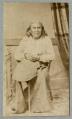
Chief Si'ahl (Chief Seattle), 1864
Chief Si'ahl, known to settlers as Chief Seattle, became the leader of the Suquamish and Duwamish peoples sometime around 1810. When settlers started moving to the Elliott Bay area in the 1850s, Chief Si'ahl stayed friendly to the newcomers and urged his people to do the same. The city of Seattle was named for him.This 1864 portrait of Chief Si'ahl…
ID Number:SHS67
Date:1864