185 results for: Coast Salish Peoples
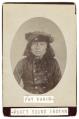
Photograph
Pat Kanim, Snoqualmie Chief, circa 1855
The Snoqualmie people are a Coast Salish group who have lived in the Snoqualmie River Valley since time immemorial. They made dugout canoes which they used to navigate the river and reach Puget Sound. Traditionally the Snoqualmie burned off the bottom lands of the Snoqualmie Valley to create open areas that ensured an abundance of edible plants for foraging as…
ID Number:SHS1679
Date:Circa 1855
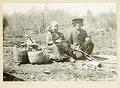
Photograph
Chesheeahud and Tleebuleetsa near campfire, circa 1900
Chesheeahud was a Duwamish chief and guide to the lakes and rivers around what is now Seattle living between the mid-19th and early 20th centuries. He led a village called hehs-KWEE-kweel (meaning Skate), at the south edge of the mouth of Union Bay onto Lake Washington. hehs-KWEE-kweel was near a vital portage used by the Duwamish between Lake Union and…
ID Number:SHS1900
Date:Circa 1900
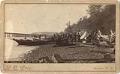
Photograph
Native camp on the beach, Seattle, circa 1885
In 1865 the Board of Trustees of Seattle passed Ordinance No. 5 banning Indigenous people from living in the city unless they worked for a non-Indigenous resident and lived on their employer’s property. Despite this attempt to enforce separation between Indigenous people and the settlers, Seattle depended on Indigenous people. Settlers relied on Native people for domestic work and for…
ID Number:SHS2174
Date:Circa 1885
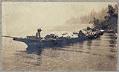
Photograph
Chesheeahud and others in a canoe on Lake Union, Seattle, circa 1885
Chesheeahud (also spelled Cheshiahud) was a Duwamish chief and guide to the lakes and rivers around what is now Seattle, living between the mid-19th and early 20th centuries. He led a village called hehs-KWEE-kweel (meaning Skate), at the south edge of the mouth of Union Bay onto Lake Washington. hehs-KWEE-kweel was near a vital portage used by the Duwamish between…
ID Number:SHS2228
Date:Circa 1885
Photograph
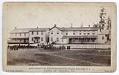
Industrial Boarding School buildings on the Puyallup Reservation, circa 1885
The Puyallup people are a Coast Salish group whose historic lands are along the Puyallup River Valley. They call themselves “Spuyalepabs” in their native language of Lushootseed, meaning “people from the bend at the bottom of the river.” Before settlers arrived, the Puyallup lived in villages that spread from the Cascade foothills to the shores of Puget Sound. In 1854,…
ID Number:SHS3491
Date:Circa 1885
Photograph
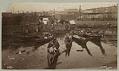
Indigenous canoes docked at the Seattle waterfront, circa 1892
In 1865 the Board of Trustees of Seattle passed Ordinance No. 5 banning Indigenous people from living in the city unless they worked for a non-Indigenous resident and lived on their employer’s property. Despite this attempt to enforce separation between Indigenous people and the settlers, Seattle depended on Indigenous people. Settlers relied on Native people for domestic work and for…
ID Number:SHS5118
Date:Circa 1892
Photograph
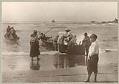
Quileutes landing provisions at La Push, circa 1900
The Quileute are an Indigenous people whose historic lands are on the west side of the Olympic Peninsula, in the valleys of the Quillayute and Hoh Rivers. The Quileute are not related to either the Makah to the north or the Coast Salish peoples of western Washington, and the Quileute language is unrelated to any other in the world. Quileute…
ID Number:SHS7914
Date:Circa 1900
Photograph
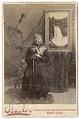
Kikisoblu (Princess Angeline) with painting of Snoqualmie Falls, Seattle, 1890
Kikisoblu was the eldest daughter of Chief Si'ahl (Chief Seattle). During her long life, she saw the coming of white settlers, the exile of her Duwamish and Suquamish people from their traditional lands, and the growth of the new city named for her father. She didn't move to the Port Madison Reservation with the rest of her people, but stayed…
ID Number:SHS10127
Date:1890
Photograph
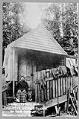
Kikisoblu (Princess Angeline) at her home, circa 1890
Kikisoblu or Kick-is-on-lo Cud was the eldest daughter of Chief Seattle. During her long life, she saw the coming of white settlers, the exile of her Duwamish and Suquamish people from their traditional lands, and the growth of the new city named for her father. She didn't move to the Port Madison Reservation with the rest of her people, but…
ID Number:SHS10965
Date:Circa 1890
Photograph
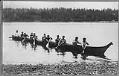
Jack Adams' racing canoe, Portage Bay, Seattle, 1909
In 1909, Jack Adams (1853-1931), a member of the Suquamish Tribe, built a canoe for a canoe race at Seattle's Alaska-Yukon-Pacific Exposition. Adams built the vessel from a single 48-foot log. On September 6, the canoes raced to the finish line at the foot of the fair's Pay Streak, in Portage Bay. In this photo, Adams and ten other men…
ID Number:SHS11726
Date:1909