185 results for: Coast Salish Peoples
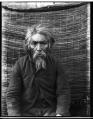
Photograph
Portrait of Yaht-le-min, circa 1900
This is a portrait of Yaht-le-min, a sub-chief of the S'Klallam. He was called "General Taylor" by the settlers and was identified as such by the photographer. Caption information source: "Land and People and Lifestyle," by Jerry Gorsline for the Port Gamble S'Klallam Tribe, retrieved from https://www.pgst.nsn.us/tribal-enterprises/noo-kayet-development/35-top-level/land-and-people-and-lifestyle
ID Number:Lib1988.33.288
Date:Circa 1900
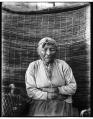
Photograph
Portrait of Yaht-le-min's wife, circa 1900
This is a portrait of the wife of Yaht-le-min (called General Taylor by the settlers), a sub-chief of the S'Klallam. Her name is not known. She had her portrait taken with a traditional clam basket in front of a handmade cattail mat. She wears a crucifix pendant, a symbol of the Christian faith introduced by missionaries in the mid-1800s. Caption…
ID Number:Lib1988.33.289
Date:Circa 1900
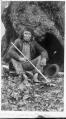
Photograph
Puget Sound Native man with pipe, circa 1900
Seated in front of a large tree trunk, this Puget Sound Native man holds a pipe in his mouth and looks steadily at the camera. The subject has been identified as Dr. Jack, a Duwamish man who lived on the Cedar River, but this information could not be confirmed.
ID Number:Lib1992.9.2
Date:Circa 1900
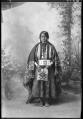
Photograph
Mattie Spencer, Klikitat woman, circa 1900
The Klickitat (also spelled Klikitat) are an Indigenous group whose historic lands are along the Klickitat and White Salmon Rivers east of the Cascade mountains in Washington. Their language is related to the language of the Yakama, their eastern neighbors. The Klickitat fished for salmon in the rivers of their homeland and were also involved in trade among different Indigenous…
ID Number:Lib1992.9.52
Date:Circa 1900
Photograph
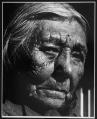
Mattie Wheeler Howeattle, Taholah, 1965
Mattie Wheeler Howeattle (1861-1967) was an enrolled member of the Quinault Indian Nation. She married Washington Howeattle, a Quileute tribal member and representative of the Quinault Council. The couple lived in Taholah and were well-known for their knowledge of Quilieute and Quinault traditions, and Mattie was an accomplished basket and doll maker.Mattie Howeattle lived to be 106, and photographer Josef…
ID Number:Lib1993.20.198
Date:1965
Photograph
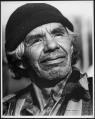
Felix Solomon, Lummi Reservation, 1979
Felix Solomon (1889-1981) was a Lummi elder, fisherman, farmer, and hunter. This portrait was taken by photographer Josef Scaylea in 1979.Scaylea (1913-2004) worked for 35 years as chief photographer for the Seattle Times, winning over 1000 awards for his photographs highlighting the scenery and people in the Pacific Northwest. He donated a collection of his photographs and photography equipment to…
ID Number:Lib1993.20.219
Date:1979
Photograph
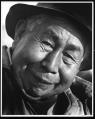
Sherman Dominick, 1970
In the 1960s, Native Americans and their supporters began protesting Washington State laws restricting Native American fishing rights that had been granted in a series of treaties with the United States between 1854 and 1855. The Survival of the American Indian Society (SAIA), the NAACP, and the National Indian Youth Council (NIYC), coordinated a series of protests and peaceful demonstrations…
ID Number:Lib1993.20.240
Date:1970
Photograph
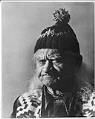
William Frank, Sr., 1980
William Frank, Sr. (1879-1983) was a Nisqually elder, early tribal government official, and leader in the struggle for Indigenous fishing rights. His name at birth was Qu Lash Qud, and he was renamed Frank while at boarding school, after a white homesteader for whom his father worked. In 1917, the US Army took most of the Nisqually Reservation to expand…
ID Number:Lib1993.20.249
Date:1980
Manuscript
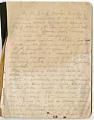
Henry A. Smith's recollection of 1856 "Battle of Seattle," circa 1900
On the morning of January 26, 1856, the "Battle of Seattle" began when Native Americans raided the settlement of Seattle. Previously warned of the attack, most settlers had barricaded themselves in a blockhouse. The attackers were driven off by artillery fire and by Marines from the U.S. Navy sloop-of-war Decatur, anchored in Elliott Bay. Although there were relatively few casualties…
ID Number:MS.COLL.204
Date:Circa 1900

Ephemera
South Park, Your Last Chance to Secure a Home, 1890
The first residents of Seattle's South Park neighborhood, on the west bank of the Duwamish River, were Coast Salish Peoples of the Duwamish Tribe. Beginning in 1851, white settlers like Eli Maple (or Mapel) (1831-1911) staked claims to the land, however the area was mostly utilized by farmers. In 1889, I. William Adams purchased the Donovan farm and he platted…
ID Number:MS.COLL.252
Date:1890