179 results for: Red
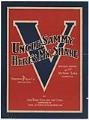
Music, notated
Uncle Sammy Here's My Share
In 1917 and 1918, the United States issued Liberty Bonds to pay for World War I, raising some $21.5 billion through patriotic appeals and rallies. Funds were still needed after the war ended. John Henry Lyons, a YMCA song leader at Camp Lewis, wrote an official song for a Victory Loan campaign, urging citizens to keep giving, with the words…
ID Number:2018.3.2.11
Date:1919
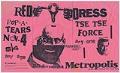
Poster
Red Dress at the Metropolis concert poster, circa 1983
Seattle band Red Dress was formed by Gary Minkler with his high school friend Rich Riggins in 1976. The two explored jazz, contemporary classical music, and the blossoming punk rock scene. Though Riggins left the band and other musicians came and went over the decades, Gary Minkler and Red Dress continued to perform at least into the early 2010s.At this…
ID Number:2018.86.37
Date:Circa 1983
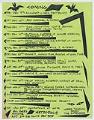
Poster
Metropolis concert schedule, December 1983 - January 1984
The Metropolis was an all-ages music venue located at 207 Second Avenue in Pioneer Square. Started by Hugo Piotten, the Metropolis provided stable access to teens interested in alternative music and culture, where they could see local and national punk bands and hang out with their peers. In the two years of its existence (1983-1984), the Metropolis hosted many of…
ID Number:2018.86.41
Date:1983
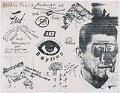
Poster
Red Square event poster, February 13, 1987
The poster pictured here advertises an unspecified event to be held on Friday, February 13, probably in 1987, at Red Square on the Seattle campus of the University of Washington. The event informs participants to bring musical instruments to play, and also "remnants of civilization," which were to be destroyed.
ID Number:2018.86.76
Date:1987
Photograph
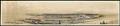
Harbor Island and Beacon Hill, Seattle, 1917
Seattle’s main industrial area, which includes Harbor Island, was built on tidelands at the mouth of the Duwamish River using dirt from the 1907-1909 Jackson Street and other Beacon Hill regrades. In 1911, Fisher Flouring Mills built a large plant on Harbor Island. Shipbuilding and related industries followed. This panoramic photograph, taken from Admiral Way in West Seattle, looks east…
ID Number:2019.3.3
Date:1917
Photograph
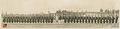
The Shriners Philadelphia LuLu Temple Patrol at the National Convention in Seattle, 1915
Seattle hosted the 41st Annual Imperial Council of the Ancient Arabic Nobles of the Mystic Shrine - or Shriners - convention from July 12-17, 1915. Shriners came from every part of the country on 56 special trains, including three trains that held just the LuLu Temple delegates from Philadelphia. Every hotel was full and "the overflow was lodged in fraternity…
ID Number:2019.3.4
Date:1915
Cartographic material
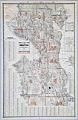
Seattle, Washington, Postal delivery section map, circa 1950
In 1903 Carl Albert Kroll (1882-1982) immigrated from Germany to the U. S., finding work as a drafting technician at the Moran Brothers shipbuilding company. By 1910 Kroll was the manager at O. P. Anderson Map & Blue Print Company. The following year he acquired both the Anderson Map Company and the Washington Map and Blueprint Company and merged them…
ID Number:2019.3.15
Date:Circa 1950
Cartographic material
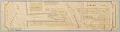
Yesler Way at Railroad Avenue map, Seattle, 1896
Seattle in the late nineteenth century was a rapidly growing city, aided in no small part by the 1883 connection to the rest of the country by the Northern Pacific Railway Company (NPRR). Additionally, the city's population doubled in 1890 from the previous year to 40,000, boosted by the influx of people who saw opportunity in rebuilding after Seattle's Great…
ID Number:2019.3.22
Date:1896
Serial
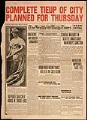
Seattle Times, February 3, 1919
The Seattle General Strike was a work stoppage by more than 65,000 workers in Seattle from February 6-11, 1919. The strike began in shipyards when workers were refused pay increases after two years of World War I wage controls. Most of the city's 110 local unions, including members of the American Federation of Labor (AFL) and the Industrial Workers of…
ID Number:2019.3.55
Date:1919
Videorecording
Oral history interview with David Lake, January 21, 2004
The interview of David Lake conducted by Julie Kerssen for the Agriculture Oral History Project on January 21, 2004. The interview begins with Lake’s description of how and why he got into winemaking, including his education, his early work in the wine business in Europe, and his becoming a Master of Wine. He describes the state of grape-growing and winemaking…
ID Number:2019.35.8.8
Date:2004