179 results for: Red
Drawing
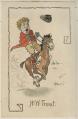
Cartoon drawing of Harry Whitney Treat riding horse, by John Ross "Dok" Hager, Seattle, circa 1910
John Ross Hager, known in print by his nickname "Dok," published humorous cartoons in the Seattle Daily Times during the early 20th century. Perhaps best known for his creation The Umbrella Man, Hager also drew caricatures of Seattle's famous citizens, published in 1911. In this drawing, H.W. Treat is shown as a horseman wearing the typical red coat of an…
ID Number:1946.404.c.1
Date:Circa 1910
Ephemera
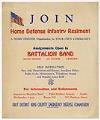
Home Defense Infantry Regiment recruitment poster, Seattle, 1941
The Home Defense Infantry Regiment, or HDIR, was organized from the state guards during World War II after the National Guard was federalized and called into service. In Washington State about 2,500 civilian men were issued a billy club, gas mask, utility belt, and white civil defense helmet, and tasked with protecting and supporting the state in times of civil…
ID Number:1947.24.39.1
Date:1941
Cartographic material
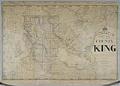
Anderson's New Map of the County of King, State of Washington, 1894
Seattle entrepreneur and amateur photographer O.P. (Oliver Phelps) Anderson (1859-1941) was the son of Alexander Jay Anderson (1832-1903), president of the Washington Territorial University (now University of Washington) from 1877-1882. O.P. trained as a draughtsman and by 1890 had started a civil engineering and map publishing business, O. P. Anderson & Company (later O. P. Anderson Map & Blue Print…
ID Number:1952.986.57.4
Date:1894
Photograph
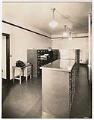
Music Library, Totem Broadcasters, Seattle, circa 1925
KJR in Seattle, begun by amateur radio operator Vincent I. Kraft in 1921, was the first radio station to be licensed in the Pacific Northwest. Shortly thereafter, in 1924, radio station KOMO began as KFQX operated by the American Radio and Telephone Company, under the ownership of Roy Olmstead (1886-1966) and Alfred M. Hubbard. In 1926 KOMO was relaunched under Birt F.…
ID Number:1954.745.9.13
Date:Circa 1925
Photograph
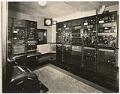
Master control room, Totem Broadcasters, Seattle, circa 1925
KJR in Seattle, begun by amateur radio operator Vincent I. Kraft in 1921, was the first radio station to be licensed in the Pacific Northwest. Shortly thereafter, radio station KOMO began as KFQX in 1924, operated by the American Radio and Telephone Company, under the ownership of Roy Olmstead (1886-1966) and Alfred M. Hubbard. In 1926 KOMO was relaunched under Birt F.…
ID Number:1954.745.9.15
Date:Circa 1925
Photograph
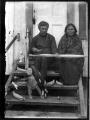
Young Doctor and his wife Lizzie, Neah Bay, circa 1900
The Makah people of the northwest tip of the Olympic Peninsula refer to themselves as Kwih-dich-chuh-ahtx, which translates roughly to "the people who live by the rocks and seagulls." The early Makah were skilled mariners, using several types of canoes which they carved from western red cedar for various purposes - war, whaling, fishing, sealing, carrying cargo, and long voyages.…
ID Number:1955.970.470.1
Date:Circa 1900
Photograph
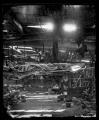
Interior of a longhouse, Neah Bay, circa 1900
The Makah people of the northwest tip of the Olympic Peninsula refer to themselves as Kwih-dich-chuh-ahtx, which translates roughly to "the people who live by the rocks and seagulls." The early Makah were skilled mariners, using several types of canoes which they carved from western red cedar for various purposes - war, whaling, fishing, sealing, carrying cargo, and long voyages.…
ID Number:1955.970.470.10
Date:Circa 1900
Photograph
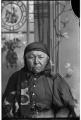
Quedessa, Makah woman, circa 1900
The Makah people of the northwest tip of the Olympic Peninsula refer to themselves as Kwih-dich-chuh-ahtx, which translates roughly to "the people who live by the rocks and seagulls." The early Makah were skilled mariners, using several types of canoes which they carved from western red cedar for various purposes - war, whaling, fishing, sealing, carrying cargo, and long voyages.…
ID Number:1955.970.470.13
Date:Circa 1900
Photograph
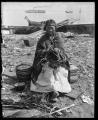
Makah woman making baskets at Neah Bay, circa 1905
The Makah people of the northwest tip of the Olympic Peninsula refer to themselves as Kwih-dich-chuh-ahtx, which translates roughly to "the people who live by the rocks and seagulls." The early Makah were skilled mariners, using several types of canoes which they carved from western red cedar for various purposes - war, whaling, fishing, sealing, carrying cargo, and long voyages.…
ID Number:1955.970.470.14
Date:Circa 1905
Photograph
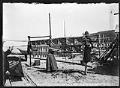
Makah woman drying fish on a rack, Neah Bay, circa 1900
The Makah people of the northwest tip of the Olympic Peninsula refer to themselves as Kwih-dich-chuh-ahtx, which translates roughly to "the people who live by the rocks and seagulls." The early Makah were skilled mariners, using several types of canoes which they carved from western red cedar for various purposes - war, whaling, fishing, sealing, carrying cargo, and long voyages.…
ID Number:1955.970.470.23
Date:Circa 1900