179 results for: Red
Menu
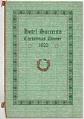
Hotel Sorrento Christmas Dinner menu, 1923
The Hotel Sorrento, one of the city's first "boutique" hotels, opened in Seattle's First Hill neighborhood in 1909. Among the hotel's first customers were some of the millions of visitors to the 1909 Alaska-Yukon-Pacific Exposition, a world's fair highlighting the development of the Pacific Northwest. The Hotel Sorrento continues in business at its original location on the corner of Madison…
ID Number:2016.36.8
Date:1923
Photograph
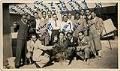
Jazz musicians in Shanghai, China, circa 1938
Many American jazz musicians traveled to Shanghai during the city's golden age in the 1930s, when "the Paris of the Orient" was the newest horizon on an increasingly international jazz music scene. For Black musicians, who were often excluded from white musicians' unions in the U. S. and subjected to other forms of segregation, Shanghai provided steady, well-paid work, and…
ID Number:2016.84.2.9.1
Date:Circa 1938
Photograph
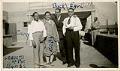
Band leaders in Shanghai, China, September 7, 1938
Many American jazz musicians traveled to Shanghai during the city's golden age in the 1930s, when "the Paris of the Orient" was the newest horizon on an increasingly international jazz music scene. For Black musicians, who were often excluded from white musicians' unions in the U. S. and subjected to other forms of segregation, Shanghai provided steady, well-paid work, and…
ID Number:2016.84.2.9.2
Date:1938
Photograph
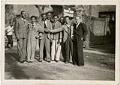
Musicians from Earl Whaley's band in China, September 7, 1938
Many American jazz musicians traveled to Shanghai during the city's golden age in the 1930s, when "the Paris of the Orient" was the newest horizon on an increasingly international jazz music scene. For Black musicians, who were often excluded from white musicians' unions in the U. S. and subjected to other forms of segregation, Shanghai provided steady, well-paid work, and…
ID Number:2016.84.2.9.3
Date:1938
Photograph
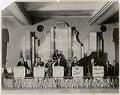
Earl Whaley's band on stage in Shanghai, China, December 20, 1934
Many American jazz musicians traveled to Shanghai during the city's golden age in the 1930s, when "the Paris of the Orient" was the newest horizon on an increasingly international jazz music scene. For Black musicians, who were often excluded from white musicians' unions in the U. S. and subjected to other forms of segregation, Shanghai provided steady, well-paid work, and…
ID Number:2016.84.2.10.1
Date:1934
Photograph
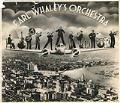
Earl Whaley's Orchestra photo collage, circa 1937
Many American jazz musicians traveled to Shanghai during the city's golden age in the 1930s, when "the Paris of the Orient" was the newest horizon on an increasingly international jazz music scene. For Black musicians, who were often excluded from white musicians' unions in the U. S. and subjected to other forms of segregation, Shanghai provided steady, well-paid work, and…
ID Number:2016.84.2.10.2
Date:Circa 1937
Photograph
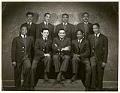
Earl Whaley's band, Shanghai, China, circa 1937
Many American jazz musicians traveled to Shanghai during the city's golden age in the 1930s, when "the Paris of the Orient" was the newest horizon on an increasingly international jazz music scene. For Black musicians, who were often excluded from white musicians' unions in the U. S. and subjected to other forms of segregation, Shanghai provided steady, well-paid work, and…
ID Number:2016.84.2.10.3
Date:Circa 1937
Ephemera
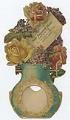
New England hotel souvenir, circa 1905
Seattle’s New England Hotel was located south of Mill Street (now Yesler Way), on the corner of First Avenue South and Main Street. In the city’s early days, this placed it in the red-light district. The hotel was popular with people heading to the gold rush, and it was a hangout for politicians and campaigners. Its manager, James Weir, also…
ID Number:2018.3.3.4
Date:Circa 1905
Ephemera
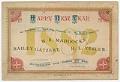
New Year's Day greeting card, January 1, 1882
Prominent early Seattle citizens Henry Yesler, Bailey Gatzert, and Moses Maddocks were close friends, loved to play pranks on each other, and at one time or another each held the office of Mayor of Seattle. Henry Leiter Yesler (1810-1892) was a lumberman who established the Seattle’s first steam-powered sawmill in 1852, and was Seattle's mayor from 1874-1875 and 1885-1886. Bailey…
ID Number:2018.3.3.61
Date:1882

Photograph
Base Hospital Number 50 officers and enlisted men at Camp Merritt, N.J., April 20,1919
Base Hospital No. 50 was created at the University of Washington in October 1917 as part of a mobilization of base hospitals at universities and civilian hospitals because the United States Army did not have an established medical corps when the country entered World War I in 1917. The Base Hospital unit consisted of medical staff, nursing staff, and civilian…
ID Number:2018.3.10
Date:1919