130 results for: Indigenous Peoples
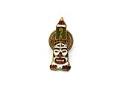
Potlatch pin, ca. 1911-1914
This pin depicts the Potlatch “Bug,” the official emblem for the Golden Potlatch, a city-wide festival first held in July of 1911. It was organized by civic boosters who were hoping to capitalize on the success of the Alaska-Yukon-Pacific Exposition of 1909. The organizers called themselves the Tilikums of Elttaes (Tilikum is "Friends" in Chinook Jargon; Elttaes is Seattle spelled…
ID Number:1962.2652.8
Date:Circa 1911-1914
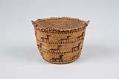
Twana basket made in Skokomish area and features wolf designs, ca. 1900
The interior of this basket was made from cattail, while cedar bark and beargrass were used for the outside and the wolf motif. The Twana became known for developing and using the dog motifs (if the tail is up) and wolf motifs (if the tail is down) in their baskets.
ID Number:1962.2735.1
Date:Circa 1900
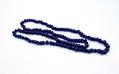
Necklace worn by Kikisoblu (Princess Angeline), ca. 1880
Kikisoblu (Princess Angeline), also known in Lushootseed as Kikisoblu, Kick-is-om-lo, or Wewick, was the eldest daughter of Chief Si'ahl (Chief Seattle). She was born around 1820 and lived until she was in her mid-seventies.
ID Number:1962.2798.1
Date:Circa 1880
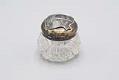
Souvenir inkwell from the Alaska-Yukon-Pacific Exposition (AYPE), 1909
This inkwell is a Seattle souvenir from the Alaska-Yukon-Pacific Exposition (AYPE) of 1909. The AYPE publicized the development of the Pacific Northwest and positioned Seattle as a gateway to Alaska and the Pacific Rim. The silver top of this inkwell shows the Totem Pole in Pioneer Square which was a major tourist attraction at the time. The totem was carved…
ID Number:1962.2838.179
Date:1909
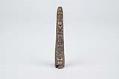
Souvenir metal totem pole from the Golden Potlatch celebration, 1912
The Golden Potlatch was a city-wide festival first held in July of 1911. It was organized by civic boosters who were hoping to capitalize on the success of the Alaska-Yukon-Pacific Exposition of 1909. The event continued for each of the next three summers before being suspended during wartime, and then was started up again as the Potlatch Festival from 1934…
ID Number:1962.2846.7
Date:1912
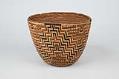
Coast Salish coiled basket, ca. 1900
This coiled basket with a stepped pattern was created by an unknown indigenous Coast Salish basketmaker.
ID Number:1963.2944.1
Date:Circa 1880-1920
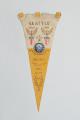
Souvenir pennant of the Golden Potlatch, 1911
The Golden Potlatch was a city-wide festival first held in July of 1911. It was organized by civic boosters who were hoping to capitalize on the success of the Alaska-Yukon-Pacific Exposition of 1909. The event continued for each of the next three summers before being suspended during wartime, and then was started up again as the Potlatch Festival from 1934…
ID Number:1963.3029
Date:1911
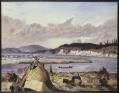
Oil painting of an Indigenous basket weaver in front of a tent, 1891
The daughter of one of Seattle’s founding families, Emily Inez Denny (1853 – 1918) was both a painter and writer. Greatly influenced by seeing the drawings of Sarah Willoughby as a student at the Washington Territorial University, she took on painting as a life-long pursuit. A woman who thrived on the creation of art, she constantly traveled with a notebook…
ID Number:1963.3178.1
Date:1891
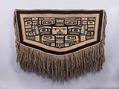
Chilkat blanket, ca. 1890-1910
The term "Chilkat Blanket" was created by European traders in the late 19th century. The Tlingit, Haida, and Tsmishian tribes had been making these blankets since the early 1800s and the Tlingit traditionally referred to the blanket as Naaxiin (or “fringe about the body”) and the Tsimshian as Gwis-halait (or “dancing blanket”).
ID Number:1964.3230.2
Date:Circa 1890-1910
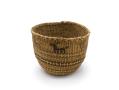
Coast Salish twined basket, ca. 1900-1940
This basket with its dog or wolf design is thought to be made by the Twana people who lived in the region around Hood Canal in the south Puget Sound.
ID Number:1964.3334.13
Date:Circa 1900-1940