130 results for: Indigenous Peoples
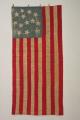
Battle of Seattle "Petticoat Flag," 1856
On the morning of January 26, 1856, the "Battle of Seattle" began when Native Americans raided the white settlement in what is now known as Seattle. Previously warned of the attack, most settlers had barricaded themselves in a blockhouse. Settlers say the women who sought shelter in the blockhouse used strips from their petticoats to sew this flag during the…
ID Number:1955.921.1
Date:1856
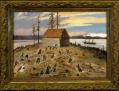
Oil painting, "Battle of Seattle, Jan. 26, 1856," by Emily Inez Denny, ca. 1890
On the morning of January 26, 1856, the "Battle of Seattle" began when Native Americans raided the white settlement in what is now known as Seattle. Previously warned of the attack, most settlers had barricaded themselves in a blockhouse. The attackers were driven off by artillery fire. The battle was the penultimate event in a series of armed conflicts, known…
ID Number:1955.921.2
Date:Circa 1890
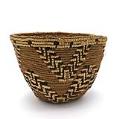
Sammamish or Klikitat basket, 1870
This basket, thought to have been made by either a member of the Sammamish or Klickitat communities, features woven geometric designs.
ID Number:1955.963.a
Date:1870
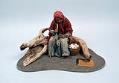
Wax figure of Kikisoblu (Princess Angeline) by Lillian Smart, 1956
Kikisoblu (Princess Angeline), also known in Lushootseed as Kikisoblu, Kick-is-om-lo, or Wewick, was the eldest daughter of Chief Si'ahl (Chief Seattle). She was born around 1820 and lived until she was in her mid-seventies. Lillian Smart, a local artist who lived at Alki Point, taught herself the process of making wax figures and her family often served as models and…
ID Number:1956.1175
Date:1956
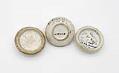
Small butter plates or saucers from "Indian camp" on Smith's Cove, ca. 1900
These small saucers were repurposed as paint plates and are thought to have been used in an Indigenous camp located on Smith's Cove in the early 1900s.
ID Number:1957.1221.3
Date:Circa 1900
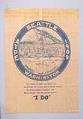
Cotton souvenir banner from the Alaska-Yukon-Pacific Exposition (AYPE), 1909
This highly stylized and romanticized image of a giant Kikioblu (Princess Angeline) waving a banner over Seattle is meant to instill a feeling of bold ingenuity and progress, big themes for the 1909 Alaska-Yukon-Pacific Exposition. Princess Angeline, also known in Lushootseed as Kikisoblu, Kick-is-om-lo, or Wewick, was the eldest daughter of Chief Si'ahl (Chief Seattle) and a beloved local icon.…
ID Number:1957.1228.12
Date:1909
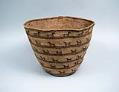
Skokomish basket featuring wolves and dogs, ca. 1900
This type of pliable basket was used for clothing or other soft items rather than food. The wolf figures have tails that hang down and the dog figures have upright tails. In this region, remains of domesticated dogs date as far back as 1,000 BCE.
ID Number:1957.1239.6
Date:Circa 1880-1920
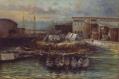
Painting of the Seattle waterfront with Indigenous canoes by P.A. Morgan, ca. 1880
This is a finely executed painting of the Seattle waterfront in the late 1800s. The artist, P.A. Morgan was active in Seattle at this time but is relatively unknown.
ID Number:1957.1281.2
Date:Circa 1880
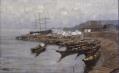
Oil painting of canoes at Ballast Island by John Fery, 1925-1935
Artist John Fery (1859-1934) was born in Austria and immigrated to the United States where he eventually settle in Seattle. During his career, Fery painted many scenes under contract for the Great Northern Railway. He based this waterfront scene on a historical photograph. Ballast Island, as the name implies, was where ships coming into the bay would dump their ballast.…
ID Number:1957.1282.7
Date:1925-1935
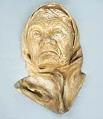
Plaster plaque of the head of Kikisoblu (Princess Angeline) by James Wehn, ca. 1910-1920
Kikisoblu (Princess Angeline), also known in Lushootseed as Kikisoblu, Kick-is-om-lo, or Wewick, was the eldest daughter of Chief Si'ahl (Chief Seattle) and a well-known figure during the early European American settler days of the city. She was born around 1820 and lived until she was in her mid-seventies. James A. Wehn (1882-1973), was born in Indiana and came to Seattle…
ID Number:1957.1373
Date:Circa 1910-1920