183 results for: Alaska
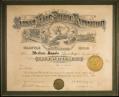
Alaska-Yukon-Pacific Exposition (AYPE) Diploma awarded to Merlino Olive Oil, 1909
Italian immigrants working in the coal mines of the Black Diamond/Ravensdale area wrote home asking friends and relatives to send foods they missed from Italy. Angelo Merlino, one of those miners, opened his first store in 1900. Angelo Merlino & Sons has been shipping cheese, olive oil and Mediterranean delicacies throughout the Pacific Northwest and Alaska ever since. The Merlino's…
ID Number:1996.48.1
Date:1909
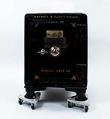
Astoria & Puget Sound Canning Company safe, ca. 1910
The fishing and canning industry has always been a boon for Seattle and all of the Pacific Northwest, including Alaska. This safe was first used by the Astoria & Puget Sound Canning Company in the early 1900s, and then shipped to Excursion Inlet, Alaska, for use in the company cannery store located there. The tumblers locked in the early 1970s…
ID Number:1997.11.1
Date:Circa 1910
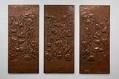
Three copper panels from the Mountain Room at the Rainier Beer Brewery, 1948
These decorative panels were part of a large fireplace hood in the Mountain Room at the Rainier Beer Brewery. The copper repoussé (a technique of hammering a copper sheet into a desired design) shows a leafy and flowering hop plant. Hops are used for brewing beer, and hop growing has been a significant agricultural crop in Washington since the 19th…
ID Number:1999.64.2.ONLINE
Date:1948
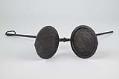
Senbei iron with AYPE seal, from the Sagamiya Confectionary Co., 1909
The Sagamiya Confectionery, founded in 1904 by Unosuke Shibata, was formerly located at 6th and Main in the area previously known as Nihonmachi, or Japantown, now in Seattle's Chinatown International District. Sagamiya used traditional Japanese methods in the making of mochi, pastries and other wagashi (confections). The bakery was a popular neighborhood establishment until it closed in the 1970s. This…
ID Number:2000.84.4
Date:1909
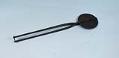
Senbei iron from the Sagamiya Bakery with the Alaska-Yukon-Pacific Exposition (AYPE) seal, ca. 1909
The Sagamiya Confectionery, founded in 1904 by Unosuke Shibata, was formerly located at 6th and Main in the area previously known as Nihonmachi, or Japantown, now in Seattle's Chinatown International District. Sagamiya used traditional Japanese methods in the making of mochi, pastries and other wagashi (confections). The bakery was a popular neighborhood establishment until it closed in the 1970s. This…
ID Number:2000.84.5
Date:1909
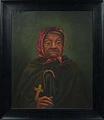
Painted portrait of Kikisoblu (Princess Angeline) by Alma Royer Lorraine, ca. 1904
Kikisoblu (Princess Angeline), also known in Lushootseed as Kikisoblu, Kick-is-om-lo, or Wewick, was the eldest daughter of Chief Si'ahl (Chief Seattle). She was born around 1820 and lived until she was in her mid-seventies. The artist Alma Royer Lorraine (1858-1952) was born in Ohio and moved to Seattle in 1893. She studied at the Art Institute of Chicago and the…
ID Number:2001.55.1
Date:Circa 1904
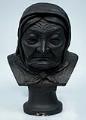
Bust of Kikisoblu (Princess Angeline) by Alma Royer Lorraine, ca. 1909
Kikisoblu (Princess Angeline), also known in Lushootseed as Kikisoblu, Kick-is-om-lo, or Wewick, was the eldest daughter of Chief Si'ahl (Chief Seattle). She was born around 1820 and lived until she was in her mid-seventies. The artist Alma Royer Lorraine (1858-1952) was born in Ohio and moved to Seattle in 1893. She studied at the Art Institute of Chicago and the…
ID Number:2001.55.2
Date:Circa 1909
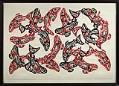
Print by Marvin Oliver, "New Generation," 1997
This serigraph by Native American sculptor and printmaker Marvin Oliver (d. 2019) depicts a new generation of salmon hatching from eggs. Born to Quinault and Isleta-Pueblo parents, and raised in Washington and San Francisco, Marvin Oliver (date of birth unknown) was an Associate Professor of American Indian Studies and Art History at the University of Washington and Curator of Contemporary…
ID Number:2001.70.1
Date:1997
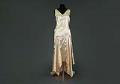
Cream silk satin evening dress, sold by Madame Thiry, ca. 1933
This silk dress with bias-cut panels has a label from “Madame Thiry,” a fashionable Seattle shop run by Louise Schwaebele Thiry. Thiry was born in Paris and came west in the early 20th century. Her fashion career started as a side business—importing goods from Paris to sell in Alaska and Seattle for supplementary income. After her husband left for WWI…
ID Number:2001.86.7C599
Date:Circa 1929-1933

Alaska-Yukon-Pacific Exposition (AYPE) pennant, 1909
This pennant was a promotional souvenir that features the iconic AYPE logo featuring three figures: the left represents Asia holding ship in hands signifying commerce by sea; right represents Pacific slope, with her right hand extended in welcome and her left hand holding a train signifying commerce by land; center represents Alaska, dressed in white for the northland, holding gold…
ID Number:2003.5.1
Date:1909