183 results for: Alaska
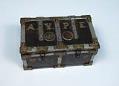
Souvenir box from the Alaska-Yukon-Pacific Exposition (AYPE), 1909
This souvenir box was made by "Huntley and Palmers Biscuits" in Reading and London, England. It originally held English biscuits.
ID Number:1975.6135
Date:1909
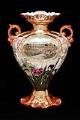
Decorative vase from the Alaska-Yukon-Pacific Exposition (AYPE), featuring the Palace of Agriculture, 1909
The Alaska-Yukon-Pacific Exposition (AYPE) was a world's fair held in Seattle in 1909. It was a major national event for the young but fast growing city, and celebrated the emerging development of the Pacific Northwest. This vase from the AYPE shows the Palace of Agriculture at the Exposition. It was made in Japan in the “Imari” style, which is a…
ID Number:1976.6248.1
Date:1909
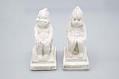
Pair of joke Billiken figures, "Billy Can" and "Billy Can't", ca. 1909
The Billiken figure, with its slogan “The God of Things as They Ought to Be,” was created in 1908 by Missouri art teacher Florence Pretz. There was quickly a nationwide craze for the seated good-luck figurines, which coincided with Seattle’s 1909 Alaska-Yukon-Pacific-Exposition (AYPE). Billikens became an unofficial mascot for the Exposition, with various versions flying off shelves in souvenir shops.…
ID Number:1976.6289.39
Date:Circa 1909
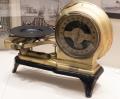
Computing scale that won grand prize at the Alaska-Yukon-Pacific Exposition (AYPE), 1909
This prize-winning computing scale was celebrated at the Alaska-Yukon-Pacific Exposition (AYPE) for its new springless design and the capability to calculate both price and weight. Manufactured by the Angldile Computing Scale Company in Elkhart, Indiana, and exhibited in the United States Government display, this device has long been considered the "Rolls Royce" of collectors. The AYPE was a world's fair…
ID Number:1980.6927.1
Date:Circa 1909
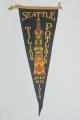
Souvenir pennant from the Seattle Tilikum Potlatch, 1914
The Golden Potlatch was a city-wide festival first held in July of 1911. It was organized by civic boosters who were hoping to capitalize on the success of the Alaska-Yukon-Pacific Exposition of 1909. The organizers called themselves the Tilikums of Elttaes (Tilikum is "Friends" in Chinook Jargon; Elttaes is Seattle spelled backward). They were a fraternal, civic organization composed primarily…
ID Number:1980.7094.317
Date:1914
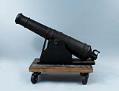
Cannon from Imperial Russian Navy sidewheel gunboat, the POLITKOFSKY, ca. 1850s
Built by the Russians in Sitka, the POLITKOFSKY came under United States ownership in 1867 when Russian Alaska was sold to the US. The gunboat was then sold into civilian service as a tugboat, POLLY, working the northwest coast of North America until 1896. It was then converted to a schooner barge and carried eager gold seekers to Alaska during…
ID Number:1980.7094.423
Date:Circa 1850
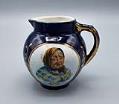
Cream pitcher with image of Kikisoblu (Princess Angeline), 1909
The image of Kikisoblu (Princess Angeline) was replicated on many souvenir items that sold in Seattle. This creamer was most likely purchased at the Alaska-Yukon-Pacific Exposition held in 1909. Kikisoblu (Princess Angeline), also known in Lushootseed as Kikisoblu, Kick-is-om-lo, or Wewick, was the eldest daughter of Chief Si'ahl (Chief Seattle). She was born around 1820 and lived until she was…
ID Number:1981.7249.1
Date:1909
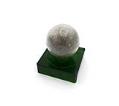
Alaska-Yukon-Pacific Exposition (AYPE) souvenir glass globe or paperweight filled with silver mineral dust from Idaho, 1909
This souvenir globe paperweight of mineral dust was sold at the Alaska-Yukon-Pacific Exposition in Seattle.
ID Number:1981.7328.338
Date:1909
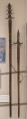
Igorot spear from the Alaska-Yukon-Pacific Exposition (AYPE) replica village, 1909
The Igorot (meaning "people of the mountains") are indigenous, Austronesian-speaking ethnic groups that live in the Cordillera Mountains of Northern Luzon, Philippines. A group of Igorot people lived in a village on the Pay Streak at the Alaska-Yukon-Pacific Exposition (AYPE), held in Seattle in 1909. During the 1899 Philippine-American War, the Igorot were allied first with the independence fighters and…
ID Number:1983.47.1
Date:1909
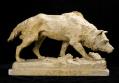
Model for the sculpture of an Alaskan wolf presented at the Alaska-Yukon-Pacific Exposition (AYPE), 1909
This sculpture model is attributed to Bert Convisar, sculptor and father of the arts patron Anne Gerber. Four large sculptures of animals – the wolf, the water buffalo, the polar bear, and the cougar – were placed at the Geyser Basin, the hub of the AYPE, and were meant to represent the early white settlement days in the Pacific Northwest.
ID Number:1984.141.1
Date:1909