183 results for: Alaska
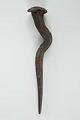
Spike from Imperial Russian Navy sidewheel gunboat, the POLITKOFSKY, ca. 1850s
Built by the Russians in Sitka, the POLITKOFSKY came under United States ownership in 1867 when Russian Alaska was sold to the US. The gunboat was then sold into civilian service as a tugboat, Polly, working the northwest coast of North America until 1896. It was then converted to a schooner barge and carried eager gold seekers to Alaska during…
ID Number:1948.399.3
Date:Circa 1850-1860
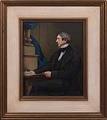
Colored photograph of painted portrait of William Henry Seward by Herbert P. Muehlenbeck, 1867
The artist Herbert Muehlenbeck was born in Peoria, Illinois, and studied at Chicago Art Institute. He later came to Seattle and was listed in "Who's Who in Northwest Art," as well as exhibited at the Seattle Art Museum. Henry William Seward (1801-1872) was Secretary of State from 1860-1869 and was involved in the purchase of Alaska in 1867.
ID Number:1948.422
Date:1867
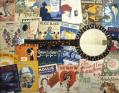
Inlaid frame banjo, 1867
This banjo, made by Henry C. Dobson (1851-1903), was owned by a Seattle druggist and doctor at the turn of the 20th century. Dobson was one of America's most prominent early banjo manufacturers. He patented the closed back banjo in 1867, and is also credited with using frets (in 1878), a resonator, and the first attempted use of a tone…
ID Number:1950.14.b
Date:1867
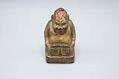
Billiken penny bank from the AYPE, 1909
The Billiken figure, with its slogan “The God of Things as They Ought to Be,” was created in 1908 by Missouri art teacher Florence Pretz. There was quickly a nationwide craze for the good-luck figurines, which coincided with Seattle’s 1909 Alaska-Yukon-Pacific-Exposition (AYPE). Billikens became an unofficial mascot for the Exposition, with various versions flying off shelves in souvenir shops. This…
ID Number:1951.29.i
Date:1909
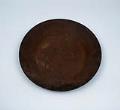
Gold mining pan used during the Klondike Gold Rush, ca. 1897
These pans are said to have been used by Ole Marsh, or the "Terrible Swede" as he was nicknamed, when he worked for Charlie Anderson during the Klondike Gold Rush of 1897. Ole Marsh was also a pseudonym for Joe Carroll, who was a Seattle champion wrestler and wrestling manager at that time.
ID Number:1951.44.M
Date:Circa 1897
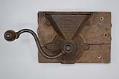
Coffee grinder used by sourdoughs during the Klondike Gold Rush, ca. 1897
The Klondike Gold Rush enticed many hopeful gold miners to Alaska who brought along gear and staples for the journey and grueling work. This versatile tool could be firmly attached to a cabin wall, post, or tree and was used to grind the morning coffee or the barley for brewing miner's beer.
ID Number:1952.161.1
Date:Circa 1897
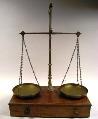
Gold scale, ca. 1895
These large scales were part of an extensive collection of Alaskan memorabilia donated to the museum by Miss Lulu Fairbanks. They are of the type used in a retail or commercial establishment for accurately measuring gold to make a sale. During the Klondike Gold Rush, merchants would weigh the miners’ gold on one side of the scale and balance it…
ID Number:1952.188
Date:Circa 1895
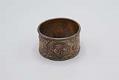
Napkin ring commemorating the Alaska-Yukon-Pacific Exposition (AYPE), 1909
This copper plated napkin ring is a souvenir from the Alaska-Yukon-Pacific Exposition (AYPE) held in Seattle in 1909. It features a relief image of Mount Rainier, the fair’s official seal which includes three female figures (representing Asia, Alaska, and the Pacific Coast of America), and text reading “A.Y.P. Exposition Seattle 1909.” The AYPE publicized the development of the Pacific Northwest…
ID Number:1952.212.1
Date:1909
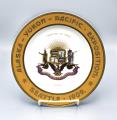
Territory of Hawaii souvenir plate from the Alaska-Yukon-Pacific Exposition (AYPE), 1909
This graniteware plate was sold as a souvenir at the AYPE in 1909. It features the logo of the then-Territory of Hawaii, 50 years before the islands' statehood.
ID Number:1952.515.a
Date:Circa 1909
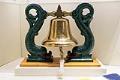
Ship's bell from the steamer ship "Beaver," 1835
The SS Beaver which was the first steamship on the Northwest Coast. Originally built in 1835 in England, she sailed to Fort Vancouver by way of Cape Horn, Juan Fernandez, and the Sandwich Islands in 1836. Hudson's Bay Company owned the ship for many years, and the Beaver served the fur trading industry from Sitka, Alaska, to Astoria, Oregon, as…
ID Number:1952.2161.1
Date:1835