183 results for: Alaska
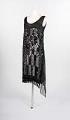
Evening dress with black chiffon and sequins, 1927
This dress, with its short skirt and boldly graphic rectangles of shiny and matte sequins, seems to presage the youthful mod dresses of the 1960s. It bears a label from “Madame Thiry,” a Seattle shop run by Louise Schwaebele Thiry. Thiry was born in Paris and came west in the early 20th century. Her fashion career started as a side…
ID Number:1953.278.C521
Date:Circa 1920-1930
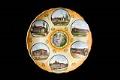
Plate commemorating the 1909 Alaska-Yukon-Pacific Exposition (AYPE), featuring buildings on the Exposition campus
In the center of the plate is the official emblem of the AYPE surrounded by flowers. Surrounding that are six buildings from the Exposition: The Machinery Building, Agricultural Building, Manufacturers Building, Fine Arts Building, Washington State Building, and Auditorium Building.
ID Number:1953.579
Date:1909
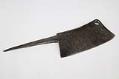
Hand-forged cleaver made by blacksmith August Joseph Wenzel, ca. 1890
August Joseph Wenzel (1856-1945) was born in Kingdom of Prussia, Germany, and moved to Seattle in 1888 with his wife Maria and their 8 children. He opened a blacksmith and cooper shop on Pike Street between Fourth Avenue and Fifth Avenue. Next door to the blacksmith shop he owned a wagon works shop and next to that a meat market.…
ID Number:1953.624
Date:Circa 1890
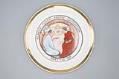
Plate commemorating the Alaska-Yukon-Pacific Exposition (AYPE) held in Seattle in 1909
The Alaska-Yukon-Pacific Exposition (AYPE) was a world's fair held in Seattle in 1909. It publicized the development of the Pacific Northwest and positioned Seattle as a gateway to Alaska and the Pacific Rim. This souvenir plate prominently features the official AYPE emblem which was designed by Adelaide Hanscom Leeson (1876-1932). One of the many published AYPE guides explained the emblem…
ID Number:1954.678.2
Date:1909
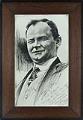
Photographic print of portrait drawing of John Edward Chilberg by Frank Calvert, 1909
Frank Calvert (1876-1920) was an illustrator for the Seattle Times, a painter, and a member of the Society of Beaux Arts, which was established "to develop art and its appreciation here in the Northwest." In 1908, he helped create and develop an art colony in the Bellevue area on the eastern shores of Lake Washington, and the City of Beaux…
ID Number:1954.751
Date:1909
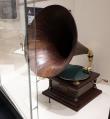
Phonograph displayed at the Alaska-Yukon-Pacific Exposition (AYPE), 1909
This phonograph manufactured by Victor Talking Machine Company was displayed at the Alaska-Yukon-Pacific Exposition (AYPE) as the "deluxe" model of the Victor line. The AYPE was a world's fair held in Seattle in 1909. It publicized the development of the Pacific Northwest and positioned Seattle as a gateway to Alaska and Pacific Rim. Exhibits at the Exposition also featured new…
ID Number:1954.754
Date:Circa 1909
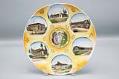
Souvenir plate from the Alaska-Yukon-Pacific Exposition (AYPE), 1909
The Alaska-Yukon-Pacific Exposition (AYPE) was a world's fair held in Seattle in 1909. It publicized the development of the Pacific Northwest and positioned Seattle as a gateway to Alaska and the Pacific Rim. This souvenir plate includes the official emblem of the AYPE surrounded by flowers in the center. Surrounding that are six buildings from the Exposition: The Machinery Building,…
ID Number:1954.764.a
Date:1909
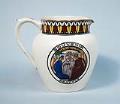
Alaska-Yukon-Pacific Exposition (AYPE) souvenir pitcher made for The Bon Marché, 1909
This pitcher is a souvenir of the Alaska-Yukon-Pacific Exposition (AYPE), a world's fair held in Seattle in 1909. It publicized the development of the Pacific Northwest and positioned Seattle as a gateway to Alaska and the Pacific Rim. The pitcher is decorated with the official AYPE emblem, designed by Adelaide Hanscom Leeson (1876-1932). One of the many published AYPE guides…
ID Number:1954.764.e
Date:1909
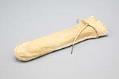
Gold poke used in Alaska, 1902
This poke, or pouch, was used during the gold rush in Alaska to store nuggets until they could be assessed in town.
ID Number:1954.824.c
Date:Circa 1902
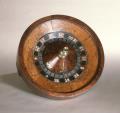
Roulette wheel from Soapy Smith's saloon in Skagway, Alaska, ca. 1890
This roulette wheel once belonged to the infamous con man, Jefferson Randolph “Soapy” Smith, who arrived in Skagway, Alaska, in 1897, during the Klondike Gold Rush. “Soapy” Smith was reputed to have rigged his roulette wheel, marked his cards and ran a Skagway gang, marking him as the “king of the frontier con men”—until a fatal shootout in 1898.
ID Number:1955.970.236
Date:Circa 1890