106 results for: Williams
Photograph
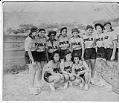
Owls Club women's softball team, circa 1938
The Owls Club was a Black women’s softball team formed the late 1930s in Seattle. The Owls won the first women’s Washington State Softball Championship in 1938, playing at Sick’s Stadium, today the site of Rainier Avenue Lowe’s. The team, renamed the Brown Bombers, won the championship again in 1939. Left-handed pitcher Lillian Brown struck out twelve batters on the…
ID Number:2014.49.19.01.08
Date:Circa 1938
Photograph
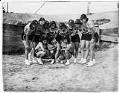
Owls Club women's softball team, circa 1938
The Owls Club was a Black women’s softball team formed the late 1930s in Seattle. The Owls won the first women’s Washington State Softball Championship in 1938, playing at Sick’s Stadium, today the site of Rainier Avenue Lowe’s. The team, renamed the Brown Bombers, won the championship again in 1939. Left-handed pitcher Lillian Brown struck out twelve batters on the…
ID Number:2014.49.19.01.09
Date:Circa 1938
Photograph
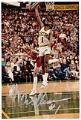
Gus Williams of the Seattle SuperSonics, circa 1979
Point guard Gus Williams led the Seattle SuperSonics to the 1979 NBA World Championship. Twice an NBA All-Star, Williams played six seasons for the Sonics. This photo, autographed by Gus Williams, shows him jumping for the basket.
ID Number:2014.49.053.008.02
Date:Circa 1979
Photograph
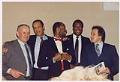
Gus Williams and others at Sonics event, February 11, 1985
On February 11, 1985, a roast for retired Seattle SuperSonics basketball player Fred Brown (aka "Downtown Freddie Brown") was held at the Sea-Tac Red Lion as a fundraiser for the American Heart Association. Several of Brown's former Sonics teammates and other Sonics personnel attended the event. This photo shows former Sonics player Gus Williams at center, with other unidentified men…
ID Number:2014.49.054.029.0002
Date:1985
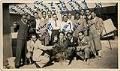
Photograph
Jazz musicians in Shanghai, China, circa 1938
Many American jazz musicians traveled to Shanghai during the city's golden age in the 1930s, when "the Paris of the Orient" was the newest horizon on an increasingly international jazz music scene. For Black musicians, who were often excluded from white musicians' unions in the U. S. and subjected to other forms of segregation, Shanghai provided steady, well-paid work, and…
ID Number:2016.84.2.9.1
Date:Circa 1938
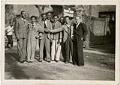
Photograph
Musicians from Earl Whaley's band in China, September 7, 1938
Many American jazz musicians traveled to Shanghai during the city's golden age in the 1930s, when "the Paris of the Orient" was the newest horizon on an increasingly international jazz music scene. For Black musicians, who were often excluded from white musicians' unions in the U. S. and subjected to other forms of segregation, Shanghai provided steady, well-paid work, and…
ID Number:2016.84.2.9.3
Date:1938
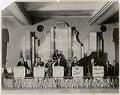
Photograph
Earl Whaley's band on stage in Shanghai, China, December 20, 1934
Many American jazz musicians traveled to Shanghai during the city's golden age in the 1930s, when "the Paris of the Orient" was the newest horizon on an increasingly international jazz music scene. For Black musicians, who were often excluded from white musicians' unions in the U. S. and subjected to other forms of segregation, Shanghai provided steady, well-paid work, and…
ID Number:2016.84.2.10.1
Date:1934
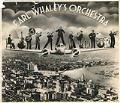
Photograph
Earl Whaley's Orchestra photo collage, circa 1937
Many American jazz musicians traveled to Shanghai during the city's golden age in the 1930s, when "the Paris of the Orient" was the newest horizon on an increasingly international jazz music scene. For Black musicians, who were often excluded from white musicians' unions in the U. S. and subjected to other forms of segregation, Shanghai provided steady, well-paid work, and…
ID Number:2016.84.2.10.2
Date:Circa 1937
Photograph
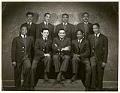
Earl Whaley's band, Shanghai, China, circa 1937
Many American jazz musicians traveled to Shanghai during the city's golden age in the 1930s, when "the Paris of the Orient" was the newest horizon on an increasingly international jazz music scene. For Black musicians, who were often excluded from white musicians' unions in the U. S. and subjected to other forms of segregation, Shanghai provided steady, well-paid work, and…
ID Number:2016.84.2.10.3
Date:Circa 1937
Ephemera
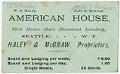
American House business card, circa 1877
John Harte McGraw (1850-1910) moved to Seattle from Maine in 1876 and got a job as a clerk in the Occidental Hotel. According to his obituary, he became an owner of American House boarding house in 1877, though the hotel was destroyed in a fire in 1878. That year he joined Seattle's tiny police force and began a successful career…
ID Number:2018.3.3.57
Date:Circa 1877