771 results for: Transportation
Photograph
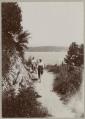
Two women on Lake Washington cycling path, circa 1901
The 1890s boom in bicycling hit Seattle and the rest of the country. Public and private money built a network of bicycle paths in Seattle and out into the wooded countryside. Four tracks were built for bike racing. As the city grew, many of the trails became streets and lost their use as bike paths. This photo shows two women…
ID Number:SHS2968
Date:Circa 1901
Photograph
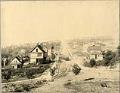
West-facing view of Queen Anne Hill, Seattle, circa 1905
This image of Seattle's Queen Anne Hill neighborhood was taken facing west from Queen Anne Avenue up West Highland Drive. The cable car visible on West Highland Drive is probably part of the northern segment of the Front Street Cable Railway, which ran north along Second Avenue North from the cable car power house at Denny Way, turned west at…
ID Number:SHS3127
Date:Circa 1905
Photograph
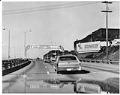
Cars on the Alaskan Way Viaduct, Seattle, 1967
The Alaskan Way Viaduct was an elevated highway in Seattle which was completed in 1966 after 16 years of construction and decades of planning. The double-decked highway ran along the Elliott Bay waterfront above the surface street, Alaskan Way, following previously existing railroad lines. The viaduct provided Seattle with its first bypass route around the downtown business district. The viaduct…
ID Number:SHS5152
Date:1967
Photograph
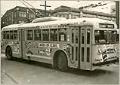
Trackless trolley or electric bus, Seattle, circa 1943
As the 1940s approached, Seattle began to modernize its transportation system, replacing its aging trolleys and streetcars with motorized buses and “trackless trolleys” (electric buses powered via overhead lines). In 1941, the last Seattle streetcar made its final run. Streets were repaved as the streetcar tracks throughout the city were torn up and sold as scrap. This image, likely taken…
ID Number:SHS5566
Date:Circa 1943
Photograph
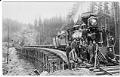
Railroad construction workers and locomotive at the Green River crossing, 1885
In the 1880s, Chinese laborers were recruited by railroad companies because they worked for lower pay than whites. Chinese men were often assigned to such dangerous tasks as blasting through rock and laying tracks in tunnels or on river bluffs. Of the 20,000 men that built the Northern Pacific branch line between Pasco and Tacoma, 15,000 were Chinese.This 1885 photo…
ID Number:SHS5907
Date:1885
Photograph
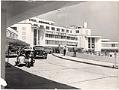
East face of Seattle-Tacoma International Airport, 1950
Seattle-Tacoma International Airport opened officially in 1949, providing the region with a state-of-the-art passenger and freight gateway to Alaska and Asia. Four major airlines served Sea-Tac: United, Pan American, Northwest and Western.This 1950 photo shows the front of Seattle-Tacoma Airport. A bus, several cars and a motorcycle with a sidecar have parked on the entry ramp in front of the…
ID Number:SHS6186
Date:1950
Photograph
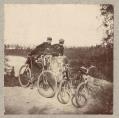
Boys with bicycles above Portage Bay, Seattle, circa 1895
Two boys pose for a photograph on a tree stump with their bicycles and one other, likely the photographer's, parked in front. The view behind shows Portage Bay and Lake Washington in the distance. Typed on verso: From what is now Interlaken Blvd. toward Portage Bay at left, Montlake, Lk. Wash. in the distance. 1890's.SHS category: Transportation - Cycling
ID Number:SHS6349
Date:Circa 1895
Photograph
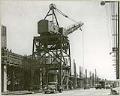
Alaskan Way Viaduct under construction, Seattle, circa 1952
The Alaskan Way Viaduct was an elevated highway in Seattle which was completed in 1966 after 16 years of construction and decades of planning. The double-decked highway ran along the Elliott Bay waterfront above the surface street, Alaskan Way, following previously existing railroad lines. The viaduct provided Seattle with its first bypass route around the downtown business district. The viaduct…
ID Number:SHS7287
Date:Circa 1952
Photograph
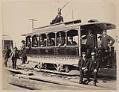
Seattle Electric Railway Company trolley with motormen, circa 1890
Seattle's first electric streetcars began carrying passengers in 1889. By 1892, the city had 48 miles of electric streetcars and 22 miles of cable railway. In the mid-1890s, motormen were paid 22 cents an hour, but only while the cars were rolling. They weren't paid for the time it took to get the cars ready in the morning, keep them…
ID Number:SHS7701
Date:Circa 1890
Photograph
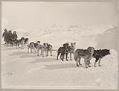
Dogsled owned by a mail carrier, near Nome, Alaska, circa 1905
Mail delivery quickly became an important service for prospectors arriving in Alaska for the Gold Rush. During the winter, dogsleds delivered first class mail to Nome once a month. Magazines and newspapers had to wait for the steamers which ran after the ice melted. Dogsled mail carriers generally worked in relay, each carrying the mail along a particular section of…
ID Number:SHS7977
Date:Circa 1905