101 results for: Great Depression
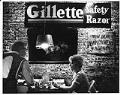
Photograph
Waiter and customer at Breadline restaurant, Seattle, April 1980
The Breadline & Soup Kitchen was a Pioneer Square restaurant owned by Jack Fecker, Steve Darland, and Bill Keegan. Located at Second Avenue South and Jackson Street, the eatery was themed on the Great Depression, specifically the 1929 stock-market crash that led to breadlines and soup kitchens. The menu of soups, stews and homemade bread advertised "1929 prices and atmosphere"…
ID Number:2000.107.185.18.02
Date:1980
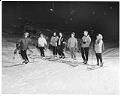
Photograph
Ski school students and instructor at Snoqualmie Summit, circa 1961
In the winter of 1934, Seattle made national news by opening one of the first municipal ski areas in the country at Snoqualmie summit, championed by Mayor John F. Dore, a skier who envisioned the project as one that could lift his city's spirits during the midst of the Great Depression. The Ski Park grew, installing a rope tow in…
ID Number:2009.23.910
Date:Circa 1961
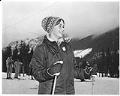
Photograph
Ski school student at Snoqualmie Summit, circa 1961
In the winter of 1934, Seattle made national news by opening one of the first municipal ski areas in the country at Snoqualmie summit, championed by Mayor John F. Dore, a skier who envisioned the project as one that could lift his city's spirits during the midst of the Great Depression. The Ski Park grew, installing a rope tow in…
ID Number:2009.23.911
Date:Circa 1961
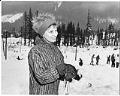
Photograph
Skier at Snoqualmie Summit, circa 1961
In the winter of 1934, Seattle made national news by opening one of the first municipal ski areas in the country at Snoqualmie summit, championed by Mayor John F. Dore, a skier who envisioned the project as one that could lift his city's spirits during the midst of the Great Depression. The Ski Park grew, installing a rope tow in…
ID Number:2009.23.912
Date:Circa 1961
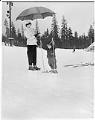
Photograph
Ski school student and instructor at Snoqualmie Summit, circa 1961
In the winter of 1934, Seattle made national news by opening one of the first municipal ski areas in the country at Snoqualmie summit, championed by Mayor John F. Dore, a skier who envisioned the project as one that could lift his city's spirits during the midst of the Great Depression. The Ski Park grew, installing a rope tow in…
ID Number:2009.23.918
Date:Circa 1961
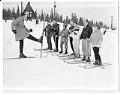
Photograph
Ski school students and instructor at Snoqualmie Summit, circa 1961
In the winter of 1934, Seattle made national news by opening one of the first municipal ski areas in the country at Snoqualmie summit, championed by Mayor John F. Dore, a skier who envisioned the project as one that could lift his city's spirits during the midst of the Great Depression. The Ski Park grew, installing a rope tow in…
ID Number:2009.23.919
Date:Circa 1961
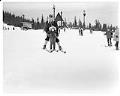
Photograph
Ski school student and instructor at Snoqualmie Summit, circa 1961
In the winter of 1934, Seattle made national news by opening one of the first municipal ski areas in the country at Snoqualmie summit, championed by Mayor John F. Dore, a skier who envisioned the project as one that could lift his city's spirits during the midst of the Great Depression. The Ski Park grew, installing a rope tow in…
ID Number:2009.23.920
Date:Circa 1961
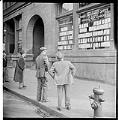
Photograph
Men outside of the Public Employment Office, Seattle, circa 1936
The Seattle Public Employment Office opened in 1894, serving many men who had come west during the panic of 1893 to seek a living. It was the first office of its kind in the nation. During the Great Depression, unemployed men in Seattle were able to find employment on WPA-funded projects like paving streets, and improving city parks, Boeing field,…
ID Number:2014.49.005.004.0045
Date:Circa 1936
Photograph
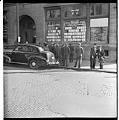
Men outside of the Public Employment Office, Seattle, circa 1936
The Seattle Public Employment Office opened in 1894, serving many men who had come west during the panic of 1893 to seek a living. It was the first office of its kind in the nation. During the Great Depression, unemployed men in Seattle were able to find employment on WPA-funded projects like paving streets, and improving city parks, Boeing field,…
ID Number:2014.49.005.005.0055
Date:Circa 1936
Photograph
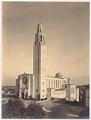
St. Joseph's Church, Seattle, circa 1930
This image is of St. Joseph's Church which was constructed with Superior Portland Cement. The 10 story building was originally designed in the early Gothic style but the challenge of building during the Great Depression necessitated a change from granite and marble to a newly rediscovered technology, reinforced concrete, bringing the original estimate from $1,000,000 down to $450,000. Reinforced concrete…
ID Number:2016.92.235
Date:Circa 1930