101 results for: Great Depression
Photograph
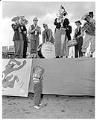
Girl covering ears near band, Seattle, August 10, 1958
The Rainier District Pow Wow began in the midst of the Great Depression as a day-long community picnic at Seward Park. Between 1934 and 1992, when it ended, pow wow events paralleled what was going on in the rest of the country, celebrating neighborhood commerce in the 1930s, patriotism during World War II, the Baby Boom of the late 1940s…
ID Number:1986.5.11304.2
Date:1958
Photograph
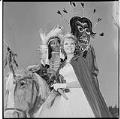
Pageant queen with wooden "Chief Pow Wow," Seattle, July 31, 1961
The Rainier District Pow Wow began in the midst of the Great Depression as a day-long community picnic at Seward Park. Between 1934 and 1992, when it ended, pow wow events paralleled what was going on in the rest of the country, celebrating neighborhood commerce in the 1930s, patriotism during World War II, the Baby Boom of the late 1940s…
ID Number:1986.5.11308.1
Date:1961
Photograph
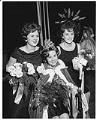
Pow Wow pageant queen and princesses, Seattle, June 5, 1963
The Rainier District Pow Wow began in the midst of the Great Depression as a day-long community picnic at Seward Park. Between 1934 and 1992, when it ended, pow wow events paralleled what was going on in the rest of the country, celebrating neighborhood commerce in the 1930s, patriotism during World War II, the Baby Boom of the late 1940s…
ID Number:1986.5.11309.1
Date:1963
Photograph
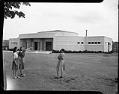
Three women standing in front of the Hughes Penthouse Theatre on the University of Washington campus, Seattle, May 1940
The Penthouse Theatre on the University of Washington campus opened on May 16, 1940 with a production of "Spring Dance." Built with Works Progress Administration funds, the 172-seat theater, designed by Glenn Hughes, head of the University of Washington's School of Drama, and John Conway, chief designer for the drama department, was the first theater-in-the-round constructed in the United States.…
ID Number:1986.5.12660.1
Date:1940
Photograph
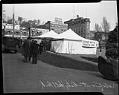
Unemployed camp at City Hall Park near Third and Yesler, Seattle, 1939
Demonstrators erected this tent in City Hall Park with the sign 'Governor Martin's Starvation Camp No. 2' in response to King County's relief crisis. 'Camp No. 1' was in Spokane. The donated tent contained chairs and benches and there were plans to open a commissary there. Another tent was planned to hold foodstuffs donated by merchants to be distributed to…
ID Number:1986.5.15173.1
Date:1939
Photograph
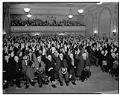
WPA workers vote to strike inside Eagles Hall, Seattle, 1937
At the Eagles Hall on Union Street, 800 hands rose in unison as Works Progress Administration workers voted to continue their month-long strike. Supported by the Workers' Alliance of Washington, the strikers voted two days later to end the strike after receiving guarantees of a six-hour day, a five-day week, and union-level hourly pay rates. The Fraternal Order of the…
ID Number:1986.5.16694.1
Date:1937
Photograph
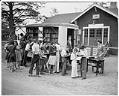
WPA bookmobile at Grayland School, June 8, 1940
During the Great Depression, libraries all over the United States had to lay off staff members and reduce salaries of those who remained. From the mid-1930s until the outbreak of World War II, several New Deal programs provided money to improve public and school library buildings and services. In Washington state, two federally-funded bookmobiles carried reading material to communities in…
ID Number:1986.5.16696.1
Date:1940
Photograph
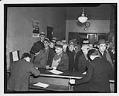
WPA applicants in a Seattle office, 1937
Handwritten on sleeve: W.P.A., Seattle, applicants. Date photograph was filed at the Seattle Post-Intelligencer (date of photograph and file date may differ by a month or more): February 8, 1937.
ID Number:1986.5.16697.1
Date:1937
Photograph
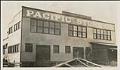
Pacific Stone Company building exterior, Seattle, circa 1926
Pacific Stone Company was founded by the Swartz brothers in Seattle around 1920. The company produced architectural cast stone for use in construction and trim of buildings. As Seattle grew, the company prospered, until the Great Depression of the 1930s. Though the company remained in business until around 1938, Pacific Stone's last major contract was the 24-story Exchange Building, completed…
ID Number:1991.22.1.1
Date:Circa 1926
Photograph
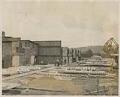
Pacific Stone Co. buildings and yard, Seattle, circa 1926
Pacific Stone Company was founded by the Swartz brothers in Seattle around 1920. The company produced architectural cast stone for use in construction and trim of buildings. As Seattle grew, the company prospered, until the Great Depression of the 1930s. Though the company remained in business until around 1938, Pacific Stone's last major contract was the 24-story Exchange Building, completed…
ID Number:1991.22.1.5
Date:Circa 1926