154 results for: Fish and Fishing
Photograph
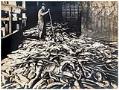
10,000 salmon on cannery wharf and Chinese worker, circa 1900
In the salmon industry, people of different races held different jobs. White workers caught the fish and took care of the equipment while Chinese laborers sorted, butchered, and canned the fish. In this photo, a Chinese worker sorts salmon into various kinds and sizes. The photo was taken by Anders B. Wilse at a Puget Sound cannery wharf sometime around…
ID Number:1990.45.20
Date:Circa 1900
Photograph
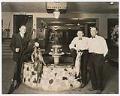
Ben Paris and two men posing at Ben Paris Sporting Goods and Recreation, Seattle, circa 1935
Benjamin M. Paris (1884-1950) was an American sportsman, entrepreneur, and conservationist. His namesake store, the Ben Paris, was a combination restaurant, lounge, pool hall, pull-tab parlor, barber shop, sporting goods establishment, and was a Seattle institution for many years. It was located on the northeast corner of Fourth Avenue and Pine Street on the lower level of the Eitel Building.…
ID Number:1991.64.2
Date:Circa 1935
Photograph
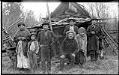
Cheholtz family in front of fishing shack, near Castle Rock, Washington, circa 1885
The Cowlitz People are a Coast Salish group whose historic lands are along the Cowlitz and Lewis Rivers, in what is now southwestern Washington. Traditionally, the annual cycle of resource gathering determined where the Cowlitz People traveled and at what time of year – from river fishing in the spring, gathering roots and berries in summer and fall, and making…
ID Number:1991.79.49
Date:Circa 1885
Photograph
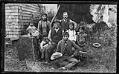
Group of Nooksacks near Lynden, Washington, circa 1900
The Nooksack are a Coast Salish people whose historic lands centered on the Nooksack River drainage basin, from the shore to around Mount Baker in the east. They have their own language, also named Nooksack. On the edges of Nooksack land and in offshore waters, resources were shared with neighboring peoples, to whom the Nooksack were linked by shared descent…
ID Number:1991.79.72
Date:Circa 1900
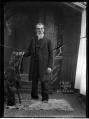
Photograph
Jim Yellakanim, Nooksack chief, circa 1898
The Nooksack are a Coast Salish people whose historic lands centered on the Nooksack River drainage basin, from the shore to around Mount Baker in the east. They have their own language, also named Nooksack. On the edges of Nooksack land and in offshore waters, resources were shared with neighboring peoples, to whom the Nooksack were linked by shared descent…
ID Number:1991.79.82
Date:Circa 1898
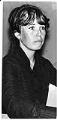
Photograph
Ramona Bennett during meeting with church officials, September 17, 1970
Ramona Bennett (b. 1938) is a prominent Puyallap Tribe leader and activist. She was elected to the Puyallup Tribal Council in 1968, and served as Tribal Chairwoman from 1971 to 1978.Much of Bennett’s work focuses on social welfare issues, mainly fighting for the rights of women, children, and families. She began her social service work in the 1950s, with the…
ID Number:2000.107.020.10.01
Date:1970
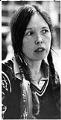
Photograph
Ramona Bennett, October 1976
Ramona Bennett (b. 1938) is a prominent Puyallap Tribe leader and activist. She was elected to the Puyallup Tribal Council in 1968, and served as Tribal Chairwoman from 1971 to 1978. Bennett is also a pioneer of fishing rights advocacy, co-founding the Survival of American Indians Association in 1964, and helping to bring “fish-in” protests to national prominence. Much of…
ID Number:2000.107.020.10.02
Date:1976
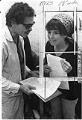
Photograph
Ramona Bennett and Hank Adams during trial on Native fishing rights, Tacoma, September 1970
Ramona Bennett (b. 1938) is a prominent Puyallup Tribe leader and activist. She was elected to the Puyallup Tribal Council in 1968, and served as Tribal Chairwoman in from 1971 to 1978. Hank Adams (Assiniboine-Sioux, 1943-2020) fought for Indian civil rights and sovereignty beginning in the 1960s and throughout his life. Both Bennett and Adams were involved with the National…
ID Number:2000.107.020.10.03
Date:1970
Photograph
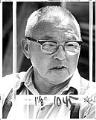
Ray Charles at ceremony to close Swinomish beaches, July 12, 1971
In July 1971, the Swinomish tribal council voted to close 15 miles of beachland on their reservation to non-Indians. At issue were the general despoliation of the land and the depletion of marine life. The Swinomish were attempting to rebuild and preserve the diminishing butter clam population. Though outsiders were required to obtain a permit and observe state shellfish restrictions…
ID Number:2000.107.034.24.01
Date:1971
Photograph
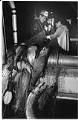
Stanley Moses and Jeff Sheldon removing salmon from a gillnet on Lake Washington, July 16, 1984
After the Boldt decision of 1974, Indigenous tribes in western Washington were legally entitled to half the harvestable salmon run each year. Fishers from the Muckleshoot and Suquamish Tribes were allowed to fish from Lake Washington during specific four-hour windows, under the supervision of fishery officials representing both the state and the Tribes.Here, Stanley Moses (Muckleshoot) and his 12-year-old crew…
ID Number:2000.107.064.01.01
Date:1984