154 results for: Fish and Fishing
Photograph
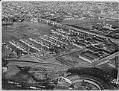
Aerial of Fishermen's Terminal from southwest, Seattle, 1950
For many years, commercial fishermen have kept their boats at Fishermen's Terminal, in Salmon Bay, just west of the Ballard Bridge. This sheltered area of the Lake Washington Ship Canal gives easy access to Puget Sound. Typed on verso: Air view of Salmon Bay Terminal. Largest commercial fishing terminal in U.S., 1950.
ID Number:SHS6172
Date:1950
Photograph
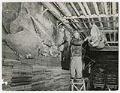
Man with display at the Frozen Fish Museum, Seattle, 1950
From 1926-1956 the Port of Seattle operated the Frozen Fish Museum on the Port’s Spokane Street wharf (now Terminal 30). Strange fish would be presented to the museum, where it could be viewed by the public. In this image taken at the museum, a man poses with a fish hanging from the ceiling. Caption information source: http://www.portseattle.org/About/History/Pages/1950-1959.aspxCaption information source: The…
ID Number:SHS6176
Date:1950
Photograph
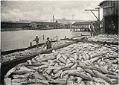
A Puget Sound salmon catch, circa 1900
The salmon canning industry started in the late 1860s along the Columbia River. By the 1890s, the fishing ground and market had shifted to Puget Sound. Seattle was the home base of the salmon fishing fleet for many years. In this photo, taken around 1900, workers unload salmon from barges at a Seattle cannery wharf south of downtown.
ID Number:SHS10593
Date:Circa 1900
Photograph
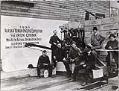
Automated salmon processing machine, "Iron Chink," Seattle, 1909
In 1902, machines called "Iron Chinks" started replacing the largely Chinese cannery workers who butchered and canned the fish. The use of a racial slur in the machine's name is one example of the discrimination faced by Chinese immigrants to the US. The name continued to be used into the mid-20th century. Today they are called butchering machines or iron…
ID Number:SHS10662
Date:1909