154 results for: Fish and Fishing
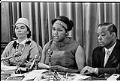
Photograph
Janet McCloud, Lillian Gregory, and Jack Tanner at press conference, Olympia, July 3, 1968
Janet Joy "Yet-Si-Blue" (Renecker) McCloud (1934-2003) was a Tulalip tribe member and an Indigenous activist who was prominent in the "fish wars" that led to the Boldt Decision, a federal ruling guaranteeing Washington tribes half the state's salmon and steelhead trout catch.In this image Janet McCloud, left, and Jack Tanner, right, listen to Lillian Gregory, center, speak at a press…
ID Number:1986.5.26914.23
Date:1964
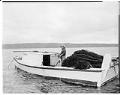
Photograph
Marya Moses in her fishing boat, July 5, 1962
Marya D. Moses (1911-2006) was a pioneering commercial fisherwoman working from the Tulalip Indian Reservation in Snohomish County. Marya (pronounced "Mariah") Jones was born on the Tulalip Reservation to Snohomish Indian parents William Jones and Nancy Boomhouse Jones. Her grandparents spoke the Chinook Jargon, and Moses grew up speaking the ancient Coast Salish language, Lushootseed. In 1928 she married Walter…
ID Number:1986.5.36634.2
Date:1962
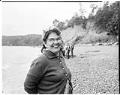
Photograph
Marya Moses on beach, July 5, 1962
Marya D. Moses (1911-2006) was a pioneering commercial fisherwoman working from the Tulalip Indian Reservation in Snohomish County. Marya (pronounced "Mariah") Jones was born on the Tulalip Reservation to Snohomish Indian parents William Jones and Nancy Boomhouse Jones. Her grandparents spoke the Chinook Jargon, and Moses grew up speaking the ancient Coast Salish language, Lushootseed. In 1928 she married Walter…
ID Number:1986.5.36634.3
Date:1962
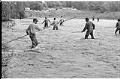
Photograph
Muckleshoot Tribe members practicing treaty fishing rights in Green River, Auburn, October 4, 1970
In the 1960s and 1970s, Native Americans and their supporters began protesting Washington State laws restricting Native American fishing rights that had been granted in a series of treaties with the United States between 1854 and 1855. The Survival of the American Indian Society (SAIA), the NAACP, and the National Indian Youth Council (NIYC), coordinated a series of protests and…
ID Number:1986.5.52952.7
Date:1970
Photograph
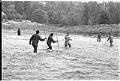
Muckleshoot Tribe members practicing their fishing rights in Green River, Auburn, October 4, 1970
In the 1960s and 1970s, Native Americans and their supporters began protesting Washington State laws restricting Native American fishing rights that had been granted in a series of treaties with the United States between 1854 and 1855. The Survival of the American Indian Society (SAIA), the NAACP, and the National Indian Youth Council (NIYC), coordinated a series of protests and…
ID Number:1986.5.52952.12
Date:1970
Photograph
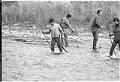
Muckleshoot Tribe members practicing their fishing rights in Green River, Auburn, October 4, 1970
In the 1960s and 1970s, Native Americans and their supporters began protesting Washington State laws restricting Native American fishing rights that had been granted in a series of treaties with the United States between 1854 and 1855. The Survival of the American Indian Society (SAIA), the NAACP, and the National Indian Youth Council (NIYC), coordinated a series of protests and…
ID Number:1986.5.52952.17
Date:1970
Photograph
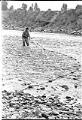
Muckleshoot Tribe member practicing their fishing rights in Green River, Auburn, October 4, 1970
In the 1960s and 1970s, Native Americans and their supporters began protesting Washington State laws restricting Native American fishing rights that had been granted in a series of treaties with the United States between 1854 and 1855. The Survival of the American Indian Society (SAIA), the NAACP, and the National Indian Youth Council (NIYC), coordinated a series of protests and…
ID Number:1986.5.52952.23
Date:1970
Photograph
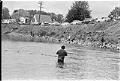
Muckleshoot Tribe member practicing their fishing rights in Green River, Auburn, October 4, 1970
In the 1960s and 1970s, Native Americans and their supporters began protesting Washington State laws restricting Native American fishing rights that had been granted in a series of treaties with the United States between 1854 and 1855. The Survival of the American Indian Society (SAIA), the NAACP, and the National Indian Youth Council (NIYC), coordinated a series of protests and…
ID Number:1986.5.52952.31A
Date:1970
Photograph
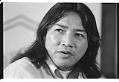
Bernie Whitebear, Seattle, 1971
Bernie Whitebear was born in the town of Nespelem on the Colville Reservation in 1937. After growing up in poverty on the reservation, he moved to Western Washington in 1955 and shortly became a fisherman on the Puyallup River. In the late 1950s, Bernie Whitebear joined a campaign of activism to protect Native fishing rights, which had been guaranteed by…
ID Number:1986.5.55140.1
Date:1971
Photograph
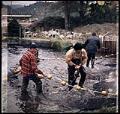
Indigenous fishers practicing their fishing rights, 1972
In the 1960s and 1970s, Native Americans and their supporters began protesting Washington State laws restricting Native American fishing rights that had been granted in a series of treaties with the United States between 1854 and 1855. The Survival of the American Indian Society (SAIA), the NAACP, and the National Indian Youth Council (NIYC) coordinated a series of protests and…
ID Number:1986.5.56319.1
Date:1972