417 results for: Indigenous Peoples
Photograph
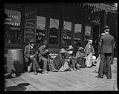
Group of Suquamish people waiting at Colman Dock, Seattle, circa 1911
The Suquamish tribe lived on Bainbridge Island and fished in the waters of Puget Sound long before Seattle was founded. The Suquamish carved dugout canoes and used them to travel to fishing and hunting grounds across Puget Sound. Fishing, especially for salmon, was of central importance to the Suquamish for both subsistence and culture. Suquamish fishers used subtle environmental clues…
ID Number:1983.10.7723
Date:1911
Photograph
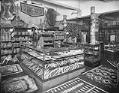
Hudson Bay Fur Co., Seattle, circa 1910
Handwritten on sleeve: Hudson Bay Fur Co.Webster & Stevens number: 6160
ID Number:1983.10.7725.2
Date:Circa 1910
Photograph
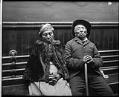
Man and woman, possibly Suquamish, seated inside a Seattle building, circa 1910
Although the photographers did not identify this couple or the location, it is possible that they are Suquamish, waiting in Seattle's federal courthouse. At approximately the same time, a group of Suquamish were photographed at Seattle's Colman Dock returning to the Port Madison Reservation, on Bainbridge Island, after trying to collect payments for land sold to the government. Webster &…
ID Number:1983.10.7792
Date:Circa 1910
Photograph
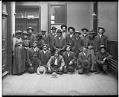
Group of Native Americans, 1910
Sometime in 1910, a photographer from the firm of Webster & Stevens snapped this image of a formally dressed group of Indigenous men and women inside an unidentified Seattle building. It is possible that the group was involved in pursuing land claims or fishing rights granted by treaty with the United States. Webster & Stevens number: 6940
ID Number:1983.10.7793
Date:1910
Photograph
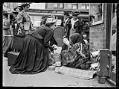
White woman buying baskets from an Indigenous woman, Seattle, circa 1911
At the turn of 19th to 20th centuries, Indigenous artists in the Pacific Northwest were making baskets and carvings specifically for the tourist trade and were experimenting with form and design. Making baskets for sale became an import income source for many Indigenous families. In this photo, taken around 1911 outside a downtown Seattle store, a woman bends to ask…
ID Number:1983.10.7929
Date:1911
Photograph
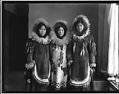
Inuit or Alaska Native women in furs, Seattle, 1911
This image shows three Indigenous women, probably Inuit or Alaska Native, wearing traditional furs. Handwritten on sleeve: Eskimo - 1911.Webster & Stevens number: 8199
ID Number:1983.10.7961
Date:1911
Photograph
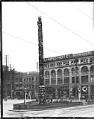
Totem pole in Pioneer Square, Seattle, circa 1905
This Tlingit totem was carved around 1870 to honor a high-ranking tribal woman named Aanséet. The pole was named Naas-shagee-yéil and it was placed in Aanséet's village on Tongass Island on the Alaska coast. In 1899, a group of leading Seattle businessmen on a goodwill tour of southeastern Alaska stole the totem and brought it back to Pioneer Square. The…
ID Number:1983.10.8056.2
Date:Circa 1905
Photograph
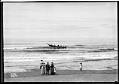
Quinault canoe and sightseers, Moclips, Washington, 1914
The Quinault are a Coast Salish people whose historic territory was the southwestern Olympic Peninsula. The current Quinault Indian Nation (QIN) has a reservation covering part of their historic lands. In addition to Quinault people, the QIN includes people from several neighboring tribes: Queets, Quileutes, Hohs, Chehalis, Chinook, and Cowlitz. Fishing, especially for salmon, is an important part of Quinault…
ID Number:1983.10.8687
Date:1914
Photograph
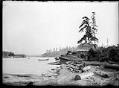
Hwehlchtid's house at Shilshole with canoe anchored offshore, circa 1905
In 1855, representatives of the Indigenous peoples of the area now known as Seattle, including the Duwamish and Suquamish, signed the Treaty of Point Elliott. As part of this treaty, many Indigenous people agreed to move in their tribal groups to reservations outside of the Seattle area, but some remained. In 1865 the Board of Trustees of Seattle passed Ordinance…
ID Number:1983.10.9067
Date:Circa 1905
Photograph
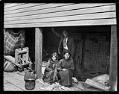
Native American family camping near the waterfront, circa 1912
Families from many different tribes camped along the Seattle waterfront, usually on their way to pick hops at inland farms. Before the area was filled with buildings and docks, they would tie up their canoes and pitch their tents along the shore.This photo shows a Native American family and their belongings at a building near the Seattle waterfront. Webster &…
ID Number:1983.10.9458
Date:Circa 1912