185 results for: Coast Salish Peoples
Photograph
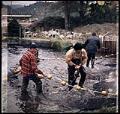
Indigenous fishers practicing their fishing rights, 1972
In the 1960s and 1970s, Native Americans and their supporters began protesting Washington State laws restricting Native American fishing rights that had been granted in a series of treaties with the United States between 1854 and 1855. The Survival of the American Indian Society (SAIA), the NAACP, and the National Indian Youth Council (NIYC) coordinated a series of protests and…
ID Number:1986.5.56319.1
Date:1972
Photograph
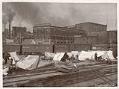
Encampment of Indigenous people on Ballast Island at the Seattle waterfront, circa 1900
In 1865 the Board of Trustees of Seattle passed Ordinance No. 5 banning Indigenous people from living in the city unless they worked for a non-Indigenous resident and lived on their employer's property. Despite this attempt to enforce separation between Indigenous people and the settlers, Seattle depended on Indigenous people. Settlers relied on Native people for domestic work and for…
ID Number:1990.45.14
Date:Circa 1900
Photograph
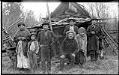
Cheholtz family in front of fishing shack, near Castle Rock, Washington, circa 1885
The Cowlitz People are a Coast Salish group whose historic lands are along the Cowlitz and Lewis Rivers, in what is now southwestern Washington. Traditionally, the annual cycle of resource gathering determined where the Cowlitz People traveled and at what time of year – from river fishing in the spring, gathering roots and berries in summer and fall, and making…
ID Number:1991.79.49
Date:Circa 1885
Photograph
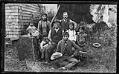
Group of Nooksacks near Lynden, Washington, circa 1900
The Nooksack are a Coast Salish people whose historic lands centered on the Nooksack River drainage basin, from the shore to around Mount Baker in the east. They have their own language, also named Nooksack. On the edges of Nooksack land and in offshore waters, resources were shared with neighboring peoples, to whom the Nooksack were linked by shared descent…
ID Number:1991.79.72
Date:Circa 1900
Photograph
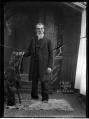
Jim Yellakanim, Nooksack chief, circa 1898
The Nooksack are a Coast Salish people whose historic lands centered on the Nooksack River drainage basin, from the shore to around Mount Baker in the east. They have their own language, also named Nooksack. On the edges of Nooksack land and in offshore waters, resources were shared with neighboring peoples, to whom the Nooksack were linked by shared descent…
ID Number:1991.79.82
Date:Circa 1898
Photograph
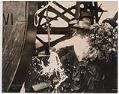
Kate Borst christening the steamer "Snoqualmie," August 11, 1919
In August 1919, the Puget Sound Bridge & Dredging Company launched the steamer "Snoqualmie" at its Seattle shipyard on Harbor Island. The vessel was named for the Snoqualmie Tribe, in honor of the aid they gave the settlers against other Indigenous groups in the war of 1855-1856, now referred to as the Puget Sound War. Many tribal members traveled to…
ID Number:1995.37.19.2.54
Date:1919
Photograph
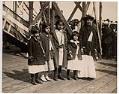
Snoqualmie woman and girls at the launching of the steamer "Snoqualmie," 1919
On August 11, 1919, the Puget Sound Bridge & Dredging Company launched the steamer "Snoqualmie" at its Seattle shipyard on Harbor Island. The vessel was named for the Snoqualmie Tribe, in honor of the aid they gave the settlers against other Indigenous groups in the war of 1855-1856, now referred to as the Puget Sound War. This photo shows some…
ID Number:1995.37.19.2.62
Date:1919
Photograph
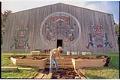
Greg Broad building walkway at Tillicum Village prior to APEC conference, Blake Island, November 5, 1993
The Asia-Pacific Economic Cooperation conference (APEC) was founded in 1989 as an informal dialog group with limited participation by ministers and cabinet-level officials in the Asian-Pacific region, and rose to world prominence in Seattle in 1993 when President Clinton endorsed the organization and used it for what is now an annual summit meeting of Asian and Pacific leaders. The group…
ID Number:2000.107.009.35.01
Date:1993
Photograph
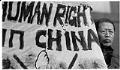
Ye Kuo Rong holding sign protesting China's human rights record prior to APEC conference, Seattle, November 19, 1993
The Asia-Pacific Economic Cooperation conference (APEC) was founded in 1989 as an informal dialog group with limited participation by ministers and cabinet-level officials in the Asian-Pacific region, and rose to world prominence in Seattle in 1993 when President Clinton endorsed the organization and used it for what is now an annual summit meeting of Asian and Pacific leaders. The group…
ID Number:2000.107.009.35.02
Date:1993
Photograph
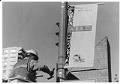
Worker attaching welcome banner to post prior to APEC conference, Seattle, November 1993
The Asia-Pacific Economic Cooperation conference (APEC) was founded in 1989 as an informal dialog group with limited participation by ministers and cabinet-level officials in the Asian-Pacific region, and rose to world prominence in Seattle in 1993 when President Clinton endorsed the organization and used it for what is now an annual summit meeting of Asian and Pacific leaders. The group…
ID Number:2000.107.009.35.03
Date:1993