771 results for: Transportation
Photograph
Fisherman's Terminal, Seattle, February 21, 1952
On May 17, 1952 the Port of Seattle's Fishermen's Terminal at Salmon Bay between the Interbay and Ballard neighborhoods was rededicated as the home of the Pacific Northwest fishing fleet after an expansion and modernization that allowed for moorage, drydock, repair, maintenance, and supply facilities for 1,000 vessels. This image of fishing boats docked at Fishermen's Terminal was taken facing…
ID Number:2000.107.171.31.01
Date:1952
Photograph
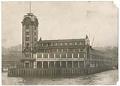
View of Grand Trunk dock from Elliott Bay, Seattle, circa 1912
The Grand Trunk Pacific dock was a shipping pier located on the Seattle waterfront at the foot of Marion Street. The largest wooden pier on the West Coast when it opened in 1910, the dock was built atop 5,000 creosote-soaked piles, and constructed using 3,700,000 board feet of lumber. In 1914 the dock was destroyed in a deadly fire, then…
ID Number:2000.107.171.32.01
Date:Circa 1912
Photograph
Hanford Street terminal, Seattle, March 22, 1927
The creation of the Port of Seattle in 1911 transformed a messy jumble of privately-owned and competing waterfront companies into a publicly owned and organized entity capable of propelling Seattle into a major center for trade. In 1915 the Port constructed the Hanford Street Grain Terminal (Pier 25), on the Duwamish East Waterway, in what is now the SoDo neighborhood.…
ID Number:2000.107.171.32.02
Date:1927
Photograph
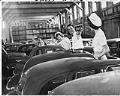
Employees with imported cars at Foreign Trade Zone, Seattle, April 20, 1950
Foreign-Trade Zones (FTZs) are duty-free, quota-free, secured areas in a designated customs “port of entry,” considered outside U. S. Customs territory and exempt from customs tariffs. The FTZ program was established in 1934 to stimulate economic growth and development in the United States by lowering the cost of international trade.In this image, from left, Robert Edwards, Rose Schnoberger, Bruce Williams,…
ID Number:2000.107.173.01.04
Date:1950
Photograph
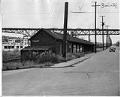
Abandoned Fremont railroad station, Seattle, July 28, 1948
This derelict railroad station in Seattle's Fremont neighborhood is located just east of the George Washington Memorial Bridge (commonly called the Aurora Bridge), which is visible in the background of this image. The small depot building was remodeled and is still standing at the foot of Stone Way North as of 2017. The station was probably part of the Seattle,…
ID Number:2000.107.173.03.01
Date:1948
Photograph
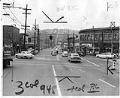
Patrolman handing out Civil Defense evacuation cards, Seattle, May 20, 1955
In this image Robert Vincent, Seattle Police Department patrolman, stands in the center of southbound traffic on Fremont Avenue North to hand out civil defense evacuation cards to motorists. At the time Fremont Avenue was designated a northbound evacuation route for the city. The Fremont Bridge is visible in the background. Signs in image: Salvation Army: Your Throw-Aways Make Work…
ID Number:2000.107.173.03.03
Date:1955
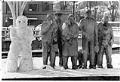
Photograph
Public sculpture with snowman, Seattle, January 6, 1982
Sculptor Richard Beyer's (1925-2012) "People Waiting for the Interurban," one of the most popular works of art in Seattle, was commissioned by the Fremont Arts Council and dedicated in 1978. It is located on the southeast corner of N. 34th Street and Fremont Avenue N., and depicts six people and a dog waiting for the Seattle to Everett Interurban, a…
ID Number:2000.107.173.03.05
Date:1982
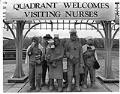
Photograph
Public sculpture decorated as nurses, Seattle, January 23, 1989
Sculptor Richard Beyer's (1925-2012) "People Waiting for the Interurban," one of the most popular works of art in Seattle, was commissioned by the Fremont Arts Council and dedicated in 1978. It is located on the southeast corner of N. 34th Street and Fremont Avenue N., and depicts six people and a dog waiting for the Seattle to Everett Interurban, a…
ID Number:2000.107.173.03.06
Date:1989
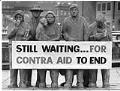
Photograph
Public sculpture with political sign, Seattle, January 27, 1988
Sculptor Richard Beyer's (1925-2012) "People Waiting for the Interurban," one of the most popular works of art in Seattle, was commissioned by the Fremont Arts Council and dedicated in 1978. It is located on the southeast corner of N. 34th Street and Fremont Avenue N., and depicts six people and a dog waiting for the Seattle to Everett Interurban, a…
ID Number:2000.107.173.03.07
Date:1988
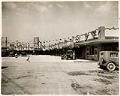
Photograph
Cove Mid-City Market, Seattle, March 27, 1931
This image of the new Cove Mid-City Market shows its convenient location on the corner of Elliott Avenue West and West Galer Street, at the east approach to the recently constructed Garfield Street Bridge (now the Magnolia Bridge) to Seattle's Magnolia neighborhood. Signs in image: Piggly Wiggly; Cove Mid-City Market; Wells Butcher's Supply Co.Caption information derived from captions written by…
ID Number:2000.107.176.37.03
Date:1931