3246 results for: Seattle Post-Intelligencer, The
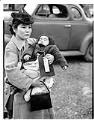
Photograph
Fumiko Hayashida and her daughter, Bainbridge Island, March 30, 1942
In this image, Fumiko Hayashida (1911-2014), holds her sleeping 14-month-old daughter, Natalie, at an exclusion assembly point near the ferry dock on Bainbridge Island. Civilian Exclusion Order No. 1 was issued at Bainbridge Island, ordering 227 residents of Japanese descent to leave with six days' notice. They departed by ferry on March 30, 1942. Hayashida and her family were incarcerated…
ID Number:PI28050
Date:1942
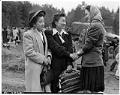
Photograph
Japanese American women saying goodbye to friend during forced removal, Bainbridge Island, March 30, 1942
In this image two young Japanese American women, Yoshie Terayama and Ritsuko Teryama, say goodbye to a white friend from school at an exclusion assembly point near the ferry dock on Bainbridge Island. Civilian Exclusion Order No. 1 was issued at Bainbridge Island, ordering 227 residents of Japanese descent to leave with six days' notice. They departed by ferry on…
ID Number:PI28051
Date:1942
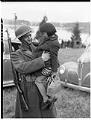
Photograph
U. S. soldier holding Japanese American girl during forced removal, Bainbridge Island, March 30, 1942
In this image a U. S. Army soldier holds a Japanese American child, Jane Nakamura, at an exclusion assembly point near the ferry dock on Bainbridge Island. Civilian Exclusion Order No. 1 was issued at Bainbridge Island, ordering 227 residents of Japanese descent to leave with six days' notice. They departed by ferry on March 30, 1942. The island had…
ID Number:PI28052
Date:1942
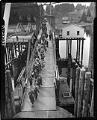
Photograph
Japanese Americans boarding ferry for forced removal, Bainbridge Island, March 30, 1942
In this image Japanese Americans board the ferry for forced removal from Bainbridge Island under U. S. Army guard. Civilian Exclusion Order No. 1 was issued at Bainbridge Island, ordering 227 residents of Japanese descent to leave with six days' notice. They departed by ferry on March 30, 1942. The island had a total of 276 Japanese American residents at…
ID Number:PI28053
Date:1942
Photograph
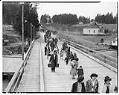
Japanese American families leaving Bainbridge Island, March 31, 1942
Civilian Exclusion Order No. 1 was issued at Bainbridge Island, ordering 227 residents of Japanese descent to leave with six days' notice. They departed by ferry on March 30, 1942. The island had a total of 276 Japanese American residents at the time; those who were away from the island at the time due to study, military service, or other…
ID Number:PI28055
Date:1942
Photograph
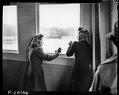
Ritsuko Terayama and Sumiko Furuta at window of ferry crossing Puget Sound, 1942
On March 30, 1942, the United States Army removed the over 200 Japanese American residents from their homes and businesses on Bainbridge Island and escorted them to the ferry. The Seattle Post-Intelligencer reported that the forced removal was peaceful. The incarcerees, most of whom were American citizens, continually professed their loyalty to the United States and gave that loyalty as…
ID Number:PI28056
Date:1942
Photograph
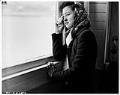
Mrs. Sumiko Furuta on ferry during forced removal, Bainbridge Island, March 30, 1942
In this image a Japanese American woman, 19-year-old Mrs. Sumiko Furuta, cries while looking out the ferry window after forced removal from Bainbridge Island. Civilian Exclusion Order No. 1 was issued at Bainbridge Island, ordering 227 residents of Japanese descent to leave with six days' notice. They departed by ferry on March 30, 1942. The island had a total of…
ID Number:PI28057
Date:1942
Photograph
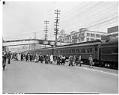
Bainbridge Island incarcerees walking to train, March 30, 1942
On March 30, 1942, the United States Army escorted over 200 Japanese Americans from Bainbridge Island to Seattle. The incarcerees boarded a waiting train which carried them to the Manzanar concentration camp in the California desert. Many were later moved to Minidoka, in Idaho. This was the first exclusion of Japanese Americans from the Pacific Northwest. Manzanar and Minidoka were…
ID Number:PI28058
Date:1942
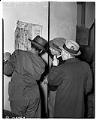
Photograph
Japanese American men looking at map of exclusion districts, Seattle, April 11, 1942
On February 19, 1942, shortly after Japan's attack on Pearl Harbor and United States entry into WWII, President Franklin Roosevelt signed Executive Order 9066, calling for the exclusion of all civilians of Japanese descent from "designated military areas." More than 9,000 Japanese and Japanese American people living in the Pacific Northwest were forced into incarceration camps in Idaho and California…
ID Number:PI28060
Date:1942
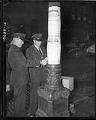
Photograph
Two policemen posting Civilian Exclusion Order No. 17, Seattle, June 16, 1942
In this image two Seattle Police officers, J. O. Deng and A. N. Barger post copies of Civilian Exclusion Order No. 17. Exclusion Order notices were posted on buildings, billboards, telephone poles, and other high visibility spots within the exclusion area. The notice announced the exclusion of Japanese Americans and gave them one week to prepare. A member of each…
ID Number:PI28061
Date:1942