3246 results for: Seattle Post-Intelligencer, The
Photograph
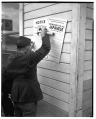
Soldier posting Civilian Exclusion Order, Bainbridge Island, 1942
On February 19, 1942, shortly after Japan's attack on Pearl Harbor and United States entry into WWII, President Franklin Roosevelt signed Executive Order 9066, calling for the exclusion of all civilians of Japanese descent from "designated military areas." In March 1942 Japanese Americans living on Bainbridge Island were the first in the country to be taken from their homes by…
ID Number:PI28035
Date:1942
Photograph
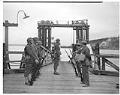
U. S. Army sentries at Winslow ferry dock, Bainbridge Island, March 25, 1942
In this image, U. S. Army soldiers guard Bainbridge Island at the Winslow ferry dock. Armed sentries were used to prevent people of Japanese descent from entering the island in violation of the Army order requiring their forced removal from the area. Civilian Exclusion Order No. 1 was issued at Bainbridge Island, ordering 227 residents of Japanese descent to leave…
ID Number:PI28036
Date:1942
Photograph
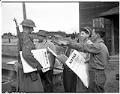
U. S. Army soldier and Japanese Americans with forced removal order, Bainbridge Island, March 25, 1942
In this image a U. S. Army soldier appears to be handing out copies of Civilian Exclusion Order No. 1 to Bainbridge Island residents of Japanese descent. 227 Japanese Americans were ordered to leave the island with six days' notice. They departed by ferry on March 30, 1942. The island had a total of 276 Japanese American residents at the…
ID Number:PI28038
Date:1942
Photograph
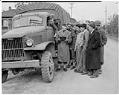
U. S. Soldiers and Japanese Americans standing by truck, March 25, 1942
Shortly after the Japanese attacked Pearl Harbor, President Franklin Roosevelt signed Executive Order 9066, calling for the exclusion of all Japanese and Japanese Americans from "designated military areas." On March 2, 1942, all civilians of Japanese ancestry living on Bainbridge Island, were ordered to leave because they were considered a threat to the Puget Sound Naval Shipyard on the Kitsap…
ID Number:PI28041
Date:1942
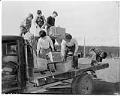
Photograph
Boys helping Japanese American man load truck for forced removal, Bainbridge Island, March 30, 1942
On February 19, 1942, shortly after Japan's attack on Pearl Harbor and United States entry into WWII, President Franklin Roosevelt signed Executive Order 9066, calling for the exclusion of all civilians of Japanese descent from "designated military areas." In March 1942 Japanese Americans living on Bainbridge Island were the first in the country to be taken from their homes by…
ID Number:PI28042
Date:1942
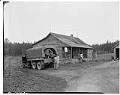
Photograph
U. S. soldiers and Japanese Americans loading Army truck for evacuation, Bainbridge Island, March 30, 1942
In this image U. S. Army soldiers and Japanese American men are loading an Army truck at Kanegama Yamashita's farmhouse in preparation for forced removal. Civilian Exclusion Order No. 1 was issued at Bainbridge Island, ordering 227 residents of Japanese descent to leave with six days' notice. They departed by ferry on March 30, 1942. The island had a total…
ID Number:PI28043
Date:1942
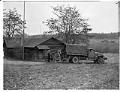
Photograph
U. S. soldiers and Nakamura family loading Army truck for forced removal, Bainbridge Island, March 30, 1942
In this image a U. S. Army soldier lifts Ruth Nakamura into an Army truck at her family's farmhouse in preparation for forced removal. Her father, sister Jane, mother Yukiko, and brother Archie look on. Civilian Exclusion Order No. 1 was issued at Bainbridge Island, ordering 227 residents of Japanese descent to leave with six days' notice. They departed by…
ID Number:PI28044
Date:1942
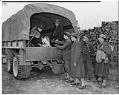
Photograph
Mr. and Mrs. Moji in back of military truck, March 30, 1942
On March 30, 1942, the Seattle Post-Intelligencer reported that the removal of Japanese Americans from Bainbridge Island, Washington, went off with only one hitch. Mr. and Mrs. Moji had arranged with Filipino American neighbors to look after their berry farm and their Alaskan husky dog, King. When it was time for the Mojis to leave their home, King jumped into…
ID Number:PI28046
Date:1942
Photograph
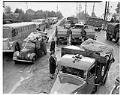
U. S. soldiers and Japanese Americans preparing for forced removal, Bainbridge Island, March 30, 1942
In this image U. S. Army soldiers gather Japanese Americans at an assembly point on Bainbridge Island in preparing for transportation to the Puyallup Assembly Center. Civilian Exclusion Order No. 1 was issued at Bainbridge Island, ordering 227 residents of Japanese descent to leave with six days' notice. They departed by ferry on March 30, 1942. The island had a…
ID Number:PI28048
Date:1942
Photograph
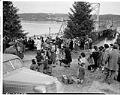
U. S. soldiers and Japanese Americans preparing for forced removal, Bainbridge Island, March 30, 1942
In this image U. S. Army soldiers gather Japanese Americans at an assembly point near the ferry dock on Bainbridge Island. Civilian Exclusion Order No. 1 was issued at Bainbridge Island, ordering 227 residents of Japanese descent to leave with six days' notice. They departed by ferry on March 30, 1942. The island had a total of 276 Japanese American…
ID Number:PI28049
Date:1942