417 results for: Indigenous Peoples
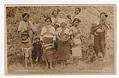
Postcard
Group of Igorot performers at Alaska-Yukon-Pacific Exposition, Seattle, 1909
The Alaska-Yukon-Pacific Exposition (AYPE) was a world's fair held in Seattle in 1909, publicizing the development of the Pacific Northwest. The fairgrounds became the campus of the University of Washington. One of the most popular attractions at the AYPE was the "Igorrote Village", a simulated village of the Igorot (previously spelled Igorrote), a diverse group of Indigenous peoples living in…
ID Number:1972.5502.13
Date:1909
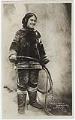
Postcard
Columbia Eneutseak (Nancy Columbia) at Alaska-Yukon-Pacific Exposition, Seattle, 1909
Columbia Eneutseak (1893-1959), also known as Nancy Columbia or Miss Columbia, was part of a family from Labrador that performed in Seattle at the Alaska-Yukon-Pacific Exposition's "Eskimo Village" in 1909. Columbia's mother, Esther Eneutseak, was brought from Labrador to the 1893 World's Columbian Exposition in Chicago, where her daughter, Columbia was born. Eneutseak recruited other Inuit from Labrador to perform…
ID Number:1972.5502.14
Date:1909
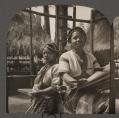
Photograph
Igorrote Village at Alaska-Yukon-Pacific Exposition, Seattle, 1909
The Alaska-Yukon-Pacific Exposition (AYPE) was a world's fair held in Seattle in 1909, publicizing the development of the Pacific Northwest. The fairgrounds became the campus of the University of Washington. One of the most popular attractions at the AYPE was the "Igorrote Village", a simulated village of the Igorot (previously spelled Igorrote), a diverse group of Indigenous peoples living in…
ID Number:1974.5868.125
Date:1909
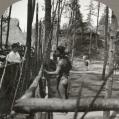
Photograph
Visitor at Igorrote Village at Alaska-Yukon-Pacific Exposition, Seattle, 1909
The Alaska-Yukon-Pacific Exposition (AYPE) was a world's fair held in Seattle in 1909, publicizing the development of the Pacific Northwest. The fairgrounds became the campus of the University of Washington. One of the most popular attractions at the AYPE was the "Igorrote Village", a simulated village of the Igorot (previously spelled Igorrote), a diverse group of Indigenous peoples living in…
ID Number:1974.5868.129
Date:1909
Photograph
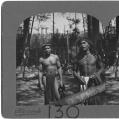
Men in Igorrote Village at Alaska-Yukon-Pacific Exposition, Seattle, 1909
The Alaska-Yukon-Pacific Exposition (AYPE) was a world's fair held in Seattle in 1909, publicizing the development of the Pacific Northwest. The fairgrounds became the campus of the University of Washington. One of the most popular attractions at the AYPE was the "Igorrote Village", a simulated village of the Igorot (previously spelled Igorrote), a diverse group of Indigenous peoples living in…
ID Number:1974.5868.130
Date:1909
Photograph
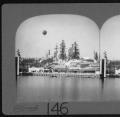
Pay Streak at Alaska-Yukon-Pacific Exposition from Lake Union, Seattle, 1909
Visitors to the Alaska-Yukon-Pacific Exposition crowded to the concessions on the Pay Streak. Here they could enjoy exciting rides, visit a reconstruction of the Streets of Cairo, buy snacks at the Tokio Cafe, and look at Indigenous Peoples of the Philippines in a reconstructed village. The Pay Streak was named after concentrated streaks of gold or other valuable ore.This view…
ID Number:1974.5868.146
Date:1909
Photograph
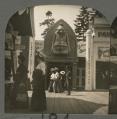
Pay Streak at Alaska-Yukon-Pacific Exposition, Seattle, 1909
Visitors to the Alaska-Yukon-Pacific Exposition crowded to the concessions on the Pay Streak. Here they could enjoy exciting rides, visit a reconstruction of the Streets of Cairo, buy snacks at the Tokio Cafe, and look at Indigenous Peoples of the Philippines in a reconstructed village. The Pay Streak was named after concentrated streaks of gold or other valuable ore.This photo…
ID Number:1974.5868.184
Date:1909
Photograph
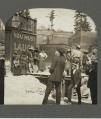
Visitors on Pay Streak at Alaska-Yukon-Pacific Exposition, Seattle, 1909
Visitors to the Alaska-Yukon-Pacific Exposition crowded to the concessions on the Pay Streak. Here they could enjoy exciting rides, visit a reconstruction of the Streets of Cairo, buy snacks at the Tokio Cafe, and look at Indigenous Peoples of the Philippines in a reconstructed village. The Pay Streak was named after concentrated streaks of gold or other valuable ore.This photo…
ID Number:1974.5868.185
Date:1909
Photograph
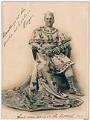
Portrait of Potlatch King Edgar L. Webster, Seattle, 1911
The Tilikums of Elttaes were a fraternal, civic organization composed primarily of influential white Seattle area businessmen who used imagery common to local Indigenous Peoples to promote tourism and the economic development of the city. In July 1911 the Tilikums ("Friends" in Chinook Jargon; Elttaes is Seattle spelled backward) organized the first Golden Potlatch celebration. The Golden Potlatch was a…
ID Number:1977.6531.2
Date:1911
Postcard
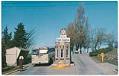
Bus driving through south gate at Fort Lawton, Seattle, circa 1960
In 1897, the city of Seattle donated land on Magnolia Bluff to the US government to build a new Army post as part of a defense system for Puget Sound; this was designated as Fort Lawton in 1900. During most of its active service, the fort served as an embarkation station where troops gathered before being sent to duty in…
ID Number:1979.6782.x24
Date:Circa 1960