517 results for: Museum of History
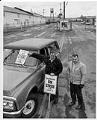
Photograph
ILWU members holding strike signs at Pier 20, Seattle, January 17, 1972
The International Longshore and Warehouse Union’s (ILWU) 1971 strike began on July 1, when ILWU members walked out against their employers, the Pacific Maritime Association (PMA). The union's goal was to secure employment, wages, and benefits in the face of increased mechanization, shrinking workforce, and the slowing economic climate of the early 1970s. The strike shut down all 56 West…
ID Number:2000.107.141.14.03
Date:1972
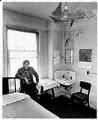
Photograph
Bob Santos visiting apartment in need of renovation, Seattle, December 15, 1980
Robert Nicholas "Bob" Santos (1934-2016), was a Filipino American born and raised in Seattle's Chinatown - International District. He spent most of his life as an activist in his old neighborhood -- saving it, nurturing it, defending it against outside threats, whether environmental, cultural, or political. Mr. Santos developed a close relationship with other activists for racial justice, in particular…
ID Number:2000.107.160.07.01
Date:1980
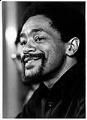
Photograph
Bobby Seale at press conference, Seattle, May 16, 1972
Robert George "Bobby" Seale (b. 1936) is a political activist and was co-founder of the Black Panther Party (BPP) in 1966. The Seattle Chapter of the Black Panther Party was established in 1968, after Aaron Dixon, Elmer Dixon, Anthony Ware, Gary Owens and several other future Panthers met BPP Chairman Bobby Seale in Oakland when they travelled there to attend…
ID Number:2000.107.163.37.01
Date:1972
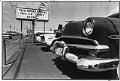
Photograph
L. Hoyt Motors car lot on Aurora Avenue North, August 1983
Aurora Avenue North in Seattle, part of State Route 99, has a long history of being home to car sale lots and other auto-oriented businesses. For decades before Interstate 5 was built, Aurora Avenue was the main highway in Seattle, dotted with restaurants, gas stations and car repair shops, stores, and motels. The area around 92nd Street has a long…
ID Number:2000.107.165.05.02
Date:1983
Photograph
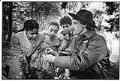
Ranger leading nature walk at Camp Long, Seattle, March 7, 1985
Named for Seattle Juvenile Court Judge William George Long (1894-1974), Camp Long was built in 1937 as a place for organized scouting groups to learn camping skills. In 1984, park officials made the 68 acre park more accessible to the general public, allowing visitors to enjoy nature, hike in the forest, camp overnight in rustic cabins, rock climb, and learn…
ID Number:2000.107.168.11.06
Date:1985
Photograph
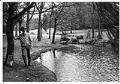
Ranger standing at Polliwog Pond, Camp Long, Seattle, March 7, 1985
Named for Seattle Juvenile Court Judge William George Long (1894-1974), Camp Long was built in 1937 as a place for organized scouting groups to learn camping skills. In 1984, park officials made the 68 acre park more accessible to the general public, allowing visitors to enjoy nature, hike in the forest, camp overnight in rustic cabins, rock climb, and learn…
ID Number:2000.107.168.11.07
Date:1985
Photograph
Hanford Street terminal, Seattle, March 22, 1927
The creation of the Port of Seattle in 1911 transformed a messy jumble of privately-owned and competing waterfront companies into a publicly owned and organized entity capable of propelling Seattle into a major center for trade. In 1915 the Port constructed the Hanford Street Grain Terminal (Pier 25), on the Duwamish East Waterway, in what is now the SoDo neighborhood.…
ID Number:2000.107.171.32.02
Date:1927
Photograph
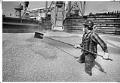
Longshoreman spreading corn at Pier 86, Seattle, March 28, 1988
In 1970 the Port of Seattle spent millions of dollars finishing and upgrading container terminals, airport projects, and new property acquisitions to support what is a major contributor to regional economic growth. Seattle's grain exports were moved at the time to the $15 million Pier 86 Grain Facility in the Interbay neighborhood. This property replaced the Port’s Hanford Street Grain…
ID Number:2000.107.171.36.01
Date:1988
Photograph
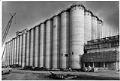
Exterior of Pier 86 grain terminal, Seattle, January 6, 1970
In 1970 the Port of Seattle spent millions of dollars finishing and upgrading container terminals, airport projects, and new property acquisitions to support what is a major contributor to regional economic growth. Seattle's grain exports were moved at the time to the $15 million Pier 86 Grain Facility in the Interbay neighborhood. This property replaced the Port’s Hanford Street Grain…
ID Number:2000.107.171.37.01
Date:1970
Photograph
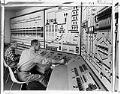
Employees operating Pier 86 grain terminal control panel, Seattle, October 28, 1970
In 1970 the Port of Seattle spent millions of dollars finishing and upgrading container terminals, airport projects, and new property acquisitions to support what is a major contributor to regional economic growth. Seattle's grain exports were moved at the time to the $15 million Pier 86 Grain Facility in the Interbay neighborhood. This property replaced the Port’s Hanford Street Grain…
ID Number:2000.107.171.37.02
Date:1970