517 results for: Museum of History
Photograph
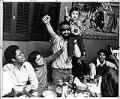
Roberto Maestas, Larry Gossett and others celebrating in restaurant , Seattle, December 26, 1972
Seattle had a growing Latino population in the late 1960s, and activists had been pressing the city for a building in which to establish a Chicano community center. Tired of having their requests ignored, in October 1972 they took over the abandoned Beacon Hill School on 16th Avenue South and renamed it El Centro de la Raza. After a 75-day…
ID Number:2000.107.117.04.01
Date:1972
Photograph
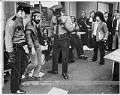
Roberto Maestas being escorted out of mayor's office, Seattle, April 5, 1973
Seattle had a growing Latino population in the late 1960s, and activists had been pressing the city for a building in which to establish a Chicano community center. Tired of having their requests ignored, in October 1972 they took over the abandoned Beacon Hill School on 16th Avenue South and renamed it El Centro de la Raza. After a 75-day…
ID Number:2000.107.117.04.02
Date:1973
Photograph
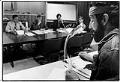
Roberto Maestas speaking to city council members, Seattle, June 11, 1974
Seattle had a growing Latino population in the late 1960s, and activists had been pressing the city for a building in which to establish a Chicano community center. Tired of having their requests ignored, in October 1972 they took over the abandoned Beacon Hill School on 16th Avenue South and renamed it El Centro de la Raza. After a 75-day…
ID Number:2000.107.117.04.03
Date:1974
Photograph
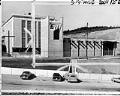
Chapel of Mount Tahoma at McNeil Island Penitentiary, April 1965
McNeil Island is a 6.6 square mile island located in south Puget Sound, lying 2.8 miles across the water from the nearest town. The site was utilized for 142 continuous years as an island-based penal institution, beginning in 1869 with a jail built by the U.S. Army Corps of Engineers. In 1909 the facility became a federal prison, the McNeil…
ID Number:2000.107.123.18.02
Date:1965
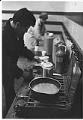
Photograph
Isidoro Gonzales working in kitchen during occupation of Beacon Hill School, October 18, 1972
Seattle had a growing Latino population in the late 1960s, and activists had been pressing the city for a building in which to establish a Chicano community center. Tired of having their requests ignored, in October 1972 they took over the abandoned Beacon Hill School on 16th Avenue South and renamed it El Centro de la Raza. After a 75-day…
ID Number:2000.107.124.39.01
Date:1972
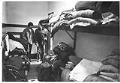
Photograph
Men in makeshift dormitory in occupied Beacon Hill School, October 18, 1972
Seattle had a growing Latino population in the late 1960s, and activists had been pressing the city for a building in which to establish a Chicano community center. Tired of having their requests ignored, in October 1972 they took over the abandoned Beacon Hill School on 16th Avenue South and renamed it El Centro de la Raza. After a 75-day…
ID Number:2000.107.124.39.02
Date:1972
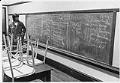
Photograph
Alfonso Simiano in classroom during occupation of Beacon Hill School, October 18, 1972
Seattle had a growing Latino population in the late 1960s, and activists had been pressing the city for a building in which to establish a Chicano community center. Tired of having their requests ignored, in October 1972 they took over the abandoned Beacon Hill School on 16th Avenue South and renamed it El Centro de la Raza. After a 75-day…
ID Number:2000.107.124.39.03
Date:1972
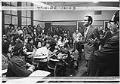
Photograph
Councilman John Miller speaking to group occupying Beacon Hill School, October 12, 1972
Seattle had a growing Latino population in the late 1960s, and activists had been pressing the city for a building in which to establish a Chicano community center. Tired of having their requests ignored, in October 1972 they took over the abandoned Beacon Hill School on 16th Avenue South and renamed it El Centro de la Raza. After a 75-day…
ID Number:2000.107.124.39.04
Date:1972
Photograph
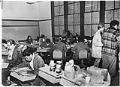
Group in classroom at occupied Beacon Hill School, October 11, 1972
Seattle had a growing Latino population in the late 1960s, and activists had been pressing the city for a building in which to establish a Chicano community center. Tired of having their requests ignored, in October 1972 they took over the abandoned Beacon Hill School on 16th Avenue South and renamed it El Centro de la Raza. After a 75-day…
ID Number:2000.107.124.39.05
Date:1972
Photograph
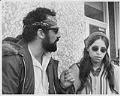
Roberto Maestas and Celia Cantri during occupation of Beacon Hill School, October 1972
Seattle had a growing Latino population in the late 1960s, and activists had been pressing the city for a building in which to establish a Chicano community center. Tired of having their requests ignored, in October 1972 they took over the abandoned Beacon Hill School on 16th Avenue South and renamed it El Centro de la Raza. After a 75-day…
ID Number:2000.107.124.39.06
Date:1972