733 results for: Labor and Labor Unions
Audio recording
Oral history interview with Edith Robertson, January 6, 1985
Edith Robertson was born in Kansas City. She moved to Spokane in the early 1930s and Seattle in 1933. She worked as a waitress and a beautician before going to work in the shipyards during World War II. In this interview conducted by Lorraine McConaghy for the Life on the Homefront Oral History Project on January 6, 1985, Robertson recalls…
ID Number:1985.134.20
Date:1985
Audio recording
Oral history interview with Inez Sauer, February 26, 1985
This interview with Inez Sauer was conducted by Lorraine McConaghy for the Life on the Homefront Oral History Project on February 26, 1985. Sauer was born in West Seattle in 1910. She married in 1929 and moved to Akron, Ohio. The family returned to Seattle with three children at the start of World War II. During the war, Inez Sauer…
ID Number:1985.134.21
Date:1985
Photograph
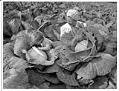
Woman and boy in a cabbage field, 1943
In 1943, workers harvested some 15,500 tons of cabbage in Bellevue and Bothell and in the White River and Sammamish Valleys. This wartime record exceeded the 1942 crop by 50%. Sauerkraut factories canned most of the crop, and the rest was dried into flakes for military meals or sold fresh to homemakers. That year, fresh cabbage was not rationed. This…
ID Number:1986.5.1346.1
Date:1943
Photograph
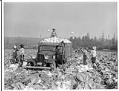
Workers harvesting cabbage near Kent, October 25, 1943
In 1943, workers harvested a record-breaking 15,500 tons of cabbage in Bellevue and Bothell and in the White River and Sammamish Valleys. Many of the wartime farmworkers were volunteers. Sauerkraut factories canned most of the crop. The rest was dried into flakes for military meals or sold fresh to homemakers.This 1943 photo shows workers harvesting cabbages at Ivan Unbedacht's farm…
ID Number:1986.5.1346.2
Date:1943
Photograph
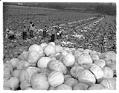
Workers harvesting cabbage, Kent Valley, 1943
This photo shows a large pile of harvested cabbage with workers at Ivan Unbedacht's farm near Kent, Washington. The entire cabbage crop on Unbedacht's 105 acre farm went to a sauerkraut factory. In 1943, workers harvested a record-breaking 15,500 tons of cabbage in Bellevue and Bothell and in the White River and Sammamish Valleys. Many of the wartime farm workers…
ID Number:1986.5.1346.3
Date:1943
Photograph
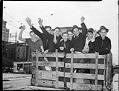
Young men leaving Seattle for a Civilian Conservation Corps camp, April 14, 1937
On April 13, 1937, eighty men reported to the Armory in Seattle on the first day of the spring enrollment for the Civilian Conservation Corps (CCC). The program, created by the federal government in 1933 to relieve unemployment during the Great Depression, hired young men to work on conservation projects in remote areas of the United States. In March 1937,…
ID Number:1986.5.1829.1
Date:1937
Photograph
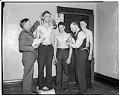
Young men in the Civilian Conservation Corps receiving a physical exam, 1937
Part of President Franklin D. Roosevelt's New Deal Legislation, the Civilian Conservation Corps (CCC) was a government work relief program that employed about 3 million men age 18 to 25 from 1933 until 1942. CCC jobs were generally manual labor, and focused primarily on the conservation and development of parks and other natural resources throughout the United States. Physical exams…
ID Number:1986.5.1829.2
Date:1937
Photograph
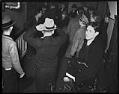
American Legion exposes Communist College in Burke Building, Seattle, 1936
The Communist Party of the United States (CPUSA) steadily gained membership through the 1930s, largely because of its success in organizing labor unions and its early opposition to fascism.In early 1936, the American Legion exposed a burgeoning "Communist College" set up in an office in the Burke Building at Second Avenue and Marion Street. Upon discovery, the office was hastily…
ID Number:1986.5.1894.1
Date:1936
Photograph
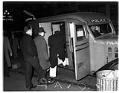
Men being loaded into a police paddy wagon, Seattle, 1936
The Communist Party of the United States (CPUSA) steadily gained membership through the 1930s, largely because of its success in organizing labor unions and its early opposition to fascism. The American Legion was integral in exposing communist activity during this time. This photograph depicts men suspected of belonging to a communist organization being loaded into a paddy wagon. Written on…
ID Number:1986.5.1894.2
Date:1936
Photograph
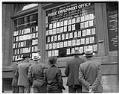
Public employment office exterior showing men looking at listings, Seattle, 1936
Signs in image include: Women's Division Room 108 County City Bldg.Men's Division Public Employment Office, City of Seattle, In Cooperation with U.S. Employment Service, Help Supplied -- No Fees.Handwritten on sleeve: Employment.Date photograph was filed at the Seattle Post-Intelligencer (date of photograph and file date may differ by a month or more): July 13, 1936.United States Employment Service also known…
ID Number:1986.5.2471.1
Date:1936