43 results for: El Centro de la Raza
Photograph
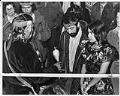
Roberto Maestas and Estela Ortega being married at Beacon Hill School, December 1972
Roberto Felipe Maestas (1938-2010) was a Mexican American activist in Seattle. He became involved in civil rights and antiwar protests in the late 1960s and in 1972 he led the occupation of the old Beacon Hill School, leading to the founding of the Chicano community center El Centro de la Raza, which Maestas led until 2009. Estela Ortega (b. 1950)…
ID Number:2000.107.117.04.07
Date:1972
Photograph
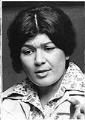
Becky Hobbs at Conferencia - Chicanas en El Movimiento, Seattle, August 22, 1974
In this image of Rebecca "Becky" Hobbs, the University of Washington Minority Affairs Office staff assistant discusses the first annual Conferencia - Chicanas en El Movimiento (Women in the Movement conference), held over three days at El Centro de La Raza on Beacon Hill. The event was an initial step in establishing a state-wide network for job listings, education opportunities,…
ID Number:2000.107.124.38.01
Date:1974
Photograph
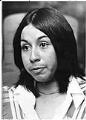
Marta Cano at Conferencia - Chicanas en El Movimiento, Seattle, August 22, 1974
In this image of Marta Cano, the Seattle Public Schools administrative intern discusses the first annual Conferencia - Chicanas en El Movimiento (Women in the Movement conference) held over three days at El Centro de La Raza on Beacon Hill. "The Chicana is in a double bind. We're treated as a minority within our own culture. People take it for…
ID Number:2000.107.124.38.02
Date:1974
Photograph
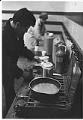
Isidoro Gonzales working in kitchen during occupation of Beacon Hill School, October 18, 1972
Seattle had a growing Latino population in the late 1960s, and activists had been pressing the city for a building in which to establish a Chicano community center. Tired of having their requests ignored, in October 1972 they took over the abandoned Beacon Hill School on 16th Avenue South and renamed it El Centro de la Raza. After a 75-day…
ID Number:2000.107.124.39.01
Date:1972
Photograph
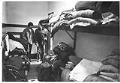
Men in makeshift dormitory in occupied Beacon Hill School, October 18, 1972
Seattle had a growing Latino population in the late 1960s, and activists had been pressing the city for a building in which to establish a Chicano community center. Tired of having their requests ignored, in October 1972 they took over the abandoned Beacon Hill School on 16th Avenue South and renamed it El Centro de la Raza. After a 75-day…
ID Number:2000.107.124.39.02
Date:1972
Photograph
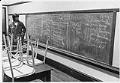
Alfonso Simiano in classroom during occupation of Beacon Hill School, October 18, 1972
Seattle had a growing Latino population in the late 1960s, and activists had been pressing the city for a building in which to establish a Chicano community center. Tired of having their requests ignored, in October 1972 they took over the abandoned Beacon Hill School on 16th Avenue South and renamed it El Centro de la Raza. After a 75-day…
ID Number:2000.107.124.39.03
Date:1972
Photograph
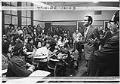
Councilman John Miller speaking to group occupying Beacon Hill School, October 12, 1972
Seattle had a growing Latino population in the late 1960s, and activists had been pressing the city for a building in which to establish a Chicano community center. Tired of having their requests ignored, in October 1972 they took over the abandoned Beacon Hill School on 16th Avenue South and renamed it El Centro de la Raza. After a 75-day…
ID Number:2000.107.124.39.04
Date:1972
Photograph
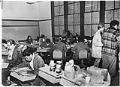
Group in classroom at occupied Beacon Hill School, October 11, 1972
Seattle had a growing Latino population in the late 1960s, and activists had been pressing the city for a building in which to establish a Chicano community center. Tired of having their requests ignored, in October 1972 they took over the abandoned Beacon Hill School on 16th Avenue South and renamed it El Centro de la Raza. After a 75-day…
ID Number:2000.107.124.39.05
Date:1972
Photograph
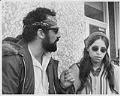
Roberto Maestas and Celia Cantri during occupation of Beacon Hill School, October 1972
Seattle had a growing Latino population in the late 1960s, and activists had been pressing the city for a building in which to establish a Chicano community center. Tired of having their requests ignored, in October 1972 they took over the abandoned Beacon Hill School on 16th Avenue South and renamed it El Centro de la Raza. After a 75-day…
ID Number:2000.107.124.39.06
Date:1972
Photograph
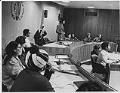
Protesters taking over City Council meeting, November 10, 1972
Seattle had a growing Latino population in the late 1960s, and activists had been pressing the city for a building in which to establish a Chicano community center. Tired of having their requests ignored, in October 1972 they took over the abandoned Beacon Hill School on 16th Avenue South and renamed it El Centro de la Raza. After a 75-day…
ID Number:2000.107.124.39.07
Date:1972