417 results for: Indigenous Peoples
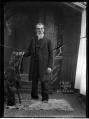
Photograph
Jim Yellakanim, Nooksack chief, circa 1898
The Nooksack are a Coast Salish people whose historic lands centered on the Nooksack River drainage basin, from the shore to around Mount Baker in the east. They have their own language, also named Nooksack. On the edges of Nooksack land and in offshore waters, resources were shared with neighboring peoples, to whom the Nooksack were linked by shared descent…
ID Number:1991.79.82
Date:Circa 1898
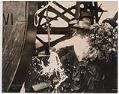
Photograph
Kate Borst christening the steamer "Snoqualmie," August 11, 1919
In August 1919, the Puget Sound Bridge & Dredging Company launched the steamer "Snoqualmie" at its Seattle shipyard on Harbor Island. The vessel was named for the Snoqualmie Tribe, in honor of the aid they gave the settlers against other Indigenous groups in the war of 1855-1856, now referred to as the Puget Sound War. Many tribal members traveled to…
ID Number:1995.37.19.2.54
Date:1919
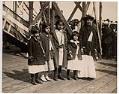
Photograph
Snoqualmie woman and girls at the launching of the steamer "Snoqualmie," 1919
On August 11, 1919, the Puget Sound Bridge & Dredging Company launched the steamer "Snoqualmie" at its Seattle shipyard on Harbor Island. The vessel was named for the Snoqualmie Tribe, in honor of the aid they gave the settlers against other Indigenous groups in the war of 1855-1856, now referred to as the Puget Sound War. This photo shows some…
ID Number:1995.37.19.2.62
Date:1919
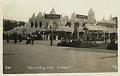
Photograph
"Eskimo Village" on the Pay Streak at the Alaska-Yukon-Pacific Exposition, Seattle, 1909
The Alaska-Yukon-Pacific Exposition (AYPE) was a world's fair held in Seattle in 1909, publicizing the development of the Pacific Northwest. The fairgrounds became the campus of the University of Washington.Otto D. Goetze (b. 1871) was an American photographer who owned the Alaska Photo Studio in Seattle from 1909 to 1912. He also photographed the Alaska Gold Rush from 1891 to…
ID Number:1995.38.37.62
Date:1909

Photograph
Sherman Alexie, Seattle, August 31, 1993
Sherman Joseph Alexie, Jr. (1966-) is a Spokane-Coeur d'Alene-American novelist, short story writer, poet, and filmmaker. Much of his writing draws on his experiences as an Indigenous American with ancestry from several tribes. He grew up on the Spokane Indian Reservation and now lives in Seattle.In this image Sherman Alexie discusses his 1993 collection of short stories, "The Lone Ranger…
ID Number:2000.107.006.01.01
Date:1993
Photograph
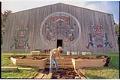
Greg Broad building walkway at Tillicum Village prior to APEC conference, Blake Island, November 5, 1993
The Asia-Pacific Economic Cooperation conference (APEC) was founded in 1989 as an informal dialog group with limited participation by ministers and cabinet-level officials in the Asian-Pacific region, and rose to world prominence in Seattle in 1993 when President Clinton endorsed the organization and used it for what is now an annual summit meeting of Asian and Pacific leaders. The group…
ID Number:2000.107.009.35.01
Date:1993
Photograph
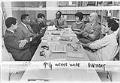
Panel at Allied Arts Congress meeting, December 4, 1966
In 1966, Allied Arts of Seattle President Norman Johnson issued a challenge to members of the organization and to the larger arts community to expand the scope of community involvement in the arts. A panel was convened for the December 1966 Allied Arts meeting, to discuss the need for outreach to Seattle’s Black and Indigenous communities, particularly in the city’s…
ID Number:2000.107.014.25.02
Date:1966
Photograph
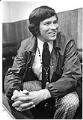
Richard Belmont speaking at press conference, Seattle, October 6, 1972
When 140 acres of their ancestral land on Oyster Bay was declared surplus by the federal government, the Suquamish Tribe sought to have it returned to the tribe. They wanted to use to site for an Indian canoe house and racing area, an Indian historical and cultural center, an center for marine science and ecology, and a meeting facility that…
ID Number:2000.107.019.39.01
Date:1973
Photograph
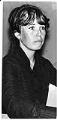
Ramona Bennett during meeting with church officials, September 17, 1970
Ramona Bennett (b. 1938) is a prominent Puyallap Tribe leader and activist. She was elected to the Puyallup Tribal Council in 1968, and served as Tribal Chairwoman from 1971 to 1978.Much of Bennett’s work focuses on social welfare issues, mainly fighting for the rights of women, children, and families. She began her social service work in the 1950s, with the…
ID Number:2000.107.020.10.01
Date:1970
Photograph
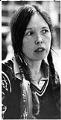
Ramona Bennett, October 1976
Ramona Bennett (b. 1938) is a prominent Puyallap Tribe leader and activist. She was elected to the Puyallup Tribal Council in 1968, and served as Tribal Chairwoman from 1971 to 1978. Bennett is also a pioneer of fishing rights advocacy, co-founding the Survival of American Indians Association in 1964, and helping to bring “fish-in” protests to national prominence. Much of…
ID Number:2000.107.020.10.02
Date:1976