417 results for: Indigenous Peoples
Photograph
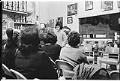
AIWSL President Joyce Reyes speaking at meeting, Seattle, December 1970
The American Indian Women's Service League (AIWSL) grew out of a 1958 meeting of American Indian women sharing their concerns over living conditions their people faced. The organization became the Seattle Indian Center (SIA) in 1972, which provides services and assistance to all people. Initially opening in the Belltown neighborhood at 2604 First Avenue, the SIA is now located at…
ID Number:1986.5.53361.1
Date:1970
Photograph
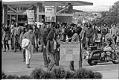
Native American student demonstration against Bureau of Indian Affairs, Seattle, 1971
On February 16, 1971, one hundred Native students at the University of Washington marched from the university's main campus to the Bureau of Indian Affairs office in Eastlake, in support of the United Indian People's Council (later United Indians of All Tribes Foundation, or UIATF) occupation of Fort Lawton. The protest at the 1,100-acre army post in Seattle's Magnolia neighborhood…
ID Number:1986.5.53853.1
Date:1971
Photograph
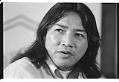
Bernie Whitebear, Seattle, 1971
Bernie Whitebear was born in the town of Nespelem on the Colville Reservation in 1937. After growing up in poverty on the reservation, he moved to Western Washington in 1955 and shortly became a fisherman on the Puyallup River. In the late 1950s, Bernie Whitebear joined a campaign of activism to protect Native fishing rights, which had been guaranteed by…
ID Number:1986.5.55140.1
Date:1971
Photograph
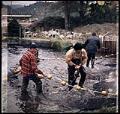
Indigenous fishers practicing their fishing rights, 1972
In the 1960s and 1970s, Native Americans and their supporters began protesting Washington State laws restricting Native American fishing rights that had been granted in a series of treaties with the United States between 1854 and 1855. The Survival of the American Indian Society (SAIA), the NAACP, and the National Indian Youth Council (NIYC) coordinated a series of protests and…
ID Number:1986.5.56319.1
Date:1972
Postcard
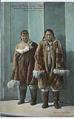
Women in "Eskimo Village" at Alaska-Yukon-Pacific Exposition, Seattle, 1909
The Alaska-Yukon-Pacific Exposition (AYPE) was a world's fair held in Seattle in 1909, publicizing the development of the Pacific Northwest. The fairgrounds became the campus of the University of Washington. The AYPE included a constructed "Eskimo Village," which exhibited Indigenous people as attractions for the fair's visitors. This image shows two women, Komot and Pungi, wearing traditional furs in the…
ID Number:1990.36.30
Date:1909
Postcard
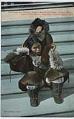
Mother and child in "Eskimo Village" at Alaska-Yukon-Pacific Exposition, Seattle, 1909
The Alaska-Yukon-Pacific Exposition (AYPE) was a world's fair held in Seattle in 1909, publicizing the development of the Pacific Northwest. The fairgrounds became the campus of the University of Washington. The AYPE included a constructed "Eskimo Village," which exhibited Indigenous people as attractions for the fair's visitors. This image shows Memlinga and Raltuga, a mother and child, wearing traditional furs…
ID Number:1990.36.31
Date:1909
Photograph
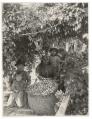
Indigenous family working in a hop field in western Washington, circa 1900
From the late 1860s to the early 1890s, hop farming was an important activity in the valleys of the Puget Sound region, including Puyallup, White River, and Snoqualmie. Indigenous workers came from throughout the Pacific Northwest, Canada, and Alaska (but especially from regional tribes like the Puyallup, Snoqualmie, Muckleshoot, Duwamish, Sammamish, Lummi, and Nisqually) as a seasonal labor force to…
ID Number:1990.45.11
Date:Circa 1900
Photograph
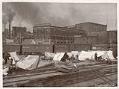
Encampment of Indigenous people on Ballast Island at the Seattle waterfront, circa 1900
In 1865 the Board of Trustees of Seattle passed Ordinance No. 5 banning Indigenous people from living in the city unless they worked for a non-Indigenous resident and lived on their employer's property. Despite this attempt to enforce separation between Indigenous people and the settlers, Seattle depended on Indigenous people. Settlers relied on Native people for domestic work and for…
ID Number:1990.45.14
Date:Circa 1900
Photograph
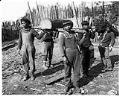
Igorot workers at Igorrote Village, Alaska-Yukon-Pacific Exposition, Seattle, 1909
The Alaska-Yukon-Pacific Exposition (AYPE) was a world's fair held in Seattle in 1909, publicizing the development of the Pacific Northwest. The fairgrounds became the campus of the University of Washington. One of the most popular attractions at the AYPE was the "Igorrote Village," a simulated village of the Igorot (previously spelled Igorrote), a diverse group of Indigenous peoples living in…
ID Number:1990.73.8
Date:1909
Photograph
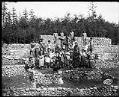
Igorot and Inuit Group at Igorrote Village, Alaska-Yukon-Pacific Exposition, Seattle, 1909
The Alaska-Yukon-Pacific Exposition (AYPE) was a world's fair held in Seattle in 1909, publicizing the development of the Pacific Northwest. The fairgrounds became the campus of the University of Washington. One of the most popular attractions at the AYPE was the "Igorrote Village," a simulated village of the Igorot (previously spelled Igorrote), a diverse group of Indigenous peoples living in…
ID Number:1990.73.17
Date:1909