1344 results for: Seattle Center
Photograph
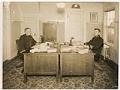
Commandant Freeman and Boatswain Hazard at the Naval Training Station, Seattle, circa 1918
During World War I a temporary Naval Training Station was set up on the University of Washington campus, near where the university's health sciences center is now located. The training camp was active from 1917-1919, during which time over 5,000 mostly college students were trained for both naval and naval aviation units. This image of U. S. Navy officers (left)…
ID Number:Lib1993.35.1.46
Date:Circa 1918
Photograph
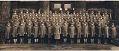
Students' Army Training Corps group on steps of Washington State Museum, University of Washington campus, circa 1918
During World War I a temporary Naval Training Station was set up on the University of Washington campus, near where the university's health sciences center is now located. The training camp was active from 1917-1919, during which time over 5,000 mostly college students were trained for both naval and naval aviation units.This image shows a Students' Army Training Corps group…
ID Number:Lib1993.35.2.10
Date:Circa 1918
Photograph
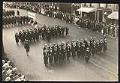
Parade of Naval Training Station personnel, Seattle, circa 1918
During World War I a temporary Naval Training Station was set up on the University of Washington campus, near where the university's health sciences center is now located. The training camp was active from 1917-1919, during which time over 5,000 mostly college students were trained for both naval and naval aviation units. Women were also recruited into the Naval Reserve…
ID Number:Lib1993.35.3.13
Date:Circa 1918
Photograph
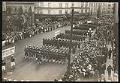
Parade of Naval Training Station personnel, Seattle, circa 1918
During World War I a temporary Naval Training Station was set up on the University of Washington campus, near where the university's health sciences center is now located. The training camp was active from 1917-1919, during which time over 5,000 mostly college students were trained for both naval and naval aviation units. This image of U. S. Navy Training Station…
ID Number:Lib1993.35.3.14
Date:Circa 1918
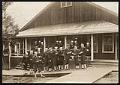
Photograph
Navy personnel at Naval Training Station, Seattle, circa 1918
During World War I a temporary Naval Training Station was set up on the University of Washington campus, near where the university's health sciences center is now located. The training camp was active from 1917-1919, during which time over 5,000 mostly college students were trained for both naval and naval aviation units. This image of U. S. Navy Training Station…
ID Number:Lib1993.35.3.31
Date:Circa 1918
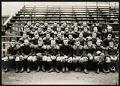
Photograph
Football team sitting on bleachers, U.S. Naval Training Station at University of Washington, 1917
During World War I a temporary Naval Training Station was set up on the University of Washington campus, near where the university's health sciences center is now located. The training camp was active from 1917-1919, during which time over 5,000 mostly college students were trained for both naval and naval aviation units. This image shows the Naval Training Station football…
ID Number:Lib1993.35.3.38
Date:1917
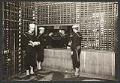
Photograph
Navy personnel at station commissary, Seattle, circa 1918
During World War I a temporary Naval Training Station was set up on the University of Washington campus, near where the university's health sciences center is now located. The training camp was active from 1917-1919, during which time over 5,000 mostly college students were trained for both naval and naval aviation units. This image of U. S. Navy Training Station…
ID Number:Lib1993.35.3.53
Date:Circa 1918
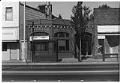
Photograph
Columbia City Theater facade, 1986
The Columbia City Theater was built in 1923 and was home to movie theaters under a few names - the Columbia, the Pix, and the Rainier. It was also a music venue, which reportedly hosted Jimi Hendrix's first show, while he was still a student at Garfield High School. The Rainier Cinema operated in 1970s, showing Black and "Blaxploitation" films.…
ID Number:Lib1993.41.2.126.1
Date:1986
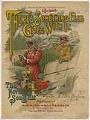
Music, notated
There's Something Else Goes With It!
Between 1900 and 1925 Seattle was a thriving music publishing center with at least half a dozen houses printing songs. As many as 10,000 copies of each musical piece would be sold, some of them peddled from door to door. Most songs were written by amateur or professional singers, although many songs were written as "singing commercials" to promote a…
ID Number:Lib1996.28.14
Date:1907
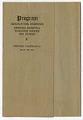
Program
Swedish Hospital Training School for Nurses commencement program, Seattle, May 18, 1921
The Swedish Hospital Training School for Nurses was founded in 1910 at the hospital's first location on Belmont Avenue in Seattle's Capitol Hill neighborhood. Applicants to the nursing school had to be female, aged 18-35, and high school graduates. Students had to outfit themselves with four gingham dresses, 12 aprons, six collars, and two pairs of "high black leather shoes…
ID Number:MS.COLL.1046
Date:1921