165 results for: Klondike-Alaska Gold Rush
Photograph
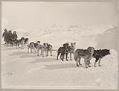
Dogsled owned by a mail carrier, near Nome, Alaska, circa 1905
Mail delivery quickly became an important service for prospectors arriving in Alaska for the Gold Rush. During the winter, dogsleds delivered first class mail to Nome once a month. Magazines and newspapers had to wait for the steamers which ran after the ice melted. Dogsled mail carriers generally worked in relay, each carrying the mail along a particular section of…
ID Number:SHS7977
Date:Circa 1905
Photograph
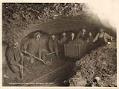
Down in a Nome gold mine, circa 1903
In Alaska and the Yukon, placer gold was found along ancient stream beds, some of which were underground. This often required much digging and long hours in the cold and dark. Candles were scarce and expensive at a dollar apiece.This photo, taken in Nome sometime between 1899 and 1906, shows a group of people working 110 feet underground for the…
ID Number:SHS7980
Date:Circa 1903
Photograph
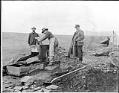
Three men and a rocker in the Nome gold fields, circa 1905
Many gold miners used rockers (also called cradles) to remove gold from pay dirt. They shoveled the dirt and gravel into a tray at the top of the rocker, and they shook the rocker back and forth as they poured water on the tray. Finer pieces of gold and dirt washed through holes in the tray into the box beneath.…
ID Number:SHS7986
Date:Circa 1905
Photograph
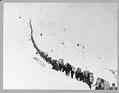
Packers ascending summit of Chilkoot Pass, circa 1898
The Chilkoot Pass had been used as a Indigenous trade route for generations before the Klondike stampede. When the 1897 gold rush started, the Chilkat, Tlingit, and other Native people hired themselves out as packers for the incoming gold seekers, charging $1.00 a pound to carry goods over Chilkoot Pass. The following year, a tramway put many of the Native…
ID Number:SHS8258
Date:Circa 1898
Photograph
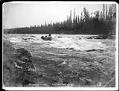
Klondikers shooting White Horse Rapids, 1898
Two miles below Miles Canyon, gold seekers on the Yukon River had to navigate through White Horse Rapids. Those who could afford it hired a pilot or portaged their goods around the rapids and used ropes to guide their empty boats through the dangerous rapids. Some boats broke up among the rocks and whirlpools; some took on so much water…
ID Number:SHS8332
Date:1898
Photograph
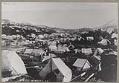
Tent city at Lake Bennett, 1898
In early spring 1898, roughly 10,000 gold seekers were camped on the shore of Lake Bennett waiting for the ice to clear. They assembled their supplies and built boats and scows to take them down the Yukon River. Until the railroad was completed in 1900, Bennett continued to be a major jumping off spot for the Klondike gold fields.This 1898…
ID Number:SHS8352
Date:1898
Photograph
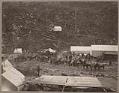
People and pack animals on the Chilkoot Trail, April 21, 1898
The Chilkoot Trail, also called the Dyea Trail, had been an Indigenous trade route for generations. Gold seekers followed the old trail north from Dyea along the river towards Chilkoot Pass. Those who could afford it hired people or pack horses to carry their goods as far as Sheep Camp.This 1898 photo shows people and pack animals at a stop…
ID Number:SHS8396
Date:1898
Photograph
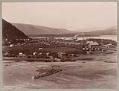
View of Klondike City, circa 1898
On July 8, 1897, an unidentified Dawson woman was quoted in The Seattle Times. She said, "There is a new mining district just discovered, fifty miles up the Yukon from here. It is turning out to be a great thing. There are over 600 claims already staked and a new town started up called Klondike..."This photo shows the town of…
ID Number:SHS9537
Date:Circa 1898
Photograph
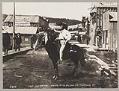
Capt. Jack Cawford on horseback, Dawson, Yukon Territory, July 4, 1899
Most of the people who poured into Dawson starting in 1897 were Americans. As a result, the Fourth of July was a big holiday.This photo, taken by Eric Hegg on July 4, 1899, shows Captain Jack Cawford on his horse in Dawson. Cawford was an American and a veteran of both the Civil War and the Indian Wars of the…
ID Number:SHS9539
Date:1899
Photograph
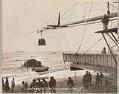
Loading passengers for steamer "St. Paul," circa 1903
There is no harbor at Nome, Alaska, and when the Nome gold rush started in 1899, there wasn't even a city. Even as the settlement grew, it was challenging for passengers to arrive or leave by sea. Vessels anchored in deep water and barges carried the passengers between the ship and the shore. The Sesnon Lighterage Company provided ferry service…
ID Number:SHS9545
Date:Circa 1903