120 results for: Mining
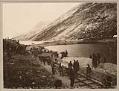
Photograph
White Pass & Yukon, laying at Bennett, track, 1899
On July 6, 1899, construction workers finally completed the White Pass & Yukon Route railroad line through White Pass to Lake Bennett, British Columbia. It took fourteen months to build the 40-mile railway line from Skagway, Alaska.This photo by Eric Hegg shows the laying of the last track on the White Pass & Yukon Route railroad between Skagway, Alaska, and…
ID Number:SHS40
Date:1899
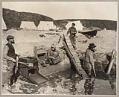
Photograph
Group of miners using conveyor and rockers, circa 1899
Around 1898, gold was found in inland creekbeds near what would become Nome. It wasn't until early 1899, when word leaked out that gold had been discovered in beach sand, that the Nome gold rush truly began. Extracting gold from beach sand called for different methods. Conveyors and rockers worked more efficiently than sluices and panning.This 1899 or 1900 photo…
ID Number:SHS414
Date:Circa 1899
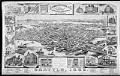
Photograph
Photo of map of Seattle before fire, 1889
Seattle in the 1880s was a rapidly growing city, aided in no small part by the 1883 connection with the Northern Pacific Railway Company. Lumber and coal were the primary industries, but the growth of fishing, wholesale trade, shipbuilding, and shipping also contributed to the town's economic expansion and population growth. The Seattle City Census of 1888 records population at…
ID Number:SHS483B
Date:1889
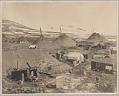
Photograph
Cabins and mining activities near Nome, circa 1905
By 1901, many of Alaska's small scale mining operations had been replaced by large industrial mining companies. Miners lived in camps near the mining operations.This B.B. Dobbs photo shows cabins and mining activities somewhere near Nome. Piles of pay dirt dwarf the small buildings. The small structure in the foreground may be an outhouse. The building to the far right,…
ID Number:SHS516
Date:Circa 1905
Photograph
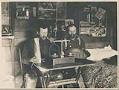
Two miners weighing gold in cabin, near Nome, Alaska, circa 1900
The last stage in the mining process was called the cleanup. After the last of the gold was washed from the pay dirt, the miners weighed it to see how much gold they had gotten.This photo shows two miners weighing gold in a comfortably furnished cabin. One man (left) weighs the nuggets in a pan balance while the other holds…
ID Number:SHS550
Date:Circa 1900
Photograph
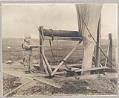
Child near mining equipment, Nome, August 30, 1906
Whole families traveled to the Yukon and Alaskan gold fields. Some couples met there and raised families. Many children worked with their parents on mining claims. It was a rough environment for children. Temperatures in Nome during the winter of 1899-1900 ranged from -35 to +35 degrees Fahrenheit with strong chilly winds.This photo of a child in Nome was taken…
ID Number:SHS565
Date:1906
Photograph
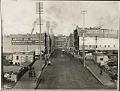
First Ave. South from King Street, Seattle, circa 1900
This view of First Avenue South looks north from King Street and was possibly taken from the railroad trestle that crossed First Avenue at King until 1903. Arctic Oil Works at 313 First Avenue South and Jackson is visible at left. In this image, pedestrians walk on the plank sidewalks and the 1st Avenue trolley heads south in the middle…
ID Number:SHS958
Date:Circa 1900
Photograph
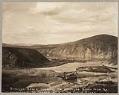
Dredging operation at Bonanza, Yukon Territory, circa 1903
Even as people poured into Dawson and the Yukon Territory during the summer of 1898, the day of the individual gold miner had begun to pass. Soon, large scale industrial mining companies were dredging the creekbeds with heavy equipment.This photo shows the Bonanza Basin, near where the Klondike River (foreground) meets the Yukon River (background). A dredge is working in…
ID Number:SHS7258
Date:Circa 1903
Photograph
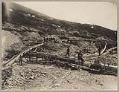
Miners and sluices on Bonanza Creek, circa 1898
Miners used water running through sluice boxes to wash the gold out of the pay dirt. Lumber for the sluice boxes was cut from the surrounding hills and finished in a nearby sawmill. As the hills were cleared, lumber became even more expensive. By the time this photo was taken, large mining companies had begun to replace small scale mining…
ID Number:SHS7300
Date:Circa 1898
Photograph
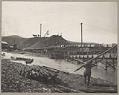
View of sluices and piles of gravel at Ophir, circa 1905
Gold strikes were made on Ophir Creek, near Nome, Alaska, in 1897. By 1905, the day of the individual miner had passed, giving way to larger scale industrial mining at Ophir and elsewhere.This photo, taken by Albert Kinne around 1905, shows the hoisting works at claim 14 at Ophir Creek. The hoists, possibly pulled by the horses (center left), lift…
ID Number:SHS7301
Date:Circa 1905