120 results for: Mining

Photograph
Group at Roslyn Black Pioneers picnic, 1983
Roslyn is a town in the Cascade Mountains about 80 miles southeast of Seattle. It was founded in 1886 by a subsidiary of the Northern Pacific Railroad as a coal mining town. In 1888 the miners went on strike and the company responded by bringing in strikebreakers, including about 300 Black miners, most of whom did not know they were…
ID Number:2014.49.02.100.13
Date:1983

Photograph
Group at Roslyn Black Pioneers picnic, 1983
Roslyn is a town in the Cascade Mountains about 80 miles southeast of Seattle. It was founded in 1886 by a subsidiary of the Northern Pacific Railroad as a coal mining town. In 1888 the miners went on strike and the company responded by bringing in strikebreakers, including about 300 Black miners, most of whom did not know they were…
ID Number:2014.49.02.100.15
Date:1983
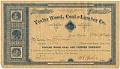
Ephemera
Yesler Wood, Coal, & Lumber Co. stock certificate, 1890
This stock certificate for the Yesler Wood, Coal, & Lumber Company was issued on March 20, 1890, to J. D. Lowman for ten shares valued at $1000. Prominent Seattle business and civic leader James D. Lowman (1856-1947) was also secretary of the company founded by his uncle, Seattle pioneer Henry Leiter Yesler (1810-1892). Yesler's Wharf, located at the foot of…
ID Number:2018.3.3.21
Date:1890
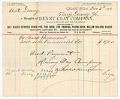
Ephemera
Denny Clay Company receipt, December 6, 1893
The Denny-Renton Clay and Coal Company (also Denny Clay Company) was founded in 1892 by Seattle pioneer Arthur A. Denny (1822-1899) when he bought out predecessor company Puget Sound Fire Clay Company. Clay's popularity over wood as a building material grew substantially after the Great Seattle Fire in 1889. Raw material was extracted with hydraulic mining equipment from heavy glacial…
ID Number:2018.3.3.78
Date:1893
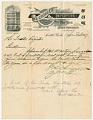
Correspondence
Wa Chong Company letter, April 20, 1909
On December 15, 1868, the man believed to be Seattle's first Chinese immigrant, Chun Ching Hock (1844-1927) opened the Wa Chong Company at the foot of Mill Street (now Yesler Way). The store sold imported Chinese goods, tea, rice, coffee, flour, and fireworks, but the company's most profitable business was labor contracting - recruiting and placing Chinese immigrants in domestic…
ID Number:2018.3.3.91
Date:1909
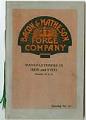
Ephemera
Bacon & Matheson Forge Company, Catalog No. 21, 1921
Bacon & Matheson of Seattle made heavy-duty iron and steel hardware and equipment for the mining, logging, construction, trucking, maritime and shipping industries. The firm's 1921 catalog includes images of their plant at West Lander Street, Seattle, images of small and large products, and equipment in action.
ID Number:2018.3.3.108
Date:1921
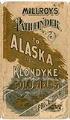
Ephemera
Millroy's Pathfinder to Alaska and the Klondyke Gold Fields, circa 1898
In 1897, in response to the Klondike Gold Rush, Canada passed a number of new laws addressing mining in the Klondike Region. These concerned the management of claims, mining by proxy, and other matters. A map publisher living in Seattle at the time, John James Millroy, Jr. (1862-1908), used government and private surveys to create "Millroy's Map of Alaska and…
ID Number:2018.3.3.112
Date:Circa 1898
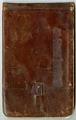
Diary
Klondike diary of Harry V. McComb, 1897-1900
In 1896 gold was discovered on the banks of the Klondike River in Canada's Yukon Territory, triggering a stampede of prospectors into Seattle and an era of prosperity that lasted for more than a decade. In this diary of his gold rush travels, Harry V. McComb (1866-1947) of Seattle describes trips between Seattle and Alaska, and writes about stops in…
ID Number:2018.3.3.115
Date:1897-1900
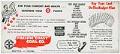
Ephemera
Pacific Coast Coal Co. advertisement blotter, circa 1930
The Pacific Coast Company was organized in 1897, and comprised several existing organizations, most notably the Pacific Coast Steamship Co., Pacific Coast Coal Co. and the Pacific Coast Railway. The Pacific Coast Coal Company oversaw several mines in King County, and by the early 1930s was the top coal producing company in Washington State. This card has a blotter on…
ID Number:2018.3.3.135
Date:Circa 1930
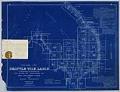
Cartographic material
Seattle Tide Lands, Volume Two, index, 1894-1896
Seattle in the late nineteenth century was a rapidly growing city, aided in no small part by the 1883 connection to the rest of the country by the Northern Pacific Railway Company (NPRR). Additionally, the city's population doubled in 1890 from the previous year to 40,000, boosted by the influx of people who saw opportunity in rebuilding after Seattle's Great…
ID Number:2019.3.23.1
Date:1894-1895