44 results for: Chinatown International District
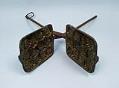
Iron used for shaping senbei, used at the Sagamiya Confectionary Co., ca. 1910
This senbei iron with leaf designs was from the Sagamiya Confectionery, formerly located at 6th and Main in the area previously known as Nihonmachi, or Japantown, now in Seattle's Chinatown International District. Sagamiya used traditional Japanese methods in the making of mochi and other wagashi (Japanese sweets). The bakery was founded in 1904 and closed in the early 1970s.
ID Number:1984.54.110.13
Date:Circa 1910
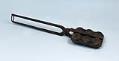
Iron used for shaping senbei, used at the Sagamiya Confectionary Co., ca. 1910
This senbei iron was from the Sagamiya Confectionery, formerly located at 6th and Main in the area previously known as Nihonmachi, or Japantown, now in Seattle's Chinatown International District. Sagamiya used traditional Japanese methods in the making of mochi and other wagashi (Japanese sweets). The bakery was founded in 1904 and closed in the early 1970s.
ID Number:1984.54.110.18
Date:Circa 1910
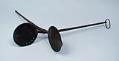
Iron used for shaping senbei, used at the Sagamiya Confectionary Co., ca. 1910
This senbei iron was from the Sagamiya Confectionery, formerly located at 6th and Main in the area previously known as Nihonmachi, or Japantown, now in Seattle's Chinatown International District. Sagamiya used traditional Japanese methods in the making of mochi and other wagashi (Japanese sweets). The bakery was founded in 1904 and closed in the early 1970s.
ID Number:1984.54.110.49
Date:Circa 1910
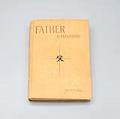
Book entitled "Father," by O. Kubushiro, 1942
This book is part of the Sagamiya Confectionery collection. The bakery, founded in 1904 and closed in the 1970s, was located at 6th and Main in the area previously known as Nihonmachi, or Japantown, now in Seattle's Chinatown International District. Sagamiya used traditional Japanese methods in the making of mochi and other wagashi (Japanese sweets). A stamp on the back…
ID Number:1984.54.117
Date:1942
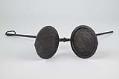
Senbei iron with AYPE seal, from the Sagamiya Confectionary Co., 1909
The Sagamiya Confectionery, founded in 1904 by Unosuke Shibata, was formerly located at 6th and Main in the area previously known as Nihonmachi, or Japantown, now in Seattle's Chinatown International District. Sagamiya used traditional Japanese methods in the making of mochi, pastries and other wagashi (confections). The bakery was a popular neighborhood establishment until it closed in the 1970s. This…
ID Number:2000.84.4
Date:1909
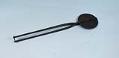
Senbei iron from the Sagamiya Bakery with the Alaska-Yukon-Pacific Exposition (AYPE) seal, ca. 1909
The Sagamiya Confectionery, founded in 1904 by Unosuke Shibata, was formerly located at 6th and Main in the area previously known as Nihonmachi, or Japantown, now in Seattle's Chinatown International District. Sagamiya used traditional Japanese methods in the making of mochi, pastries and other wagashi (confections). The bakery was a popular neighborhood establishment until it closed in the 1970s. This…
ID Number:2000.84.5
Date:1909
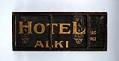
Hotel Alki wooden sign, ca. 1910
The Hotel Alki opened in 1910 and was located at the corner of 5th and Washington in what is today the Chinatown International District. The building housed primarily low income tenants throughout its lifetime. In 1934, a deadly storm caused the south wall to collapse, killing a man below. The Alki eventually closed down in the 1970s.
ID Number:2004.37.1
Date:Circa 1910
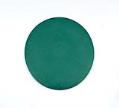
Lazy Susan from Tai Tung Restaurant, Seattle, Washington, ca. 1959-1961
The Tai Tung Restaurant is one of the oldest restaurants in Seattle, established in 1935. The restaurant was a favorite of several Seattle mayors, and even Bruce Lee had a favorite booth. The donor of the Lazy Susan, Harry Chan, an immigrant from China in 1968, has worked at Tai Tung since her arrived in the US. He is now…
ID Number:2015.86.1
Date:1959-1961
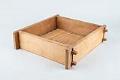
Fish cake steamer from the Moriguchi family and Uwajimaya, 1928-1940
This fishcake steamer is from the Moriguchi family who founded Uwajimaya, a family-owned supermarket chain headquartered in Seattle's Chinatown International District with other locations in the Pacific Northwest. Fujimatsu Moriguchi began his enterprise in 1928, selling fishcakes and other goods from his truck in Tacoma, Washington. In the mid 1940s, after Moriguchi and his family were released from the incarceration…
ID Number:2016.Uwajimaya.1
Date:1928-1940
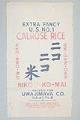
Muslin rice bag from Uwajimaya, 1928-1950
This rice bag is from the Moriguchi family who founded Uwajimaya, a family-owned supermarket chain headquartered in Seattle's Chinatown International District with other locations in the Pacific Northwest. Fujimatsu Moriguchi began his enterprise in 1928, selling fishcakes and other goods from his truck in Tacoma, Washington. In the mid 1940s, after Moriguchi and his family were released from the incarceration…
ID Number:2016.Uwajimaya.2
Date:1928-1950