At MOHAI, our library and archives are full of millions of stories. As a proud Smithsonian Affiliate, we were excited to take part in this year’s #MuseumLibraryWeek (March 16–20), a nationwide campaign celebrating the unique role museum libraries play in preserving and sharing history.

Throughout the week, we pulled back the curtain on our collections, our staff, and the behind-the-scenes work that makes access possible. Here’s a look back at what we shared and why it matters.

What 2.5 Million Images Really Looks Like

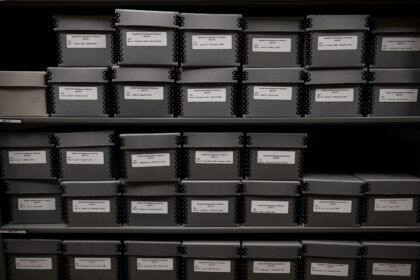
Photograph of Seattle Post-Intelligencer CDs stored in the MOHAI Collection.

To kick things off, we asked a simple question: what do 2.5 million images actually look like?

The answer sits on shelves in our collection, stored on nearly 10,000 CDs from the Seattle Post-Intelligencer. A recent Digital Collections Survey, funded by a 2022 4Culture Collections Care grant, revealed that these discs contain more than 2.5 million individual digital photographs documenting life in Seattle and beyond.

But CDs aren’t permanent. That’s where MOHAI’s Media Archivist, Joanna Steusloff, comes in. She carefully transfers these files off aging media and into our digital preservation system, ensuring they remain accessible for future generations. Throughout the week, we highlighted the kinds of materials Joanna is working to preserve—and the scale of that effort.

Connecting Objects to Stories

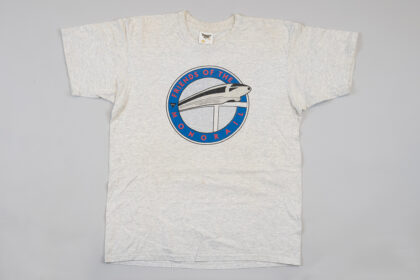
Photograph of a gray t-shirt with a logo that reads "friends of the monorail" with an image of the Seattle Monorail in the center.

MOHAI, 2023.Monorail.1

Museum collections come alive when you can see the connections between objects and the moments they represent.

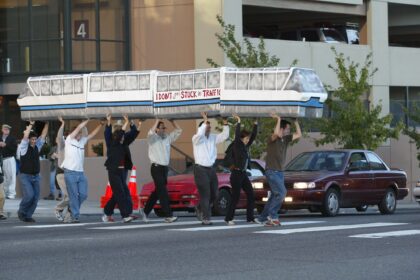
One example we shared paired a “Friends of the Monorail” T-shirt from our collections with a photograph from the Seattle Post-Intelligencer CD archive. On its own, the T-shirt hints at advocacy. Alongside the photograph, which shows pro-monorail supporters demonstrating an alternate route to Seahawks Stadium, it becomes part of a larger story about late-1990s and early-2000s efforts to expand Seattle’s monorail system.

These kinds of pairings are only possible because of the work happening behind the scenes to preserve and organize digital collections.

Photograph of a group of pro-monorail supporters demonstrating an alternate route to Seahawks Stadium.

MOHAI, Seattle Post-Intelligencer Collection, 2000.107.20021014.CD01.02.001, photo by Renee C. Byer

Behind the Scenes: Preserving Audio at Scale

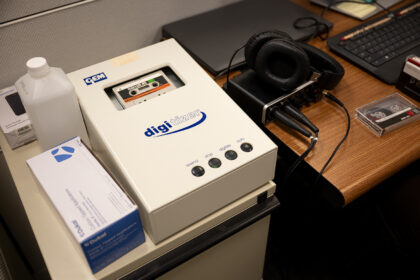
Photograph of a Graff Gem audio cassette digitizer.

Much of what happens in a museum library isn’t visible to the public, but that doesn’t mean the work isn’t essential.

Over several months this past year, Joanna digitized more than 600 audio cassette tapes from MOHAI’s collections. Using traditional equipment, converting a single 90-minute cassette into a preservation-quality file can take the full 90 minutes.

Thanks to the loan of a specialized Graff Gem audio cassette digitizer from the Washington State Archives, Joanna was able to dramatically increase that pace—digitizing up to 12 tapes per hour. She is now editing those files and creating access copies for researchers and future exhibitions.

It’s meticulous, time-intensive work but it ensures that voices captured decades ago can still be heard today.

Collaboration in Action

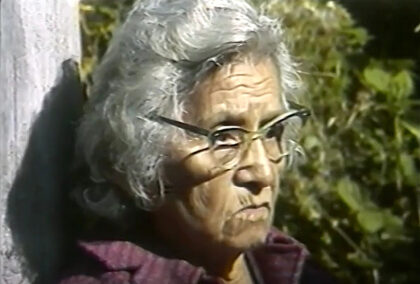
Screen grab of Ella Aquino from the 1987 documentary Princess of the Pow-Wow.

Still of Ella Aquino from Princess of the Pow-Wow. MOHAI, 2025.9.1

Museum library work often extends beyond our walls.

At a 2023 event hosted with Moving Image Preservation of Puget Sound (MIPoPS) at the Northwest Film Forum, we connected with filmmaker Derek Creisler, who had a U-Matic videotape of his 1987 documentary Princess of the Pow-Wow. The film tells the story of Ella Aquino, a Lummi, Yakima, and Puyallup activist from Seattle.

Through this partnership, MIPoPS digitized the film, and Creisler donated it to MOHAI. Today, it is accessible online, transforming a fragile, obsolete format into a resource available to anyone interested in this important story.

Why This Work Matters

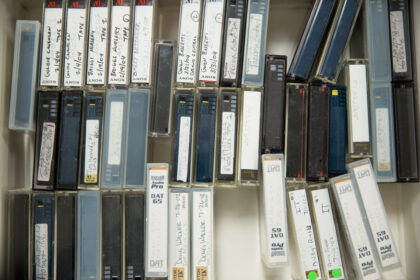
Photograph of several kinds of cassette and VHS tapes stored in the MOHAI collection.

If there was one message we hoped to convey during #MuseumLibraryWeek, it’s this: we are in a race against time.

Many of the materials in our care—magnetic media like videotapes and audiotapes, and optical media like CD-Rs—are beginning to degrade. Without intervention, the images, audio, and stories they contain could be lost.

The work of our library and archives team, and especially our Media Archivist, is about more than preservation: it’s about access. It’s about making sure that the history of Seattle, in all its complexity and richness, remains available to researchers, students, and the public.
From millions of digital photographs to fragile cassette tapes and rare films, these collections tell the stories of our region. Preserving them ensures those stories can continue to inform, inspire, and connect us.

As #MuseumLibraryWeek comes to a close, we’re grateful for the opportunity to share this work—and to celebrate the people and processes that make it possible.
Categories:
History, Technology

Related Blog Posts

Round wall clock that once hung in the window of Ding Ho Laundry and Cleaners, a Seattle business founded by Chinese immigrants York and Arlene Luke in 1956.
March 4, 2026

Spring Forward with Seattle History: Timeless Clocks from the MOHAI Collection

It’s almost time to spring forward! Celebrate the season with a look at four historic clocks from the MOHAI collection,…
Read More
Emperor and Empress dolls from a Japanese Girls' Day set, dressed in ornate purple and red court garments and displayed on tiered platforms; part of MOHAI's Japanese American doll collection.
February 18, 2026

Tadaima: The Lost Dolls of Seattle’s Japanese American Community

MOHAI’s newest Community Spotlight display, Tadaima: I’m Home, features some of the most exquisite and emotionally complex objects in the…
Read More