179 results for: Red
Photograph
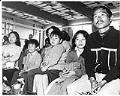
The Dương family at Camp Murray, Washington, May 20, 1975
The Vietnam War ended on April 30, 1975, with the fall of South Vietnam to North Vietnamese communist forces. In the immediate aftermath, many thousands of people from Vietnam, Cambodia, and Laos fled violence and persecution in their home countries and sought refuge in the United States and elsewhere. Vietnamese refugees arriving to the West Coast in May 1975 were…
ID Number:2000.107.220.21.02
Date:1975
Photograph
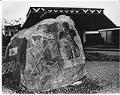
James Washington Jr. sculpture "Oracle of Truth" outside Mount Zion Baptist Church, Seattle, December 8, 1987
James Washington Jr. (1911-2000) was a sculptor and painter who became associated with the Northwest School of artists in Seattle. He grew up in Mississippi and moved to Seattle in 1944 to work for the Navy during World War II. Washington was largely self-taught and he believed this lack of formal training was essential to his artistic success. In the…
ID Number:2000.107.227.21.01
Date:1987
Photograph
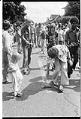
Central Area residents painting a red line down the middle of Roy Street to protest red-lining bank policies, August 17, 1975
In the mid-20th century, protesters began challenging long-established inequitable practices in housing. Racially restrictive housing covenants and discriminatory lending (“redlining”) excluded people of color from buying or renting housing in most of Seattle’s neighborhoods. Seattle passed an open housing law in 1968, making redlining illegal, but it often continued in secret and its effects have continued for decades. This photo,…
ID Number:2000.107.19750817.2.21A
Date:1975
Photograph
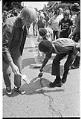
Central Area residents painting a red line down the middle of Roy Street to protest red-lining bank policies, August 17, 1975
In the mid-20th century, protesters began challenging long-established inequitable practices in housing. Racially restrictive housing covenants and discriminatory lending (“redlining”) excluded people of color from buying or renting housing in most of Seattle’s neighborhoods. Seattle passed an open housing law in 1968, making redlining illegal, but it often continued in secret and its effects have continued for decades. This photo,…
ID Number:2000.107.19750817.2.22A
Date:1975
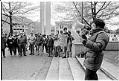
Photograph
Student anti-apartheid protest in Red Square, Seattle, April 25, 1986
When South Africa’s National Party came to power in 1948, the white leadership put extreme laws in place forcing the country’s racial groups to live and develop separately. These “apartheid” laws caused much hardship and resentment. The growth of the Civil Rights Movement in the United States in the 1950s brought attention to apartheid, and in the 1970s and 80s,…
ID Number:2000.107.19860425.1.03
Date:1986
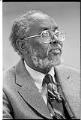
Photograph
Ahmed Isse at American Red Cross headquarters, Seattle, December 28, 1992
Ahmed Isse, a former Somali government official, came to the United States in 1991 as a refugee from the Somali Civil War. He settled in south Seattle, with a daughter living in Tacoma and a son in Vancouver, BC. Isse had left other relatives behind, including a son in Mombasa, Kenya, and at least one sister in Somalia.In late December…
ID Number:2000.107.19921228.2.30
Date:1992
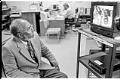
Photograph
Ahmed Isse looking at photographs at Red Cross headquarters, Seattle, December 28, 1992
Ahmed Isse, a former Somali government official, came to the United States in 1991 as a refugee from the Somali Civil War. He settled in south Seattle, with a daughter living in Tacoma and a son in Vancouver, BC. Isse had left other relatives behind, including a son in a Mombasa, Kenya, and at least one sister in Somalia.In late…
ID Number:2000.107.19921228.2.37
Date:1992
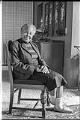
Photograph
Lillian Gideon at home, Seattle, January 12, 1993
Lillian Morris Gideon (1907-2006) was widely known in Seattle as a volunteer and philanthropist in Seattle's African-American community and other groups. Born in Mobile, AL and educated at Boston College, Gideon served in the American Red Cross during both World Wars, and moved to Seattle in the 1950s with her husband Russell, working as a social worker at the VA…
ID Number:2000.107.19930112.1.35
Date:1993
Photograph
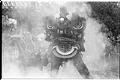
Lion Dance performance at Lunar New Year celebration, Seattle, January 25, 1993
The Lion Dance is based on myths of a lion defending a village from monsters and it dates back more than 1,000 years. The dance is performed at Lunar New Year celebrations and is intended to bring good fortune in the coming year. The costume is usually brightly colored especially red, which symbolizes good luck. The lion dances in a…
ID Number:2000.107.19930124.1.05
Date:1993
Photograph
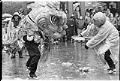
Lion Dance performance at Lunar New Year celebration, Seattle, January 25, 1993
The Lion Dance is based on myths of a lion defending a village from monsters and it dates back more than 1,000 years. The dance is performed at Lunar New Year celebrations and is intended to bring good fortune in the coming year. The costume is usually brightly colored especially red, which symbolizes good luck. The lion dances in a…
ID Number:2000.107.19930124.1.24
Date:1993